
How to Personal Loans Work: A Complete Borrower's Guide
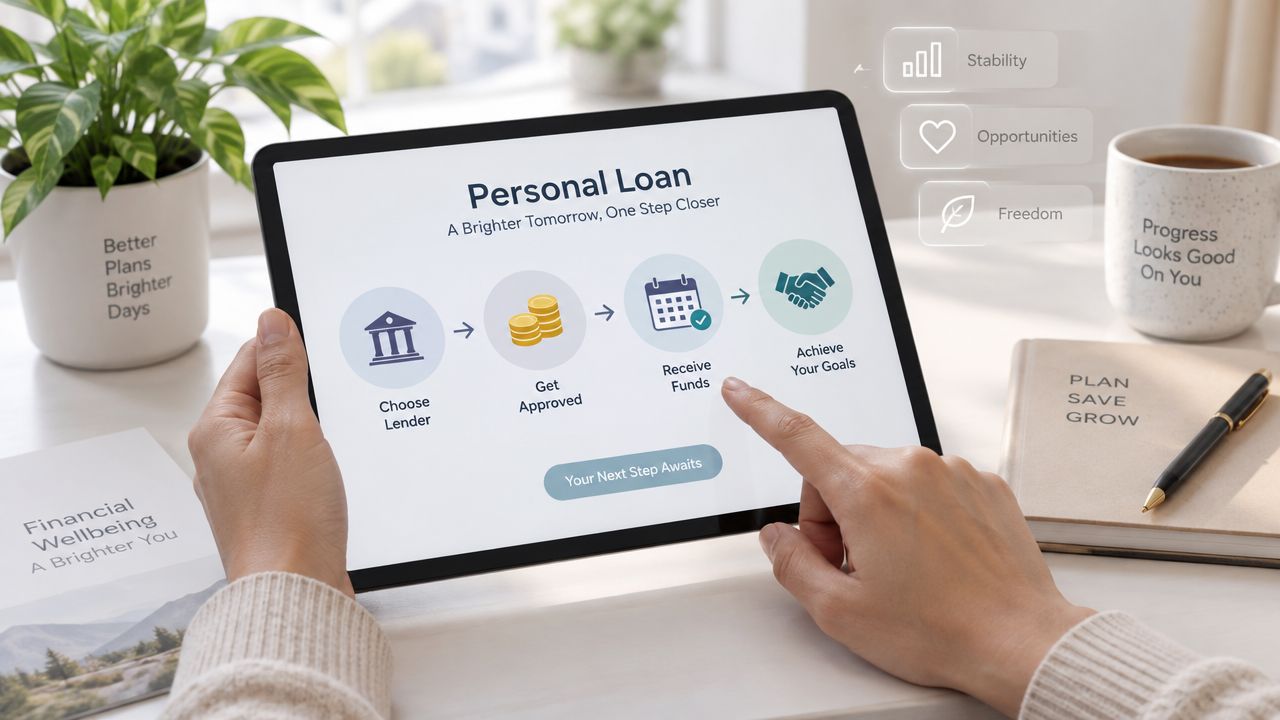
You're staring at a car-repair invoice while a medical bill is already sitting on the counter. Your savings can cover one problem, but not both, and the credit-card balance is becoming harder to control each month. A personal loan may offer a bridge, but the important question isn't only how quickly you can apply. It's why a lender approves one borrower, changes another borrower's terms, or declines a third before funds ever move.
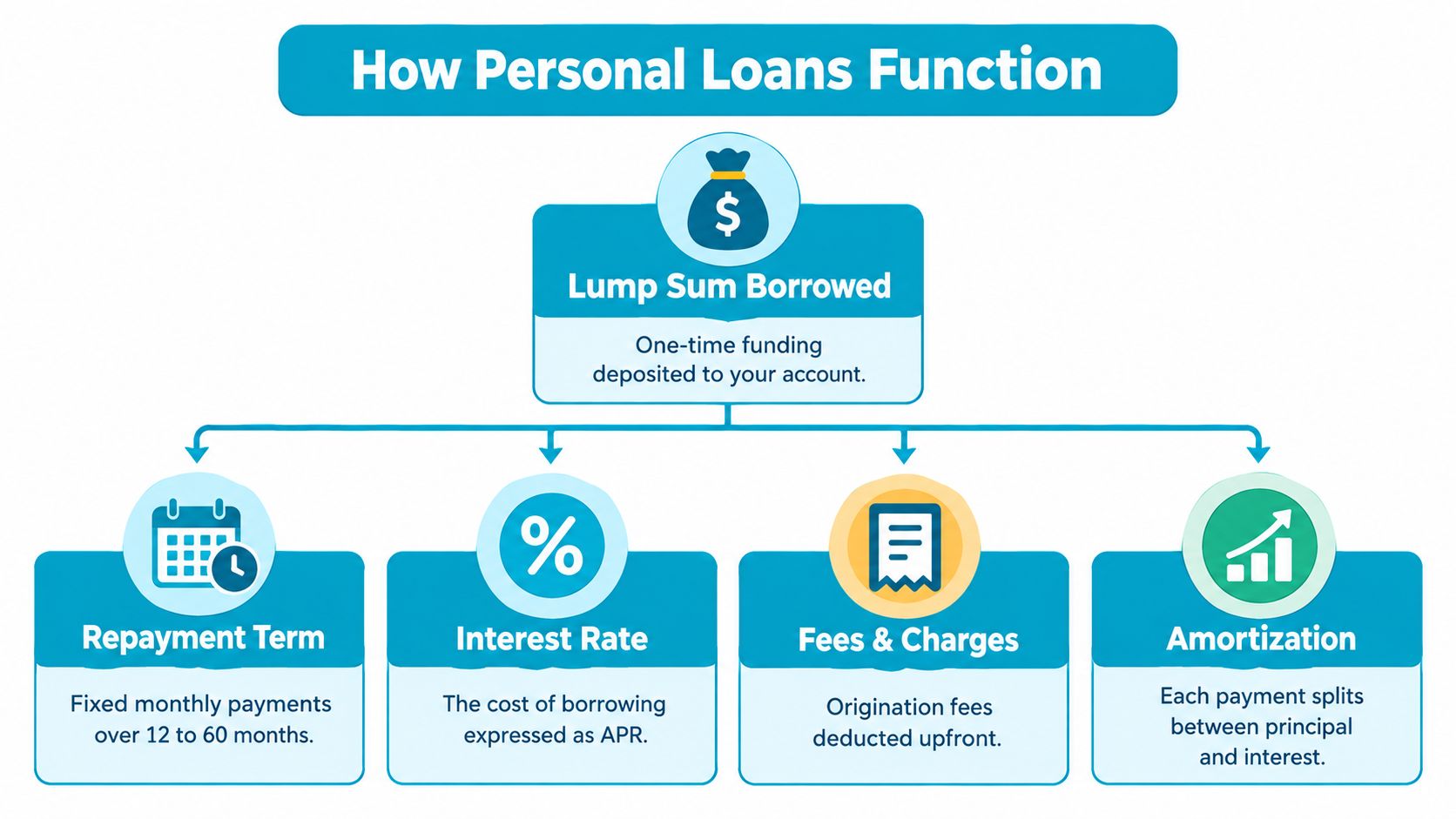
A personal loan is a form of installment credit. You receive a lump sum, then repay it through scheduled payments that include principal, interest, and possibly fees. The structure can make a defined expense easier to manage, but only if the total cost and monthly obligation fit your finances.
Table of Contents
- Why You Need a Roadmap for Borrowing
- The Core Mechanics of How Personal Loans Function
- Navigating the Application and Approval Process
- Comparing Different Types of Personal Loans
- How Lending Marketplaces Connect Borrowers
- Understanding Underwriting for All Credit Profiles
- Strategic Uses and Financial Outcomes
Why You Need a Roadmap for Borrowing
A financial emergency creates pressure to choose the first offer that appears. That pressure can hide the decisions that matter most, including how much you really need, whether the payment fits your budget, and whether another solution would cost less. Understanding the machinery behind the application helps you slow down without ignoring the problem.
Personal loans are already a substantial part of household borrowing. At the end of 2022, the U.S. personal loan market had reached about $356 billion across 36.2 million accounts, and more than 31 million people, roughly 11% of the adult population in the Consumer Credit Panel, held a personal loan, according to the Federal Reserve analysis of personal loan accounts. Those figures describe a mainstream financial product, not a niche reserved for borrowers with perfect credit.

The guide ahead follows the borrower's real path:
- Loan structure: What principal, interest, APR, term, fees, and amortization mean.
- Underwriting: How lenders turn income, debts, credit history, and other information into a risk decision.
- Marketplace routing: Why an online platform can send one request to multiple lenders without making the final decision.
- Product choice: How secured, unsecured, installment, title, and payday structures differ.
- Financial purpose: How to test whether consolidation, emergency funding, or a major purchase justifies the cost.
Practical rule: A loan should solve a defined problem without creating a payment you'll struggle to maintain.
The objective isn't to predict approval with certainty. It's to recognize the signals lenders examine and compare the complete offer before you submit sensitive information or sign an agreement.
The Core Mechanics of How Personal Loans Function
At its simplest, a personal loan exchanges one-time access to cash for a contractually defined repayment schedule. The lender advances the principal. You repay that principal plus the cost of borrowing over the agreed term.
Think of the arrangement like renting money. The principal is the amount of money placed in your hands. The interest rate is the charge for using it. The term is how long you keep access to the money. The APR puts interest and most applicable fees into a broader annual cost measure, making it more useful than the interest rate alone when you compare offers. The Federal Reserve's personal-loan rate data provides the wider rate context borrowers use when evaluating installment credit.
What appears in the payment
A fixed-payment personal loan generally sends the same scheduled amount from your bank account each cycle. Each payment is divided between interest and principal. Early payments commonly devote more of the payment to interest because the outstanding balance is larger. As the balance falls, a greater share can go toward principal.
That process is called amortization. The amortization schedule shows how the balance changes after every payment, so you can see the expected payoff path rather than judging the loan by its monthly payment alone.
A longer term can make the monthly payment look more comfortable, but it also gives interest more time to accumulate. A shorter term can raise the payment while reducing the period over which borrowing costs accrue. The right comparison is therefore both monthly affordability and total repayment.
Why APR deserves attention
Two offers can advertise similar rates while producing different total costs if one includes an origination fee. Some lenders deduct that fee from the amount deposited, so a borrower who applies for a specific amount may receive less cash than expected.
Before accepting an offer, compare:
- Net proceeds: How much money will reach your account?
- APR: What is the annualized cost after covered fees?
- Payment schedule: How much is due and when?
- Total repayment: What will you return over the full term?
- Early-payoff terms: Does the agreement impose any charge for paying ahead?
For a focused explanation of the pricing measure, review this guide to personal loan APR rates. The central lesson is simple: the payment tells you whether you can carry the loan, while APR and total repayment tell you what the loan costs.
Navigating the Application and Approval Process
Approval isn't a single button. It's a sequence in which the lender verifies identity, estimates repayment capacity, evaluates risk, and then prepares final documents.
Step one, define the request
Start with the expense and the amount required. A lender may ask why you want the funds, but borrowing more than the expense requires can create unnecessary interest and a larger payment. Gather information about your income, employment, housing, current debts, and bank account before opening the application.
Step two, submit initial information
The application usually collects identifying details, requested amount, income information, and permission to review relevant records. Some services begin with a soft eligibility check, while a lender may later perform a hard credit inquiry during formal underwriting. Read the consent language so you know which organization may access your information and at what stage.
The online personal loan application guide can help you prepare documents and questions before submitting a request.
Step three, underwriting tests repayment ability
Underwriters examine whether your income appears reliable and whether your existing obligations leave room for another payment. They can review credit history, outstanding accounts, payment behavior, employment details, and information used to verify the application. They aren't asking only, “Does this person have a high score?” They're asking whether the proposed loan fits the borrower's overall risk and cash-flow picture.
That explains why two applicants with similar scores can receive different outcomes. Their income stability, existing debt, requested amount, documentation, and recent credit behavior may differ.
Step four, verification and closing
The lender may request pay records, bank information, identification, or clarification about an application entry. Approval can remain conditional until those checks are complete. After final approval, the borrower reviews the agreement, accepts the terms, and signs electronically or through another closing process.
Step five, funding follows approval
Funding speed is operationally separate from underwriting. After final approval and signing, ACH delivery commonly takes one to two business days, while some lenders can send funds the same day or by the next non-holiday business day, depending on cutoff time and the payment rail, according to Experian's explanation of quick personal-loan funding. A fast advertisement doesn't eliminate verification, bank processing, weekends, or holidays.
Approval means the lender has accepted the risk under stated conditions. It doesn't always mean the money is already available.
Comparing Different Types of Personal Loans
The label “personal loan” covers different risk arrangements. The most important distinction is whether the lender has a specific asset it can claim if you stop paying.
An unsecured personal loan doesn't require collateral. The lender relies primarily on the borrower's credit profile, income, existing obligations, and repayment history. Because the lender has no pledged asset, the offer can depend heavily on the applicant's demonstrated ability to repay.
A secured personal loan connects the debt to collateral, such as a vehicle or qualifying savings. The asset can reduce the lender's exposure, but it increases the borrower's consequences if payments fail. The lower-risk position for the lender doesn't automatically make the loan affordable for the borrower.
Loan Type Comparison
| Loan Type | Collateral Required | Typical Use Case |
|---|---|---|
| Unsecured personal loan | No specific asset | Debt consolidation, medical bills, repairs, or other defined expenses |
| Secured personal loan | Yes, such as a vehicle or savings | Borrowing where collateral supports qualification or pricing |
| Installment loan | Usually no, but structure varies | A lump sum repaid through scheduled payments |
| Title loan | Vehicle equity | Short-term access to cash backed by a vehicle title |
| Payday loan | Typically no vehicle collateral | Very short-term cash needs between paychecks |
An installment loan describes the repayment design, not necessarily whether collateral exists. A fixed installment schedule can make budgeting clearer because the debt has a defined end point. A title loan uses vehicle equity, so the borrower must weigh the need for cash against the possibility of losing the vehicle.
Payday loans serve a different purpose and carry a different timing pressure. They're designed around a short repayment window, which can become difficult if the borrower's next paycheck is already committed to rent, utilities, food, or other necessities.
Match the structure to the problem
For debt consolidation, an unsecured installment loan may be easier to manage than several revolving balances, but only if the new APR and fees reduce the all-in cost. For an asset-backed product, ask whether losing the collateral would threaten transportation, housing stability, or income.
Don't choose a product because its approval looks easiest. Choose the structure whose risk, payment schedule, and total cost match the actual problem.
How Lending Marketplaces Connect Borrowers
A lending marketplace is an intermediary, not the lender. You submit one request, and the platform can route relevant application information to independent lenders in its network. Those lenders decide whether to respond, what terms to offer, and whether to fund the loan.
That distinction explains why a marketplace can show potential options without guaranteeing approval. It doesn't set the APR, approve the request, or control the final funding timeline. The participating lender handles those decisions under its own underwriting rules.

The routing sequence
- You provide the request: The platform collects the amount, personal details, income information, and other data needed for matching.
- The platform transmits the request: Potentially relevant lenders receive the information according to the service's consent and disclosure terms.
- Lenders evaluate the profile: Each lender applies its own rules, which can include credit checks and additional verification.
- You review any offer: You can examine the payment, APR, fees, term, and lender identity before deciding whether to proceed.
- The lender closes and funds: Final documents, approval conditions, and deposit timing remain the lender's responsibility.
A single intake can reduce repeated form-filling, but it doesn't remove the need to read privacy disclosures. Check who receives your information, which credit inquiry may occur, whether the service is available in your state, and which company you'll contact about the agreement.
The quick credit connection process is best understood as a way to organize lender outreach, not as a promise that every applicant will receive an offer.
Protecting sensitive information
Use a secure connection, verify the website address, and read electronic-consent language before submitting bank details. Look for clear links to privacy, rates and fees, advertiser disclosures, and lender terms. Encryption helps protect information in transit, but borrowers still need to confirm who will receive the data and how the resulting offer will be handled.
Understanding Underwriting for All Credit Profiles
A loan application can look like a form, yet behind it is a risk decision. A credit score is one signal. It summarizes parts of your credit history, while underwriting also examines dependable income, current debt, and whether the requested payment fits your budget.
That helps explain why two applicants with similar scores can receive different decisions. A borrower with a thin file has limited conventional evidence, even with steady work and income. A borrower with a poor history presents a different concern when missed payments, defaults, or recent financial stress appear. Marketplace routing can expose the same profile to lenders with different rules, so the outcome depends on more than the score alone.
What can matter beyond the score
Underwriters may examine:
- Income consistency: Regular earnings support the case that payments are sustainable.
- Employment context: Work history and the type of current employment can clarify how reliable the income may be.
- Existing obligations: Large monthly commitments leave less room for another payment.
- Education and earning potential: Some lenders consider broader information when reviewing debt-consolidation applicants.
- Requested amount: A smaller loan limits the lender's exposure compared with a larger request.
Recent TransUnion data shows how lenders segment applicants. In Q2 2026, subprime personal-loan borrowers grew 18.4% year over year, subprime accounts grew 20.5%, and the average new subprime loan size fell 6.8%, according to recent coverage of alternative credit data. More borrowers entered the market while the typical loan amount declined. Expanded access can therefore exist alongside tighter loan sizing.
An approved amount says little about your character. It may show that the lender is limiting exposure while testing whether you can manage repayment.
For someone with limited credit, ask what job the loan will do. Is it funding a defined bridge to a specific outcome, or keeping an unaffordable budget running? Compare the payment and total cost with the original problem. If the new obligation leaves no room for ordinary expenses, approval may only postpone the pressure.
Strategic Uses and Financial Outcomes
Personal loans work best when the borrower can name the expense, the required amount, and the repayment source. They can fund a necessary repair, cover a medical bill, support a major purchase, or replace several expensive debts with one scheduled obligation.
The market's current use pattern places debt payoff at the center. Personal loan balances reached a record $281 billion in Q2 2026, up 9.3% year over year, and more than half of borrowers used personal loans for debt consolidation or credit-card refinancing, according to LendingTree's personal-loan statistics. Lenders often charge origination fees, while APRs commonly range from about 6% to 36%, so consolidation isn't automatically a money-saving move.
Test consolidation with all-in math
Suppose you're replacing several card balances with one loan. Don't compare only the new monthly payment with the old minimum payments. Compare:
- Current cost: Interest and fees on the existing accounts.
- New cost: Interest, origination charges, and any other loan fees.
- Net proceeds: Whether the loan pays the intended balances in full.
- Behavior risk: Whether the cards will remain open and available for new spending.
- Payment horizon: Whether the new schedule gives you a realistic path to becoming debt-free.
A lower payment may result from extending repayment, not from reducing the cost. Consolidation can also simplify due dates and create a fixed finish line, but it won't fix a budget that continues to spend more than income.
Use a loan with a clear job
For emergency funding, compare the personal-loan offer with a provider payment plan, a hardship arrangement, available savings, or another lower-cost option. For a major purchase, ask whether the item is necessary now and whether the payment remains affordable after housing, transportation, food, and other commitments.
A loan deserves serious consideration when:
- The purpose is defined: You know what the funds will cover.
- The payment fits: The budget remains workable after the new obligation.
- The full cost is clear: APR, fees, proceeds, and total repayment are documented.
- The alternative is more expensive: The loan improves the situation rather than merely moving the balance.
- The borrowing stops the problem: You have a plan that prevents the same debt from returning.
How personal loans work becomes much clearer once you stop viewing approval as the finish line. Approval is only permission to borrow under particular terms. The financially sound decision comes after that, when you decide whether those terms improve your position.
NextStopLoans provides an online marketplace that routes consumer loan requests to independent third-party lenders, including lenders that may consider broader credit profiles. Review the lender's offer, APR, fees, and repayment terms carefully, then visit NextStopLoans to submit a secure request and compare any available options.