
Quick Credit Connect: How It Works and What to Know
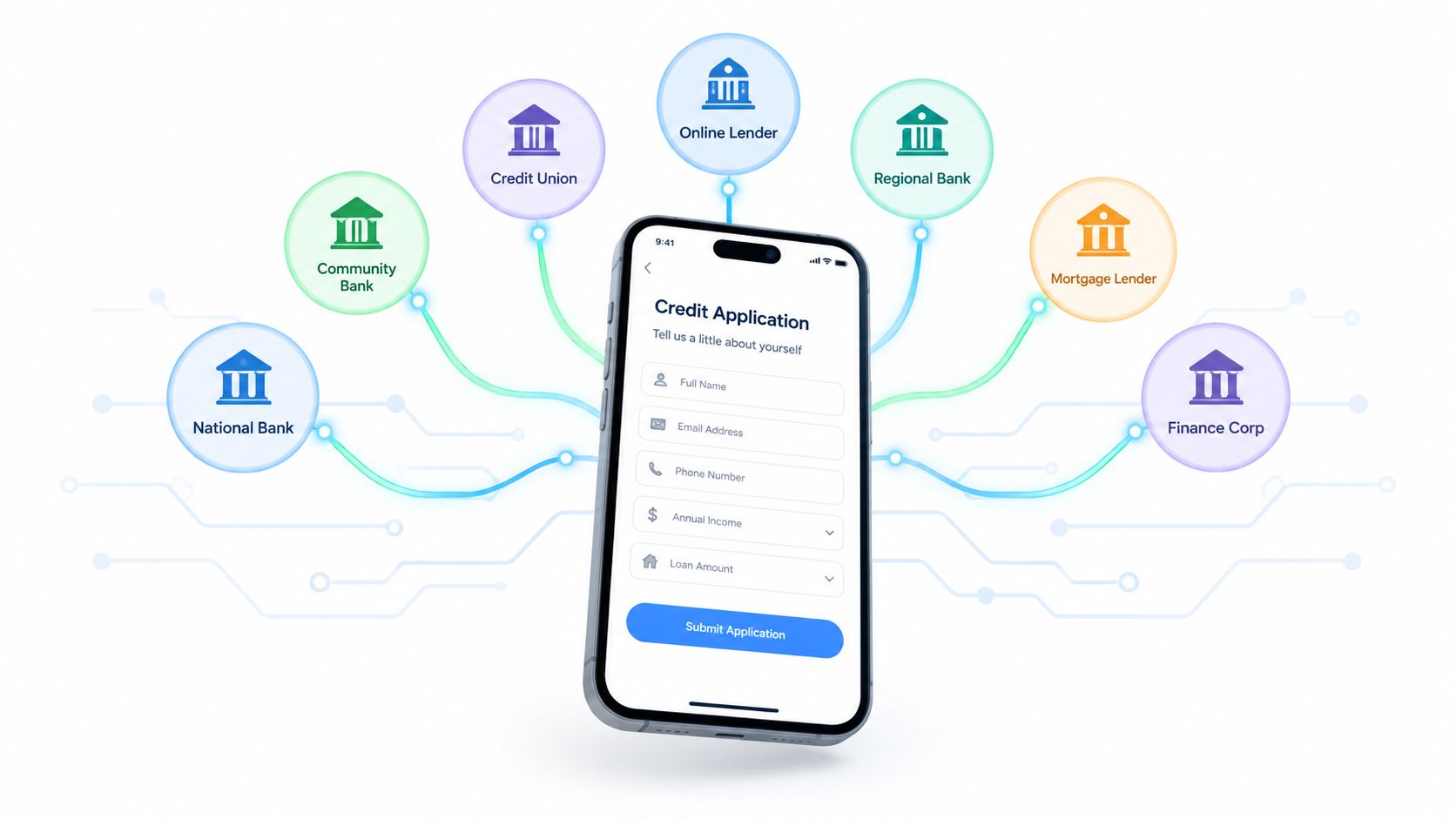
A quick credit connect isn't a lender itself. It's a marketplace that can route one application to multiple third-party lenders, while those lenders decide the APR, repayment schedule, and funding speed.
Your car breaks down on a Tuesday morning, the repair shop wants payment before releasing it, and your savings account can't cover the bill. You search for “quick credit connect” and find a form that promises to connect you with loan options. The natural question is simple: Have you found a lender, or just another step before the money?
You've found a loan marketplace connector. It collects information from one application and shares the request with participating lenders that may evaluate it. The connector doesn't approve the loan, provide the funds, set the interest rate, or manage repayment. Those responsibilities belong to the lender named in the offer.
That distinction matters because online marketplace lending is still a small part of the wider U.S. credit system, even though it grew rapidly during the 2010s. The Congressional Research Service reported that marketplace lenders originated almost $26 billion in loans in 2017, up from $19 billion in 2016, while still representing less than 1% of the total consumer and small-business loan market. The report also placed total consumer credit outstanding above $3.8 trillion, which puts the marketplace's scale in perspective. The Congressional Research Service report provides that broader context.
The useful way to understand quick credit connect isn't as a single loan product. Think of it as a routing tool. Your task is to identify the lender behind an offer, compare the actual cost, and decide whether the repayment obligation fits your budget.
Table of Contents
- What Quick Credit Connect Actually Means
- How the Lender Matching Process Works
- Loan Categories You Can Route Through a Marketplace
- Who Really Sets Your Rates and Repayment Terms
- Eligibility Basics to Confirm Before You Apply
- When a Quick Credit Connect Is the Wrong Choice
- Using a Loan Marketplace Securely Step by Step
- A Simple Framework for Deciding What to Do Next
What Quick Credit Connect Actually Means
The borrower in the repair-shop example may expect one company to review the application, approve the loan, and deposit the money. That expectation causes much of the confusion around quick credit connect.
Quick Credit Connect is a marketplace connector, not a lender. It routes one borrower application to multiple independent lenders that may offer personal, installment, payday, title, or other forms of credit. The marketplace may collect your details and facilitate the connection, but the lender makes the underwriting decision and supplies the funds.
The difference is more than a technical label. A connector generally doesn't hold the loan balance, determine the APR, choose the repayment schedule, or decide when funds arrive. Once a lender presents an offer, that lender's disclosures control. The lender may also apply its own eligibility rules, credit-check process, state restrictions, and funding procedures.

Why brand names can be misleading
Online lending uses several overlapping labels. You may see affiliate networks, lead aggregators, and loan marketplaces presented under a polished consumer brand. These services can look like direct financial institutions even when their function is primarily to gather a request and match it with outside providers.
That doesn't automatically make a marketplace unsuitable. A single intake can be more convenient than completing several separate applications. It can also help a borrower discover that different lenders use different underwriting approaches. Still, convenience shouldn't replace careful review.
Practical rule: Treat the marketplace as the switchboard, not the creditor. The lender named in the offer is the party whose terms you need to evaluate.
The phrase “quick” refers mainly to the application and matching experience. It doesn't guarantee approval, a low rate, immediate funding, or affordable repayment. A fast response can still lead to an expensive loan, particularly when the borrower has limited credit history or urgent cash needs.
How the Lender Matching Process Works
A marketplace works much like a telephone switchboard. You place one call, the switchboard identifies possible destinations, and each destination decides whether to answer. The platform helps route the request, but it doesn't control what happens after a lender receives it.
1. You provide the initial information
The form usually asks for basic identity and financial details, such as your name, income range, employment status, bank information, contact details, and requested amount. Accuracy matters. An incorrect income figure or incomplete employment record can produce an unsuitable match or delay verification.
At this stage, the connector's job is information collection and transmission. It isn't yet promising that a lender will approve you, and completing the form doesn't mean you've accepted a loan.
2. The system screens for possible matches
A marketplace may use an initial screening or soft credit inquiry to identify lenders that could consider the request. A soft inquiry generally doesn't affect your credit score, but you should read the consent language because a lender may later perform a hard inquiry when you accept or continue with an offer.
Alternative data can also enter the process. Cash-flow activity, rent, utility payments, buy now, pay later history, and gig income may give lenders more information about repayment capacity for borrowers who are thin-file or underrepresented in traditional bureau data. Plaid's explanation of alternative credit data describes how lenders can use these signals as model attributes or alternative scores, subject to applicable reporting and dispute requirements.
3. The request is routed to participating lenders
The marketplace sends the application to lenders in its network that may fit the submitted profile. It doesn't force a lender to accept the request, and it doesn't guarantee that every lender will review it.
A lender may use traditional bureau information, alternative data, income verification, or its own internal rules. That's why two applicants with similar scores can receive different outcomes.
4. Lenders make independent decisions
Each lender reviews the application independently. It may return an offer, request more information, or decline the request. The lender, not the connector, determines the APR, term, fees, underwriting conditions, and funding method.
5. You compare and complete the process
If you receive an offer, review the lender's legal name and disclosures before continuing. You may be redirected to the lender's website to verify your identity, read the final agreement, and sign electronically.
For a second explanation of the general routing model, see how a loan marketplace works. The important point is that the connection is only the beginning. The final agreement is between you and the lender.

Loan Categories You Can Route Through a Marketplace
A marketplace can expose you to different products that share a similar application path but have very different costs and risks. Don't compare them only by the amount deposited today. Compare the repayment structure, total cost, collateral requirement, and consequences of missing a payment.
The table below uses qualitative descriptions because lenders set their own amounts, terms, and eligibility standards.
| Loan Type | Typical Amount | Repayment Window | Best Fit Profile |
|---|---|---|---|
| Personal installment loan | Varies by lender and borrower profile | Several scheduled payments, often over months or longer | A borrower with predictable income who needs a defined amount and can manage regular payments |
| Payday loan | Usually a small short-term advance | Often due in one payment on or around the next payday | Someone facing a brief cash gap who fully understands the repayment burden |
| Cash advance or earned wage advance | Usually smaller than a traditional personal loan | Often tied to a future paycheck or a short repayment period | A worker with verified earnings and a modest, immediate need |
| Auto title loan | Based on vehicle equity | Varies by lender, with scheduled or short-term repayment | A vehicle owner who understands the risk of losing the vehicle if the debt isn't repaid |
| Bad-credit personal loan | Varies, with pricing based on risk | Fixed installments or another lender-defined schedule | A borrower with limited or damaged credit who has enough income for the quoted payment |
Personal installment loans can be easier to budget because the agreement specifies a payment schedule. They may serve debt consolidation, medical expenses, large purchases, or repairs, but the APR and fees determine whether consolidating reduces financial pressure.
Payday loans usually solve a timing problem with a single repayment obligation. Their short duration can hide the difficulty of repaying the balance from the next paycheck without borrowing again.
Cash advance apps and employer-based earned wage advances may offer a smaller bridge for workers with accessible earned income. Their lower apparent fee doesn't make them free, and access limits may not cover a large repair or medical bill.
Title loans use the vehicle as collateral. That can make approval possible when unsecured credit is difficult, but missed payments can put transportation at risk.
For a closer structural comparison, review installment loans versus payday loans. The first offer returned isn't necessarily the product that matches your problem.
Who Really Sets Your Rates and Repayment Terms
The marketplace controls the path to an offer. The lender controls the offer itself.
That split explains why the same application can produce very different results. One lender may view your income pattern as sufficient for an installment loan, while another may decline because its underwriting model weighs your credit history differently. A third lender may offer credit but price it much higher because it considers the application riskier.
A lender-oriented FAQ gives a stark example: an installment loan of $2,000 can carry a 225% APR with 48 bi-weekly payments of $175.91, and that product is available only in certain states. The Quick Credit FAQ shows why a rapid approval decision should never be treated as evidence that the loan is affordable.
The features that change the cost
| Loan Feature | Marketplace Connector | Third-Party Lender |
|---|---|---|
| APR | Routes the request and displays or transfers lender information | Sets the interest rate under its underwriting model and applicable law |
| Repayment length | Doesn't choose the schedule | Selects the term and payment frequency |
| Origination or processing fee | May transmit lender disclosures | Charges and discloses any applicable fee |
| Funding timing | May facilitate the connection | Approves, schedules, and sends the funds |
| Prepayment terms | Doesn't establish the contract | Defines whether prepayment affects the cost or carries a charge |
| Credit inquiry | May collect consent for the process | Decides whether and when to perform a credit inquiry |
APR combines interest and certain borrowing costs into an annualized figure. It's more useful than the payment alone because a small payment can still reflect a long and expensive obligation.
The repayment period matters just as much. A longer schedule can reduce each individual payment while increasing the time you remain responsible for the debt. A short schedule may reduce the duration but create a payment that competes with rent, food, utilities, or transportation.
Use the lender's written disclosures, not the marketplace's headline language, to verify the terms. NextStopLoans' rates and fees information is one example of the type of disclosure page borrowers should locate, while the final lender agreement remains the controlling document.
Eligibility Basics to Confirm Before You Apply
Before sharing sensitive information, spend a few minutes checking whether you meet the basic requirements. Quick Credit Connect may route your request, but the actual lender decides which applicants qualify. Requirements also differ by state and loan product.
Check the practical requirements
- Age: Confirm the lender's minimum age rule, which can vary by state and product.
- Income: Prepare proof of a verifiable income source. This may include employment details, benefit information, bank records, or other documents.
- Bank account: Many lenders require an active checking account for identity checks, electronic funding, or repayment.
- Contact information: Provide a working phone number and email address that you can access during verification.
- Identity details: Gather the information the lender requests, but review the site's privacy and security disclosures before submitting it.
State availability needs its own check. A marketplace may connect borrowers with lenders in some states but not others, and a lender can impose additional restrictions. A consumer-facing FAQ lists age, income, email, and an active checking account among its application requirements while also identifying state exclusions. The Quick Credit Connect review from Finder discusses these eligibility and availability limits.
Read before submitting
Review the site for HTTPS, a visible privacy policy, and a plain explanation of how your information may be shared with lenders or marketing partners. Check the consent language for a credit inquiry, any arbitration provision, and each marketing opt-in box. Treat these permissions like labels on a package: read what you are agreeing to before handing over your information.
A secure connection protects data while it travels. It does not tell you whether the lender's offer fits your budget. Security, eligibility, and affordability are separate checks.
When a Quick Credit Connect Is the Wrong Choice
Your car needs a repair today, but the payment would consume money set aside for groceries. A fast approval may answer the immediate question, yet it does not show whether the loan fits your budget. The marketplace connects you with a lender, while that lender sets the APR, repayment schedule, and funding timing.
Start with the bill itself. A hospital may offer a payment plan, an auto mechanic may accept scheduled payments, a utility provider may discuss an arrangement, and an employer may provide an earned wage advance. A credit union may also offer a small-dollar alternative with different pricing and underwriting. These options can involve more calls or waiting, but that inconvenience may cost less than accepting the first high-cost offer.
The difference matters more for borrowers with damaged or limited credit. A review of a similar installment-loan provider described APRs from 185% to 225%, even without listed fees. The earlier Finder review of Quick Credit Connect illustrates why “no fee” does not mean “low cost.”
Use a three-question pause
- How much do I need? Borrowing more than the bill requires increases the amount you must repay.
- How urgent is the payment? If the provider can wait, use that time to compare alternatives.
- Can I repay without cutting essentials? If the payment crowds out rent, groceries, utilities, or transportation, the offer may be unaffordable even if you qualify.
For a larger planned purchase, a promotional credit-card offer or a conventional personal loan may provide a different cost structure, provided you can meet the payment terms and manage the balance. For a small emergency, community assistance, payment arrangements, or employer support may fit better than a high-APR loan.
Fast funding is a feature, not a verdict on the loan's value.

Marketplace lending remains unfamiliar to many consumers. Boston Fed data found that only 2.4% of consumers had ever applied for a marketplace loan, while 1.6% currently had one or had one in the past, according to its consumer marketplace-lending data. Those figures help explain why borrowers need a decision framework, not just a promise of speed.
Using a Loan Marketplace Securely Step by Step
Receiving a lender match doesn't require immediate acceptance. Treat the offer like a contract that deserves a line-by-line review.
First, verify the lender's legal name, physical contact details, privacy disclosures, and state authorization where applicable. A marketplace brand may not be the company listed on the agreement. Search the name independently if anything about the offer feels unclear.
Next, locate the APR, finance charge, amount financed, total of payments, and payment schedule. Don't rely on a calculator that shows only the periodic payment. If the lender deducts an origination or processing fee from the amount disbursed, confirm whether you'll receive less cash than the principal stated in the agreement.
Questions to answer before signing
- What will I receive? Compare the amount deposited with the amount you'll owe.
- What will each payment be? Note the due date, frequency, and number of payments.
- What is the total repayment? Use the lender's disclosure rather than estimating from the advertised rate.
- Can the payment change? Look for variable rates, balloon clauses, or a final payment that differs from the others.
- What happens if I pay early? Check for prepayment conditions or charges.
- How will funding arrive? Confirm whether the lender uses electronic deposit, another transfer method, or a timing cutoff.
Electronic signature consent deserves attention too. Make sure you know which documents you're agreeing to receive electronically and how to obtain paper copies if needed. Read any cancellation or revocation language carefully, including rights that may apply under federal lending rules and the specific agreement.
Before accepting: If you can't explain the APR, total repayment, payment dates, and funding method in your own words, pause before signing.
Never authorize a bank transfer because the marketplace displayed a match. Confirm the lender, inspect the final documents, and ensure the account information belongs to the legitimate lender named in those documents.
A Simple Framework for Deciding What to Do Next
Use this framework whenever urgent borrowing makes comparison feel difficult.
First, identify the actual lender. The marketplace routes your request, but the lender sets the APR, repayment schedule, fees, and funding procedure.
Second, compare the complete cost. Look beyond the monthly or bi-weekly payment. Review the APR, finance charge, amount you'll receive, total repayment, and consequences of late payment. Compare available offers rather than assuming the quickest response is the cheapest.
Third, test the payment against essentials. If the scheduled payment would force you to delay rent, groceries, utilities, transportation, or another necessary bill, don't treat approval as proof that the loan fits.
A quick credit connect is a routing tool, not a safety net. It can simplify contact with multiple lenders, but your review determines whether fast funding becomes a manageable obligation or another source of financial strain.
NextStopLoans operates as an online marketplace that routes consumer loan requests to independent third-party lenders, rather than making lending decisions or setting loan terms itself. If you want to review a marketplace application process and potential lender connections, visit NextStopLoans, then read the lender's final disclosures carefully before accepting any offer.