
Personal Loan Application Process: A Complete Guide
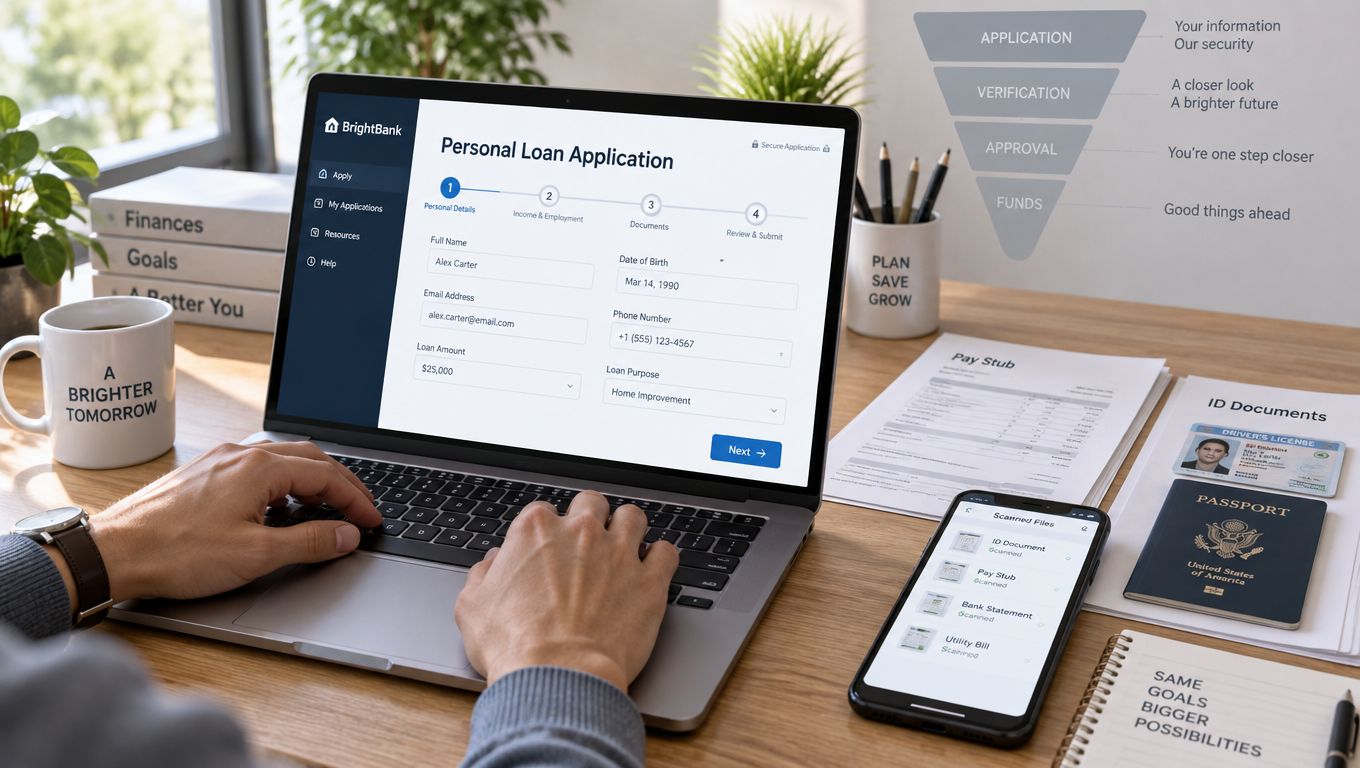
You're staring at an unexpected bill, checking your bank balance, and wondering whether an online lender can get you an answer before the problem gets worse. The form may take minutes, but the personal loan application process is more than a form. It's a filtering funnel that decides which applicants receive an offer, which receive worse terms, and which never reach funding.
The borrowers who fare best don't rush straight to the first lender. They prepare their documents, use prequalification strategically, compare offers before authorizing a full credit check, and treat every field as underwriting data. Here's how the process works, where applications fail, and what you should do at each stage.
Table of Contents
- What the Personal Loan Application Process Really Looks Like
- Eligibility and Documents to Gather First
- Submitting Your Online Application and Prequalifying
- Underwriting, Credit Checks, and Lender Decisioning
- Rate Shopping Without Hurting Your Credit
- Final Approval, Disclosures, and Funding
- Habits That Improve Your Approval Odds
What the Personal Loan Application Process Really Looks Like
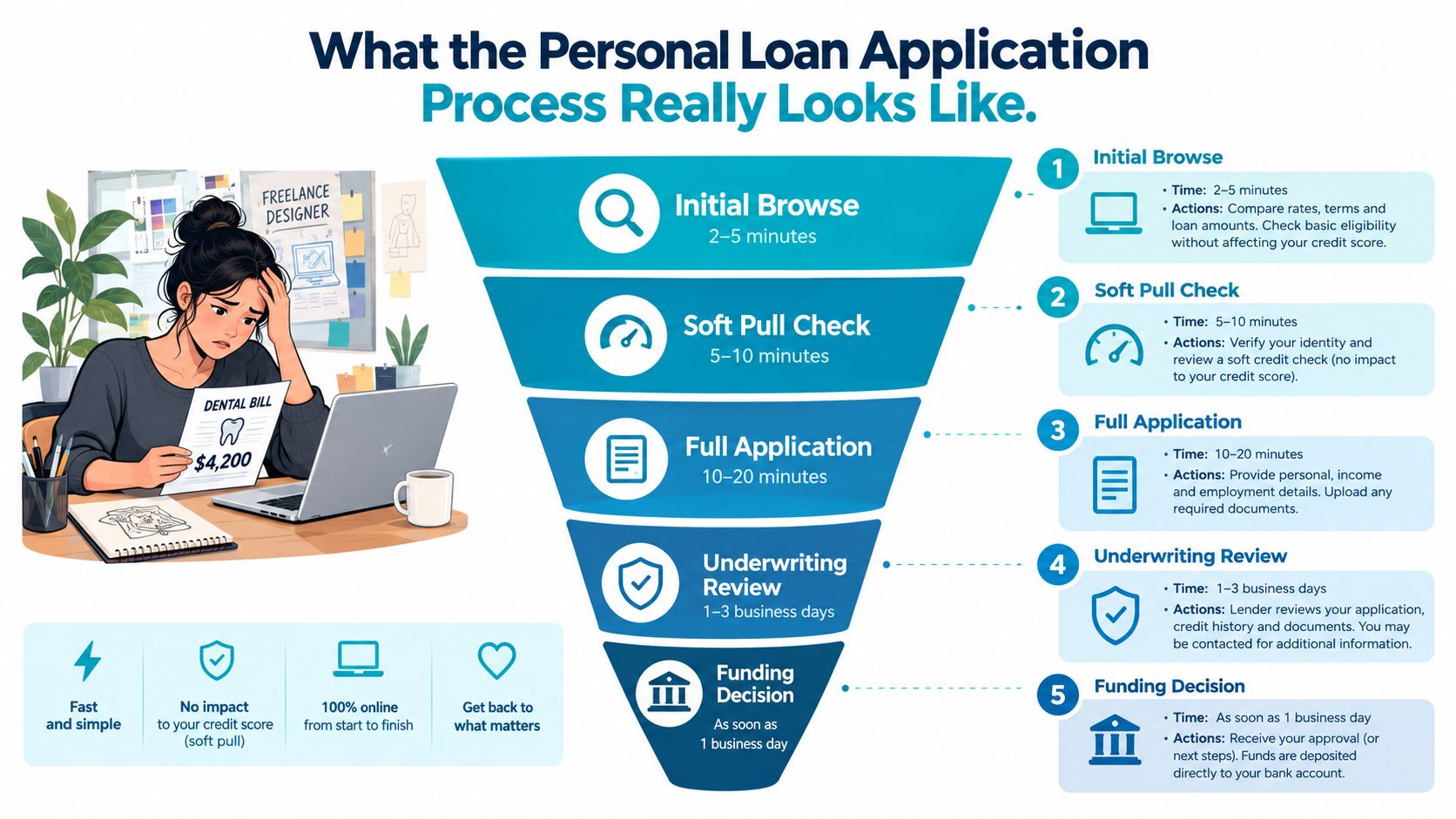
Maya is a freelance designer who wakes up to a $4,200 dental bill after her insurance coverage runs out. She searches for a personal loan during breakfast and sees promises of fast decisions and simple online applications. The advertised experience looks like this: enter a few details, choose an offer, and wait for the money.
The experience is a funnel. Maya first browses lenders and marketplaces. A soft-credit prequalification may screen her profile without affecting her score. If she selects an offer, the lender can request a hard credit inquiry, verify her income and identity, review her obligations, and run the application through underwriting. Every stage removes applicants who don't meet that lender's criteria.
Modern origination can now move from application and identity verification through credit evaluation, underwriting, disclosures, e-signature, and funding online. One industry source reports that applications once requiring a branch visit can be completed online in minutes, with an estimated average application-to-funding time of 4.2 hours online versus 2.3 days in branches. See the current overview of digital personal loan timing for that comparison.
The five filters that matter
- Initial browse: You compare lenders, loan purposes, estimated terms, eligibility rules, and fees.
- Soft-pull check: A lender estimates whether your profile fits its product range.
- Full application: You authorize a more complete review and provide information the lender can verify.
- Underwriting review: The lender checks income, debts, identity, employment, and repayment capacity.
- Funding decision: The lender approves, denies, counteroffers, or requests additional information.
This process won't bypass a thin credit file, erase recent delinquencies, or turn inconsistent income into verifiable income. It also won't protect you from accepting a loan you can't comfortably repay. Your advantage comes from knowing where the funnel narrows and preparing before you submit anything.
Eligibility and Documents to Gather First
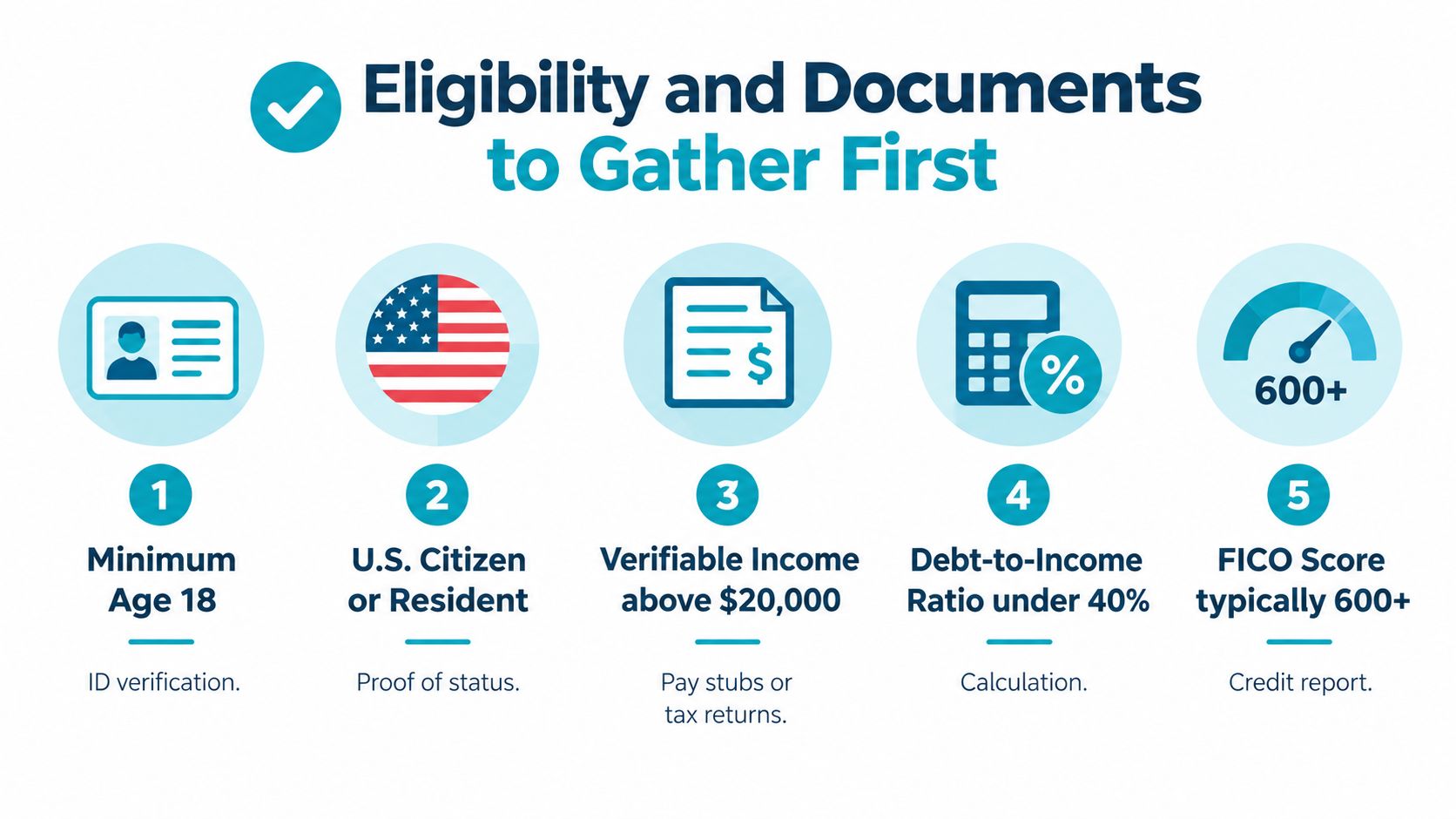
Start with the lender's baseline requirements, but don't assume a checklist guarantees approval. Lenders commonly look for legal identity, residence, income, employment, credit history, and enough repayment capacity to support the requested payment. Exact standards vary by lender, loan purpose, and borrower profile.
A practical preparation folder should contain the following:
- Identity: A current government-issued photo ID and your Social Security number.
- Income: Recent pay stubs, W-2s, 1099s, or other records that show how you earn money.
- Bank activity: Recent statements that support the income and cash flow reported on the application.
- Residence: A lease, utility bill, mortgage statement, or another document that confirms your address.
- Employment: Employer details, contact information, and any verification the lender requests.
Online applications commonly take about 30 to 45 minutes, and lenders may ask for additional verification before approval, according to consumer guidance on preparing a personal loan application. Reserve uninterrupted time. Starting on a phone while searching for documents usually leads to incomplete fields and avoidable errors.
Accuracy matters more than volume
A missing document can delay review. An inconsistent document can undermine the application. Watch for pay records that no longer reflect your current job, deposits that don't match the income you stated, an address that differs between the application and your credit files, or side income that has no supporting record.
Self-employed applicants should expect more scrutiny. Keep tax returns, business income records, and a current profit and loss statement ready. Don't estimate from memory when you can check the source document. Underwriters are comparing the story in your application with evidence from payroll, bank accounts, tax records, and credit reports.
Put everything in one secure folder on your phone or computer before you begin. Name files clearly, check that every page is legible, and keep the original documents available if a lender asks for clarification. For a fuller checklist, review this guide to personal loan eligibility requirements.
Submitting Your Online Application and Prequalifying
Prequalification is the safest place to start comparing lenders because it gives you an estimated offer before you commit to a full application. It isn't an approval. Treat it as a screening result that helps you decide whether a lender is worth further consideration.
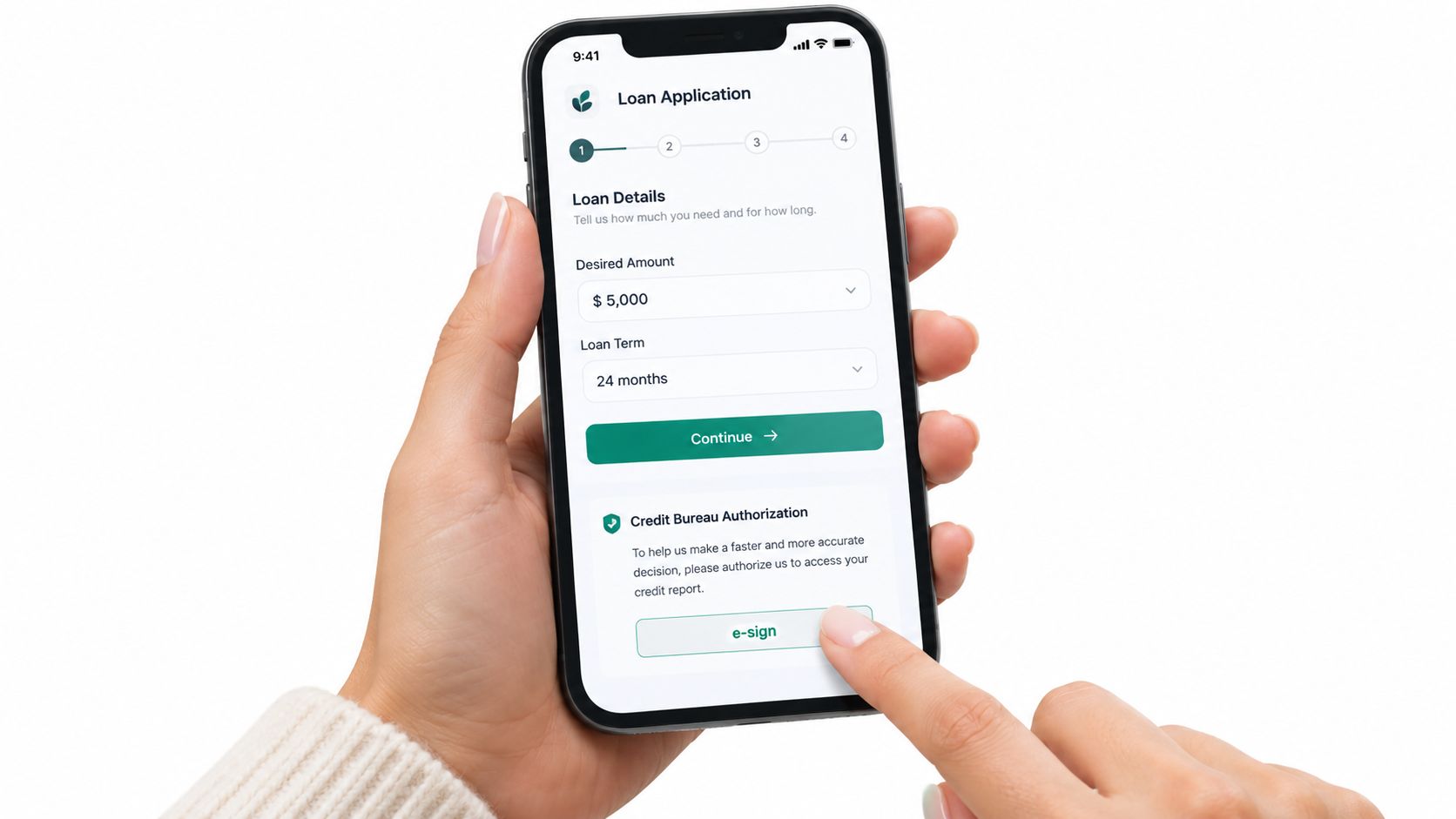
A typical mobile application asks you to:
- Choose the amount you want and a repayment term.
- Select the loan purpose, such as debt consolidation, medical expenses, or home improvement.
- Enter your name, address, phone number, email, and housing payment.
- Report gross monthly income and employment details.
- Provide your Social Security number and authorize the applicable credit check.
- Review the privacy and electronic-consent disclosures.
- Submit the request and wait for the prequalification result.
Enter the purpose accurately. Lenders use purpose categories within their product rules, and the category can affect which offers appear. Enter your housing payment carefully, too. A low or incorrect figure can trigger a verification question later and make your application look less reliable.
Read the offer screen like a comparison shopper
A prequalification result may show an estimated APR or rate range, projected payment, loan term, fees, and the amount you could receive after deductions. Save the offer screen or download the details. Lender portals don't always display the same information after you leave the page.
The result is conditional. The lender may change the terms after verifying income, checking the full credit profile, or reviewing the requested amount. Don't treat a fast response as a promise that funds are on the way. Treat it as permission to compare.
The best workflow is to finish your document preparation first, prequalify with multiple suitable lenders, and then compare the complete cost rather than the payment alone. A longer term can produce a smaller payment while increasing the total cost of borrowing. A lower advertised rate can also be offset by an origination fee.
Underwriting, Credit Checks, and Lender Decisioning
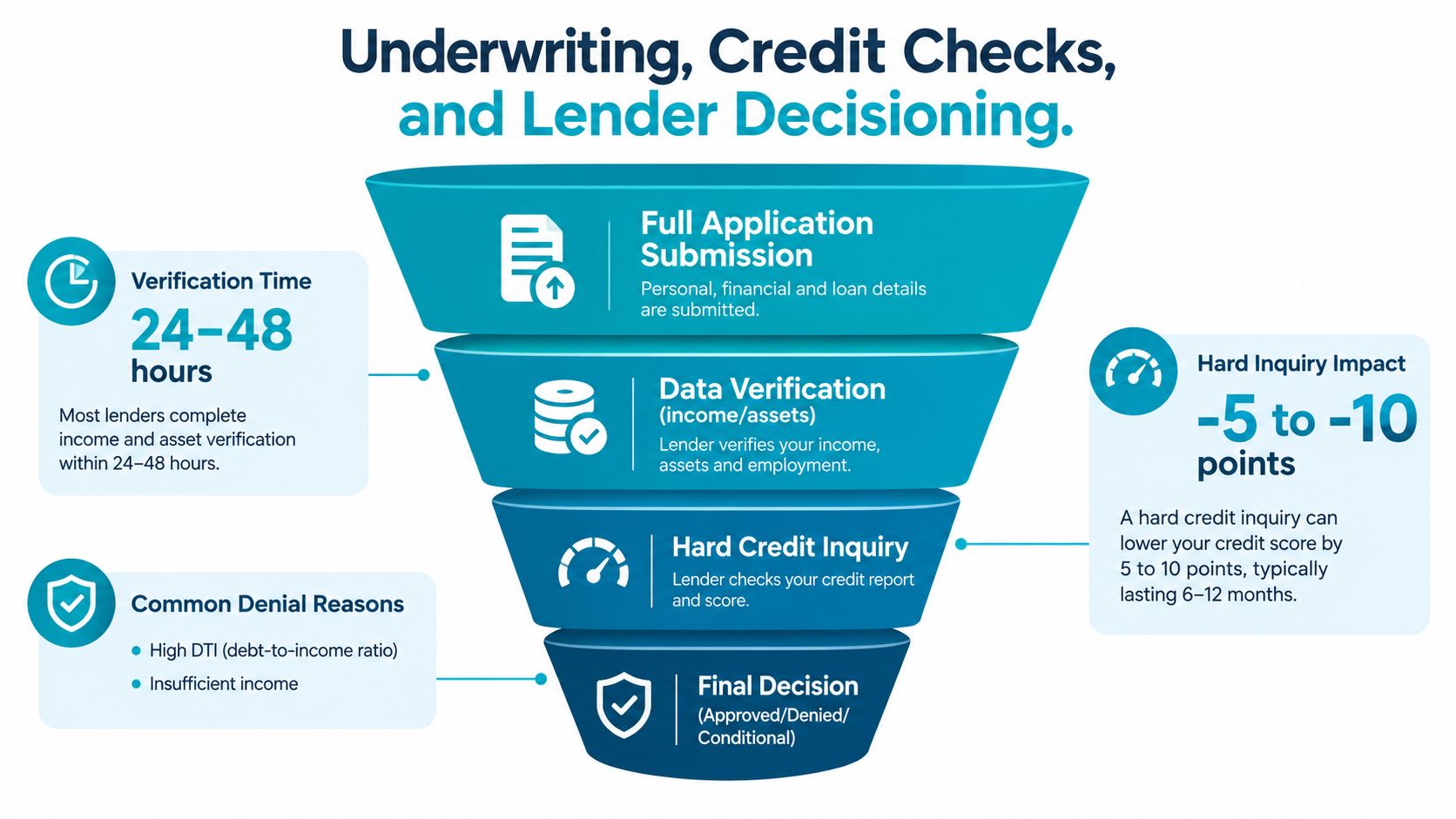
The full application is where the lender tests whether the information you supplied holds up. Underwriters may verify your income against pay records or bank data, confirm employment, check your listed debts, review recent credit activity, and assess whether the proposed payment fits your finances.
This is also where credit-sensitive differences become stark. A 2026 industry analysis reported an 81% approval chance for borrowers with excellent credit and a chance of less than 1% for borrowers with poor credit, while only 20.8% of people who attempted to prequalify successfully closed a loan in July 2026, according to the cited personal loan industry analysis. Prequalification identifies possible fit. Underwriting decides whether the lender is prepared to fund the risk.
Automatic review versus manual review
Many applications move through automated rules. A clean file with stable employment, consistent income, straightforward debts, and a credit profile that fits the lender's policy can receive a quick response.
Manual review becomes more likely when the file needs interpretation. Self-employed income, a recent job change, irregular deposits, a thin credit history, a recent delinquency, or conflicting addresses can all prompt follow-up questions. A manual review isn't an automatic denial, but it gives you less room for unexplained inconsistencies.
Respond to document requests quickly and send exactly what the lender asks for. Don't upload unrelated statements or create a new explanation that conflicts with the original application. If the lender asks why a deposit appears in your account, provide a clear, document-backed answer.
Practical rule: A conditional approval is a request to finish proving the file, not permission to start spending.
The lender may approve the requested amount, approve a smaller amount, offer a different rate or term, request a co-borrower, or deny the application. If denied, read the adverse action notice carefully. It can identify the main factor that prevented approval and help you avoid repeating the same application strategy.
For a clearer distinction between preliminary screening and a formal credit review, read this explanation of personal loan soft pulls.
Rate Shopping Without Hurting Your Credit
Prequalification and a full application serve different purposes. A soft inquiry used for prequalification generally doesn't affect your score. A full application can create a hard inquiry because the lender is evaluating your credit for a specific borrowing decision.
| Stage | Inquiry type | Score impact | Counted separately? |
|---|---|---|---|
| Initial browsing | None | No direct impact | Not applicable |
| Prequalification | Usually soft | Usually no score impact | Generally no |
| Full application | Hard | Can cause a temporary decrease | May be grouped with similar loan inquiries under applicable scoring rules |
| New credit account | Account review and hard inquiry may apply | Depends on the full credit profile | The new account can affect future scoring factors |
The practical answer is simple: prequalify first, then narrow your choices. Compare APR, origination fees, payment amount, term, funding conditions, and total repayment. Don't select an offer because its monthly payment is the lowest. That payment may reflect a longer repayment period.
FICO scoring models can group multiple hard inquiries for the same type of loan when you shop within the model's applicable rate-shopping window. The exact treatment depends on the scoring version and the inquiry type, so don't assume every credit inquiry receives the same protection. Credit-card applications and mortgage inquiries follow different rules.
A disciplined comparison workflow
Complete your prequalification requests close together while your income, debt balances, and requested amount are consistent. Save each result. Then choose only the lenders whose terms and requirements fit your situation for a full application.
Avoid opening unrelated revolving accounts while shopping. A new account can add an inquiry, change your available credit, alter utilization, and make your profile look different from the one a lender prequalified. Rate shopping should be a controlled comparison, not a burst of applications across every product on your screen.
Experian reported that hard inquiries tied to personal loan applications were 16% higher in 2025 than in 2024, alongside faster digital processing and same-day funding promotions, as described in its personal loan application research. That makes a soft-pull-first strategy more important, not less.
Final Approval, Disclosures, and Funding
Once underwriting clears the file, the lender presents formal disclosures and a loan agreement. This is the point where an estimated offer becomes a binding financial obligation. Slow down before you e-sign.
Check the APR, finance charge, total payments, payment schedule, loan amount, late-payment terms, and any prepayment language. Confirm the amount you'll receive. An origination fee may come out of the proceeds, so the deposited amount can be lower than the principal shown in the agreement.
The final terms can differ from the prequalification result. Your credit profile may have changed, the lender may have verified a different income amount, or the underwriting system may have placed you in another pricing tier. The term also matters. A longer term can reduce the scheduled payment while extending the period during which interest accrues.
Funding depends on clean details
After signing, the lender typically sends funds through electronic deposit or another stated method. Timing varies by lender, bank, cutoff time, verification status, weekends, and holidays. Read this guide to how long loans take to process before assuming that an approved application means money is already available.
If funding is delayed, check the routing and account numbers first. Then look for a pending verification request, an email asking for another document, or a weekend processing hold. Contact the lender through the official portal or phone number in the agreement, not through an unsolicited message.
Set up autopay only after confirming the payment amount and first due date. Ask whether autopay provides a rate discount and whether the discount requires a specific account. Your first payment usually follows the lender's schedule after funding, so don't assume it's due on the day the money arrives.
Habits That Improve Your Approval Odds
Approval odds improve before you open the application. The most effective habit is a credit and document pre-check. Review your credit reports, look for incorrect balances or accounts, dispute genuine errors, and make sure your name and address are consistent across your records.
Next, make your income easy to verify. Gather recent pay records, tax documents where relevant, and bank statements that support the deposits you report. If your income varies, don't choose the highest month and call it normal income. Use a defensible figure and be ready to explain legitimate fluctuations.
Prioritize the preparation work
- Fix reporting errors first. An incorrect delinquency or balance can affect a lender's view of your risk. Give disputes time to process before applying if the issue is material.
- Reduce expensive revolving debt. Lower balances can improve your monthly cash flow and make your debt picture easier to defend.
- Stabilize the application facts. Use the same legal name, address, employment status, and income explanation across every lender request.
- Avoid unnecessary new credit. New cards and auto loans can add inquiries, change utilization, and make your profile less stable during review.
- Prepare explanations with evidence. A large deposit, recent job transition, or self-employment income shouldn't surprise the underwriter.
- Choose the right lender category. A mainstream lender may prioritize conventional credit history, while another lender may consider cash-flow information or alternative bureau data.
The approval picture is segmented. Bankrate reported that 11% of personal-loan applicants were rejected during the prior 12 months for credit score, credit history, or income reasons, reinforcing why prequalification and application accuracy matter. Don't submit a formal application because a lender advertises speed.
Borrowers with thin files, irregular income, or poor credit should also ask how the lender evaluates cash flow. Market coverage describes fintech lenders using permissioned transaction data to verify income and account activity, rather than relying only on traditional statements or phone verification, as discussed in this overview of personal loan market developments. Read the lender's disclosures before granting that access.
A personal loan is useful only when the payment fits your budget after rent, utilities, food, insurance, and existing debt. Prepare the file, compare conditional offers, and reject any agreement whose total cost or payment creates a new emergency.
NextStopLoans offers a secure online loan request form that can route one request to a network of independent lenders, including lenders that may consider different credit profiles. Visit NextStopLoans to review your options, compare any terms you receive, and decide whether an offer fits your repayment plan.