
Personal Loan Soft Pull: What It Is and Why It Matters
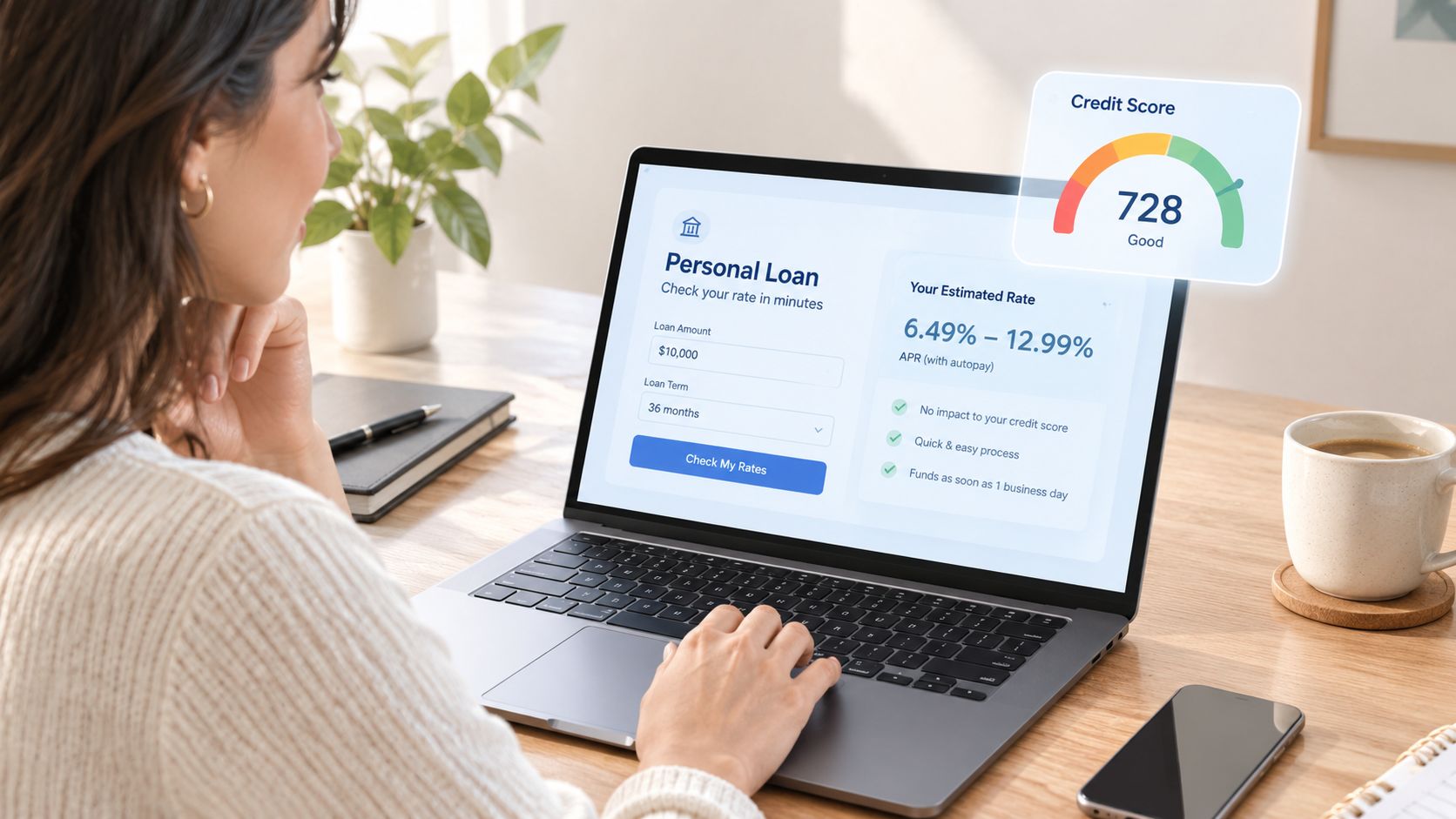
You're on your laptop, entering your income and borrowing needs into a loan form. Before you submit, one question nags at you: Will checking my rate hurt my credit score? For most personal-loan prequalification forms, the answer is no, because the lender uses a soft pull, also called a soft inquiry, rather than the hard inquiry associated with a full application.
That distinction makes rate shopping less intimidating, but it doesn't make every prequalified offer a promise. A soft pull can help you compare possible lenders without lowering your score, while the final approval process may still change the rate, amount, fees, or documentation requirements. The important question isn't only whether a personal loan soft pull hurts your score. It's also what lenders can see, what marketplaces do with one request, and what can happen before funding.
Table of Contents
- What a Personal Loan Soft Pull Actually Means
- Soft Pull vs Hard Pull and Why the Difference Matters
- How Lenders Use Soft Pulls to Prequalify Borrowers
- How Marketplaces Route Your Request Through Multiple Lenders
- Why a Soft-Pull Offer Is Not the Same as Final Approval
- Reading a Prequalification Offer Before You Accept
- Smart Rate Shopping Habits That Protect Your Credit
What a Personal Loan Soft Pull Actually Means
You submit your information to compare personal-loan rates, and a lender checks your credit file before you decide whether to apply. That preliminary review is a soft pull. It gives the lender enough information for an initial estimate without automatically turning your rate request into a formal application.
The Consumer Financial Protection Bureau's explanation of credit inquiries describes soft inquiries as credit-file reviews used for prescreening, employment screening, and checking your own file. These inquiries don't affect credit scores. They appear on your own credit report, while outside lenders generally do not see them when reviewing your file.
What the lender may review
A personal-loan soft pull works like a quick map of your credit profile. Depending on the lender and the bureau data available, it may show:
- Open accounts: Existing credit accounts and how long they have been open.
- Balances and debt patterns: Outstanding balances and current credit obligations.
- Score information: A credit score or approximate score range for initial screening.
- Payment history: Recent delinquencies or other payment problems.
- Credit activity: The overall pattern of your file, rather than one score alone.
Your application answers fill in information the credit report may not establish. You might provide income, housing costs, employment details, and the loan's purpose. A marketplace may send one request to several potential lenders, with each lender making its own soft review. Multiple soft checks in that process still function as preliminary checks, not as multiple hard applications.
What it doesn't tell the lender
A soft pull is not a complete underwriting file. It may not verify your income, confirm every debt, or prove that the information you entered is current and accurate. The lender may still request documents, ask follow-up questions, and review your credit formally before deciding.
Prequalification therefore works more like an estimate than a reserved loan. The rate, amount, fees, or approval could change after the lender verifies your details and completes its full review. A lender may also decide not to approve the application even when the initial estimate looked available.
You can generally check your own credit file repeatedly without lowering your score. Experian explains that soft inquiries can remain on a report for up to two years, but they are not treated as negative credit events and do not change the score. Use the soft pull as an early filter for comparing options, not as proof that the loan will be approved or affordable.
Soft Pull vs Hard Pull and Why the Difference Matters
The easiest way to remember the difference is this: a soft pull is usually a preview, while a hard pull is connected to a formal borrowing decision. A lender may use a soft inquiry when you ask to see potential rates. Once you authorize a full personal-loan application, the lender may use a hard inquiry to evaluate the request.
| Attribute | Soft Pull | Hard Pull |
|---|---|---|
| Typical purpose | Prequalification, prescreening, account review, employment screening, or checking your own file | Formal application for a loan or other credit |
| Who usually initiates it | You, an existing creditor, a lender offering prequalification, or another authorized party | You, when you authorize a lender to review credit for a specific application |
| Visibility | Generally visible only to you on the report checked | Visible on reports reviewed by lenders |
| Score impact | Does not affect credit scores | May affect scoring and can influence a lender's decision |
| Report duration | Experian says it can remain for up to two years | Experian says hard inquiries can remain for up to two years |
| Connection to approval | Preliminary screening or estimate | Formal credit review tied to an application |
The Experian guide to soft pulls confirms the central difference: soft inquiries don't affect credit scores, even when a borrower performs multiple prequalification checks. Experian also distinguishes them from hard inquiries, which are tied to formal applications and may influence scoring models.
Why rate-shopping rules still matter
A hard pull isn't automatically a disaster. FICO describes a rate-shopping treatment in which multiple hard inquiries for the same type of loan within a 14- to 45-day window are generally counted as one inquiry, depending on the scoring model. That protection exists so borrowers can compare certain loan offers without being penalized as though every quote represented a separate borrowing decision.
Still, you shouldn't assume every inquiry will receive identical treatment. The loan type, timing, bureau, and scoring model can matter. A borrower who knows whether a form uses a soft or hard pull can avoid authorizing unnecessary formal applications and can reserve hard inquiries for lenders whose terms fit the budget.
Practical rule: Before entering sensitive information, look for clear language stating whether prequalification uses a soft inquiry and when a hard inquiry could occur.
How Lenders Use Soft Pulls to Prequalify Borrowers
Prequalification usually follows a simple sequence, although each lender's process differs. The borrower provides enough information for an initial screen, the lender reviews available credit data, and an internal model estimates whether the request fits the lender's criteria.

The initial request
You'll typically enter personal and financial details such as your identity, income, housing situation, requested amount, and loan purpose. The information helps the lender understand the request before it decides whether a full application makes sense.
Next, the lender runs a soft inquiry. It may review a score band, payment patterns, existing balances, and other available credit-file information. It may also combine that information with income signals from the form.
The lender's internal estimate
The lender's scoring system uses the available information to estimate risk. It may decide that the request doesn't fit its criteria, or it may produce a tentative offer showing a possible loan amount, rate range, repayment term, or estimated payment.
That response can arrive quickly online, sometimes within seconds or minutes, but speed doesn't make it final. The lender hasn't necessarily verified every statement or completed the deeper review required before funding.
The offer stage
A prequalified offer is best understood as an invitation to consider the next step. You can compare it with other possibilities, review the fees, and decide whether the terms are worth authorizing a full application.
Borrowers with limited or damaged credit may also encounter different screening paths. For a plain-language comparison of credit situations, see this guide to no credit versus bad credit. The key point is that a soft pull helps a lender make an early estimate. It doesn't create a binding loan contract.
How Marketplaces Route Your Request Through Multiple Lenders
You enter your information once, yet several independent lenders may review the request. A marketplace collects the form, then uses details such as the requested amount and loan purpose to identify possible lender matches. That can spare you from repeating the same application on every lender's website.

What happens after one submission
The platform first evaluates the information against its partner criteria. It may then send the request to several participating lenders, each of which can conduct its own soft credit check for prequalification. The exact sequence depends on the marketplace, the lenders involved, and the consent language presented before submission.
The platform and each lender may work from different parts of the file. The marketplace manages the intake and routing, while a lender reviews the information available to it under its own screening rules. The platform is matching and forwarding requests, not approving the loan or setting the final terms.
A single request can therefore produce several early responses without creating several separate full applications. Those responses may differ because lenders use different eligibility models, product rules, and available information.
What appears on your credit file
Several lender reviews do not automatically mean several visible hard inquiries. Soft inquiries are generally treated differently from hard inquiries, and outside lenders typically cannot use soft inquiries as a record of your credit-shopping activity. Still, the way an inquiry is labeled or displayed can vary by credit bureau and reporting practice.
Ask before submitting: which company will conduct the inquiry, whether it will be soft, and whether the platform may share your request with multiple partners. The application process explanation can clarify the platform's role, but your own consent notice controls the specific request.
Marketplace shopping versus direct shopping
Direct shopping means entering your details separately with each lender. A marketplace can reduce repeated form-filling, but it also creates a wider information path. Multiple partners may receive the request, and some may contact you according to the permissions you accepted.
Review the lender names, estimated rates, repayment terms, fees, and any hard-pull disclosure before continuing. Treat the marketplace as a routing service that presents possible matches, not as the lender making a final promise. Prequalification helps you compare likely options. It does not make every routed response a guaranteed approval.
Why a Soft-Pull Offer Is Not the Same as Final Approval
A prequalified offer is an estimate based on an early snapshot. It isn't a guarantee that you'll receive the displayed amount, rate, or repayment terms. Upstart's explanation of personal-loan prequalification makes the same practical distinction, prequalification can indicate potential eligibility, but final approval may require a full application and hard inquiry.
The deeper review can change the result
After you proceed, the lender may verify income, examine documents, and review credit information more closely. The formal review can uncover details that weren't available or weren't confirmed during the soft-pull stage, such as an obligation omitted from the form or a recent account change.
Your financial position can also change between the estimate and the final decision. A new debt, changed income, missed payment, or altered debt-to-income picture may affect how the lender views the request. Even if nothing changed, the lender's full review may interpret the file differently from the preliminary model.
Different borrowers can receive different outcomes
A soft-pull offer doesn't mean every borrower is evaluated on one universal scale. TransUnion described the U.S. consumer credit market as following a K-shaped pattern, with prime borrowers receiving larger personal loans while subprime borrowers continue participating with lower loan amounts. That context helps explain why a lender may offer different amounts or pricing to borrowers with different credit profiles.
The final terms may shift in several directions:
- Loan amount: The approved amount may be lower than the preliminary ceiling.
- Pricing: The final rate may differ after verification and full underwriting.
- Repayment term: The lender may present different available terms.
- Documentation: Additional proof of income, identity, or obligations may be required.
- Approval status: A preliminary match can become a decline.
Read “prequalified,” “estimated,” and “subject to verification” as conditions, not promises. Don't build a budget around money that hasn't received final approval.
Reading a Prequalification Offer Before You Accept
A credible offer should give you enough information to judge affordability before you authorize a hard inquiry. Don't focus only on the advertised rate. Look for the APR range, whether the rate is fixed or variable, the possible loan amount, estimated payment, repayment term, and any origination fee.
The NextStopLoans rates and fees information is one example of the disclosure material borrowers should review when comparing online loan options. The specific lender's terms still control, so read the lender's own agreement rather than relying on a marketplace summary.
Use the fine print as a decision tool
Pay attention to language explaining when a hard pull occurs. A form that clearly says “soft inquiry for prequalification” but separately describes a hard inquiry after full application gives you a clearer choice than a form that blurs both steps.
Be cautious if the offer has:
- A vague rate range: You can't compare affordability if the pricing information is too broad to interpret.
- Missing fee details: An advertised payment may not reflect origination or other lender charges.
- Heavy conditional language: Asterisks may hide verification requirements or eligibility limits.
- Pressure to act immediately: Urgency can push you into accepting terms before comparison.
Check the lender's identity, licensing information where applicable, privacy disclosures, and borrower feedback. Compare at least one competing offer before moving from prequalification to a full application. A soft pull gives you room to evaluate. Use that room.
Smart Rate Shopping Habits That Protect Your Credit
Good rate shopping starts before you submit a form. Confirm that the lender or marketplace states exactly what type of inquiry it uses, what information it shares, and when a hard pull may occur.

Use this checklist:
- Confirm the disclosure: Verify that prequalification uses a soft inquiry before you enter sensitive information.
- Compare the full cost: Review APR ranges, repayment terms, estimated payments, and fees rather than focusing on a headline rate.
- Delay the hard pull: Don't submit a full application until one offer appears compatible with your budget and borrowing purpose.
- Keep information consistent: Use accurate income, employment, housing, and debt details so the estimate reflects your actual situation.
- Avoid unnecessary fees: Be wary of lenders charging an application or prequalification fee, and read the conditions before continuing.
- Record each offer: Save the lender name, rate range, amount, term, fees, payment estimate, and requirements.
The FICO rate-shopping framework can help borrowers compare certain same-type credit offers within a 14- to 45-day window, when multiple hard inquiries are generally treated as one inquiry depending on the scoring model. That doesn't mean you should authorize every application. It means you can plan a focused comparison instead of scattering applications over an extended period.
Keep your shopping organized. Reusing the same email address and Social Security number across many sites in one day may trigger fraud-prevention reviews, even when the inquiries themselves are soft.
Monitor your reports and scores after submitting requests. If an inquiry appears as hard when you expected a soft check, contact the lender or marketplace and review the consent record. Soft-pull shopping is a sensible first pass, but savings come from comparing final, fully underwritten terms before signing.
NextStopLoans lets you submit one online loan request for consideration by independent lenders in its network, while the participating lenders handle credit reviews, decisions, and funding. Visit NextStopLoans to review your options, read the disclosures, and decide whether a lender's final terms fit your budget before accepting.