
How Long Do Loans Take to Process a Borrower Timeline
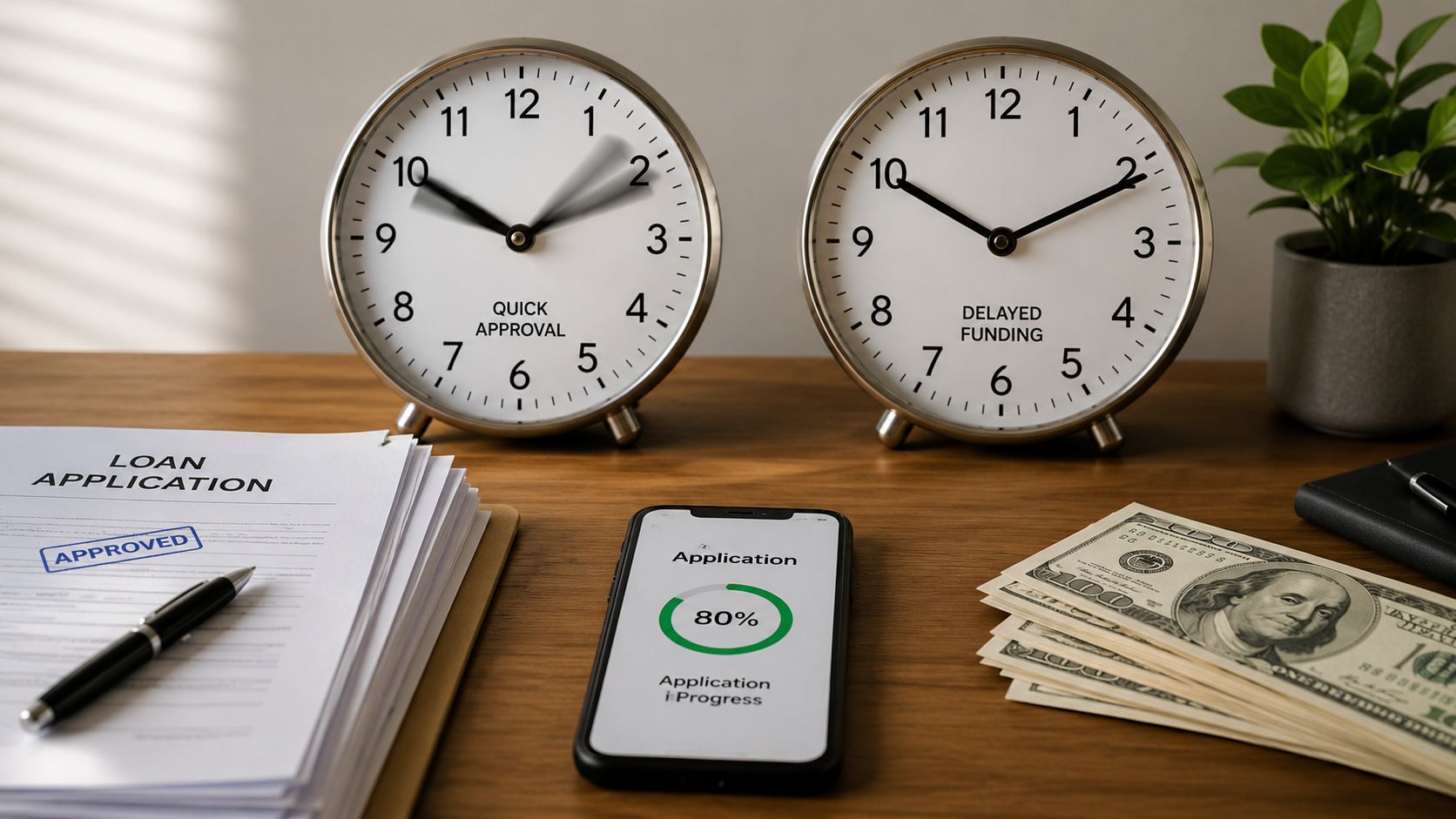
A loan decision can come in minutes, but funding usually follows a separate clock, with ACH-based disbursement typically taking 1 to 3 business days. For a federally regulated U.S. mortgage, the median time from application to closing is 44 calendar days, although the first Loan Estimate arrives in a median of 1 calendar day.
You've submitted the application because a car repair, medical copay, rent payment, or payroll gap can't wait until next month. The lender's screen says “application received,” and now one question takes over: When will the money be available?
The answer depends on the loan type, the documentation required, the lender's review process, and the payment network used to send the funds. A payday loan, installment loan, title loan, personal loan, mortgage, and small business loan can all have very different timelines.
The most useful way to understand how long loans take to process is to separate the experience into two stages. First comes the lender's decision. Then comes funding, when approved money moves through the banking system and reaches your account.
Table of Contents
- The Moment You Need Cash and Want to Know What's Coming
- Understanding the Two Clocks Behind Every Loan Timeline
- Typical Processing Times by Loan Type
- Why Mortgages and Small Business Loans Take Longer
- The Hidden Delay Between Approval and Funding
- What Speeds Up or Slows Down Your Application
- How a Marketplace Submission Changes the Timeline
- Setting Realistic Expectations and Quick Answers
The Moment You Need Cash and Want to Know What's Coming
Suppose your car won't start on a Monday morning. The repair shop gives you an estimate, your next paycheck is still several days away, and you complete an online loan request during your lunch break. You may receive an eligibility response quickly, but that response doesn't necessarily mean you can pay the mechanic immediately.
That distinction matters because borrowers often use “processing” to describe several different events:
- Application review: The lender checks identity, income, banking details, credit information, and other eligibility factors.
- Approval: The lender decides whether to offer credit and provides terms for you to review.
- Loan acceptance: You agree to the lender's terms and complete any required electronic signatures.
- Funding: The lender sends the money through a bank transfer, debit card, check, or another payment method.
- Account availability: Your bank makes the deposited funds available for spending.
A lender might finish the decision stage while the funding stage is still waiting on bank processing. That's why a message saying “approved” should be treated as a decision update, not a promise that cash is already available.
Four loan types borrowers commonly compare
Payday loans are designed around short-term needs between paychecks. The decision may be rapid, but repayment generally starts quickly. Consumer guidance from the California Department of Financial Protection and Innovation explains that payday loans are typically due in 2 to 4 weeks or by the borrower's next pay date.
Installment loans spread repayment across a fixed schedule determined by the lender. The application process can be efficient, although identity checks, bank validation, or manual review can extend the timeline.
Title loans use vehicle equity as collateral. The lender may need to verify ownership, lien status, vehicle details, and other documents before releasing funds. Borrowers comparing this option can review an explanation of how online title loans work.
Personal loans can be offered by banks, credit unions, or online lenders. Some decisions are highly automated, while others require income and employment verification before the lender can finalize the offer.
The practical question isn't just “How fast can I be approved?” It's “What must happen after approval before I can use the money?”
Understanding the Two Clocks Behind Every Loan Timeline
Every loan application has a decision clock and a funding clock.
The decision clock measures how long the lender takes to say yes, say no, or request more information. A consumer-loan application may produce a decision in minutes. A mortgage or complex business application can require several rounds of review because the lender must verify more documents and assess collateral or repayment capacity.
The funding clock starts after approval and acceptance. It measures how long it takes for the lender to originate the payment, move it through the relevant settlement network, and have your bank credit the account.

Why approval and available cash aren't the same
ACH transfers usually move in batches rather than continuously. The Federal Reserve's ACH overview explains that ACH-based funding and repayments typically settle in 1 to 3 business days. Same-day ACH can shorten that window to hours when the lender submits the transaction before its cutoff, but a missed cutoff can push settlement into the next business day.
| Clock | What it measures | What can interrupt it |
|---|---|---|
| Decision clock | The lender's eligibility and underwriting review | Missing documents, identity mismatches, or manual risk checks |
| Funding clock | The movement of approved money into your account | ACH batching, weekends, holidays, bank posting rules, or verification holds |
For example, a payday lender might make a decision in minutes, while the deposit still depends on the lender's submission time and your bank's processing. A personal loan may receive a decision within hours, yet the funds can remain unavailable until the transfer completes.
Practical rule: Treat an approval notice as permission to proceed, not as proof that the money is spendable.
This two-clock model prevents the most common timeline mistake. Instead of asking for one vague processing estimate, ask the lender two separate questions: When will you decide, and when will the funds be available after I accept?
Typical Processing Times by Loan Type
A borrower may see an approval notice before any money is available. Loan type affects both clocks because lenders ask different questions and send funds through different settlement rails.
| Loan Type | Decision Time | Funding Time | Settlement Method | Best For |
|---|---|---|---|---|
| Payday loan | Often minutes | Same day or next business day, depending on lender and bank processing | ACH or another lender-selected method | A short-term gap before the next paycheck |
| Personal installment loan | Minutes to hours for automated applications, longer if manually reviewed | Commonly 1 to 3 business days when ACH is used | Usually ACH | A defined expense repaid through scheduled installments |
| Title loan | Hours or longer after vehicle and lien verification | After collateral checks, plus bank transfer time | ACH, check, or lender-selected method | Borrowers using eligible vehicle equity as collateral |
| Unsecured personal loan | Same day to several days | Same day to 5 business days, depending on lender and bank rails | ACH, wire, check, or another method | Larger planned expenses, consolidation, or major purchases |
Personal-loan approval and funding ranges vary by lender and bank transfer method, as explained in independent coverage of personal-loan timelines. Do not add the two ranges automatically. A lender can decide quickly, then need more time to verify information and start the transfer.
What the borrower experiences
A payday loan can appear fastest because its application and decision may occur in one online session. The repayment deadline arrives much sooner than it does for many other loan products. The California consumer advisory on payday lending says repayment is typically due within 2 to 4 weeks or by the next pay date. Fast funding therefore comes with immediate repayment pressure.
Installment and unsecured personal loans usually involve more checks. Bank-account validation, income confirmation, or inconsistent application details can move a request from automated review to manual review, adding time before the lender sends money.
Title loans add a collateral checkpoint. A borrower may submit the application online, but the lender still needs to verify the vehicle and lien information. Borrowers comparing this process with online title loans and their application steps should ask which documents must be reviewed before funding begins.
The practical comparison is simple: payday loans often shorten the decision clock, personal loans may require broader verification, and title loans depend on collateral review. Ask the lender when it expects to decide and when funds should be available, because those are separate milestones.
Why Mortgages and Small Business Loans Take Longer
A mortgage file follows the property as closely as it follows the borrower. The lender reviews income, assets, debts, property value, title information, insurance, and required disclosures. Each item is another checkpoint, much like inspecting both the driver and the vehicle before approving a long trip.
For federally regulated U.S. mortgages, the Consumer Financial Protection Bureau's mortgage study found a median of 44 calendar days from application to closing. It also found a median of 1 calendar day from application to the first Loan Estimate, although the TRID rule gives lenders 3 business days to deliver it. An early disclosure is therefore a sign that the file has started, not proof that the loan is ready to close.
The study reported that 10% of mortgages took more than about 75 days from application to closing. Missing documents, appraisal questions, income changes, and compliance exceptions can add review cycles. The decision clock stretches when any one of those pieces needs clarification.
| Stage | Mortgage | Small Business |
|---|---|---|
| Initial review | Income, assets, debts, property, and application details | Business identity, revenue, bank activity, and ownership |
| Verification | Employment, tax records, assets, appraisal, title, and insurance | Bank statements, tax returns, financial statements, collateral, and repayment capacity |
| Underwriting | Reviews borrower and property risk | Reviews business cash flow, guarantors, collateral, and loan purpose |
| Final approval and closing | Conditions must be cleared before closing documents are finalized | Approval terms, documentation, collateral, and closing requirements must be completed |
Small business loans grow slower to process as the amount and structure become more complicated. The FDIC's 2024 Small Business Lending Survey found that more than three-quarters of banks can approve small and simple loans in a week or less, while about three-quarters can approve a typical small business loan in two weeks or less. Very large or complex loans can take 4 to 6 weeks to approve.
A business loan may require a lender to piece together several years of financial evidence, confirm ownership, assess collateral, and test whether projected cash flow can support repayment. The extra time reflects the depth of that review, not just slower software. After approval, the funding rail and closing requirements still determine when the borrower can use the money.
The Hidden Delay Between Approval and Funding
The most confusing wait can begin after a lender says yes. Approval answers whether the lender will extend credit. Funding follows a separate clock: the lender must send the money through a payment network, and the receiving bank must post it to the borrower's account.
ACH transfers often add time because they process in batches. As noted earlier in the Federal Reserve's explanation of ACH processing, typical ACH settlement takes 1 to 3 business days. Same-day ACH may settle within hours when the lender submits the payment before the applicable cutoff, but that option depends on the lender's process and timing.
Consider an installment loan approved late on a Friday. The lender may still need to finish a final check, confirm the account, and submit the ACH file. If the submission misses the processing window, it may wait until the next business day. The weekend can then delay when the receiving bank makes the funds available.
The steps between approval and use
- The borrower accepts the offer. Electronic signatures and confirmation of bank-account details may be required.
- The lender completes final checks. An identity mismatch, failed account validation, or higher-risk signal can send the application to manual review.
- The lender originates the payment. The funds enter ACH or another transfer rail.
- The banks settle and post the funds. The transfer method and receiving institution affect when the money becomes available.
The transfer rail creates the practical difference between approval and usable cash. A wire may arrive faster in some arrangements, while prepaid debit-card programs or instant-payout partnerships may also offer quicker access. These options are not universal and can have separate eligibility rules, costs, or limits.
A fast credit decision removes one delay. It does not remove the banking steps that move the money.
Ask the lender for a funding estimate in practical terms: Will the money be sent today, or on the next business day? Which transfer method will be used? When is the lender's cutoff? These answers reveal the second clock, which a simple approval estimate leaves out.
What Speeds Up or Slows Down Your Application
Some processing conditions are outside your control, but your preparation can prevent avoidable pauses. Lenders can review a complete, consistent application more easily than one that requires repeated follow-up.
Prepare before you apply
- Check your credit files: Use AnnualCreditReport.com to review your reports and identify identity or account information that may need explanation.
- Gather bank records: Keep recent bank statements available if the lender requests proof of account ownership, deposits, or cash flow.
- Confirm employment details: Make sure the employer name, phone number, and income information on the application are current.
- Review consent requests: Understand whether the lender plans a soft inquiry, a hard inquiry, or another form of verification before you authorize it.
A stale pay stub or an employer contact that no longer works can turn a straightforward review into a manual task. The same is true when the name, address, birth date, or bank-account information on the application doesn't match the lender's records.
Timing matters too
Applying during a weekday can make it easier for staff to respond to questions and complete manual checks. Direct deposit is generally more efficient than waiting for a paper check, but it still depends on the lender's transfer process and your bank's posting schedule.
Recent overdrafts, undisclosed debts, or unusual account activity may also lead to additional questions. That doesn't automatically determine the outcome, but it can lengthen the review.
Before submitting an online request, read the lender's funding language rather than relying only on phrases such as “instant approval.” NextStopLoans describes a process in which a request is routed to participating lenders, lender decisions and terms are handled by those lenders, and direct-deposit timing is subject to lender processes. Borrowers can also review the online advance application process before deciding whether the workflow fits their needs.
Before you submit: Check every name, account number, income figure, and document date. Small inconsistencies can create a much longer wait.
How a Marketplace Submission Changes the Timeline
A marketplace and a direct lender occupy different places in the process. A marketplace generally collects the borrower's request and routes it to participating lenders. The lenders then decide whether to offer credit, set the terms, request additional documentation, and handle funding.
That structure can reduce the need for separate applications, but it also adds a handoff. After submission, the request may be matched with a lender whose own system performs another eligibility review. The lender may ask for pay stubs, bank statements, employment information, or identity confirmation before making a final decision.
The routing step
The timeline can include several distinct activities:
- Intake: The marketplace receives the borrower's information and consent.
- Matching: The request is evaluated against participating lender criteria.
- Lender review: A receiving lender applies its own underwriting rules.
- Verification: The lender may request documents or confirm banking information.
- Funding: Once the borrower accepts the terms, the lender sends funds through its chosen payment rail.
A direct application to a bank or credit union usually places the borrower in one institution's queue. A marketplace request can expose the borrower to more than one potential lender, but each lender controls its own decision and funding timeline.
That distinction affects expectations. A marketplace isn't the party that approves the loan, sets the interest rate, determines fees, or guarantees when funds will arrive. Those responsibilities belong to the lender that presents the offer.
When the extra step may make sense
A marketplace can be useful when a borrower wants to submit one request rather than complete multiple lender forms. It may also help someone who isn't sure which lender criteria fit their situation. The tradeoff is that the borrower should expect additional communications and should read each lender's terms carefully before accepting.
Going direct may be more suitable when you already have a relationship with a bank or credit union, know the product you want, and can meet that institution's requirements. A marketplace may be more practical when comparing possible lender responses matters more than keeping the application inside one institution.
Setting Realistic Expectations and Quick Answers
Suppose a bill is due tomorrow and a lender advertises fast approval. Two different clocks matter: the time needed to decide whether to lend, and the time needed to move the money into your account. A lender may finish the first clock quickly while verification, bank processing, or the selected payment rail keeps the second one running.
| Loan Type | Typical Decision Time | Typical Funding Time | Best Case Scenario |
|---|---|---|---|
| Payday loan | Minutes in an automated process | Same day or next business day, subject to lender and bank processing | Approval and lender payment submission happen promptly |
| Installment loan | Minutes to hours, with longer review if flagged | 1 to 3 business days when ACH is used | Complete application, successful verification, and timely ACH submission |
| Personal loan | Same day to several days | Same day to 5 business days | The lender approves quickly and uses a fast available payment method |
| Title loan | Hours or longer after collateral checks | After lien and vehicle verification, then transfer time | Ownership documents are complete and collateral review raises no questions |
| Mortgage | Early disclosure can arrive quickly, but closing is much longer | At closing and according to the transaction schedule | Property, income, title, appraisal, and compliance conditions are cleared |
| Small business loan | A week or less for many small, simple loans, and two weeks or less for many typical loans | Depends on closing and the lender's disbursement process | Documentation, underwriting, and closing requirements are complete |
Mortgage and small-business timelines are longer because their decision process includes more records, checks, and closing conditions, as noted earlier. The personal-loan funding range follows the personal-loan timeline coverage cited earlier. A short decision time does not guarantee immediate access to cash.
Three avoidable timeline problems
- Late-week submission: A Friday request can meet weekend and bank-processing delays, especially when ACH funding is involved.
- Incomplete income records: Missing or outdated documents can send the application back for review.
- Ignoring product-specific cancellation rules: Certain refinance and home-equity transactions can include a right of rescission. That requirement affects when the transaction becomes final and when funds are released.
Common questions borrowers ask
Is same-day funding realistic? Sometimes. The lender must complete underwriting, risk checks, and payment initiation in time, and the payment method must support rapid availability. ACH funding often takes longer because the money must pass through bank settlement before it posts.
What usually causes the longest delay? Missing or inconsistent documents, manual identity checks, collateral questions, and payment submissions made after a cutoff are common causes. Each issue can move the application from an automated path to additional review.
Does refinancing follow the same calendar as a new home purchase? No. A refinance has its own disclosure, verification, closing, and possible rescission requirements. A purchase also depends on the property transaction and the actions of the closing parties.
What happens if the funding date falls on a holiday? Bank settlement and account posting may move to the next business day. Ask whether the lender's date means the payment was “sent” or the money will be “available in your account.”
For an urgent expense, compare total cost, repayment schedule, and the actual funding method, not only the advertised approval speed. This guide to urgent loan requests can help you organize questions before accepting an offer.
NextStopLoans operates as an online marketplace that routes consumer loan requests to independent third-party lenders. Those lenders make decisions, set terms, and handle funding. Review the available disclosures and lender terms, then visit NextStopLoans to submit a secure request and compare the offered timeline with the time your expense allows.