
Payday Alternative Loans Near Me: How to Choose

37% of U.S. adults in 2022 would have difficulty covering a hypothetical $400 emergency using cash, savings, or a credit card paid off at the next statement, according to the Federal Reserve. If you're searching for payday alternative loans near me, the problem probably isn't finding another lender. It's finding a contract you can repay without needing another loan.
A nearby storefront, a federal credit union, and an online loan marketplace don't offer interchangeable products. Start with the bill and your repayment capacity, not distance or approval speed.
Table of Contents
- What Payday Alternatives Must Beat
- How to Find Loans That Serve Your State
- Payday Alternatives Compared by Cost and Term
- Read the Offer and Avoid a Rollover
- Choose a Credit Union PAL or an Online Request
What Payday Alternatives Must Beat
A car repair needed before work on Friday creates a different borrowing problem from a medical copay or a rent shortfall. The mechanic might need payment before releasing the car. A clinic might accept installments, while a landlord might agree to split the balance around your payday.
Those differences matter because borrowing isn't always the best way to solve the bill. Before choosing a lender, ask the person collecting payment what flexibility they'll offer, then compare that arrangement with the cost of financing it.
Match the contract to the actual bill
For an auto repair, get the written estimate and ask whether the mechanic will split payment without holding the vehicle. For a medical bill, contact the billing office before putting the balance on a credit product. For rent, propose specific payment dates rather than a vague promise to catch up.
If borrowing remains necessary, use the amount still due after those conversations. Don't increase the request to the largest amount an application offers.
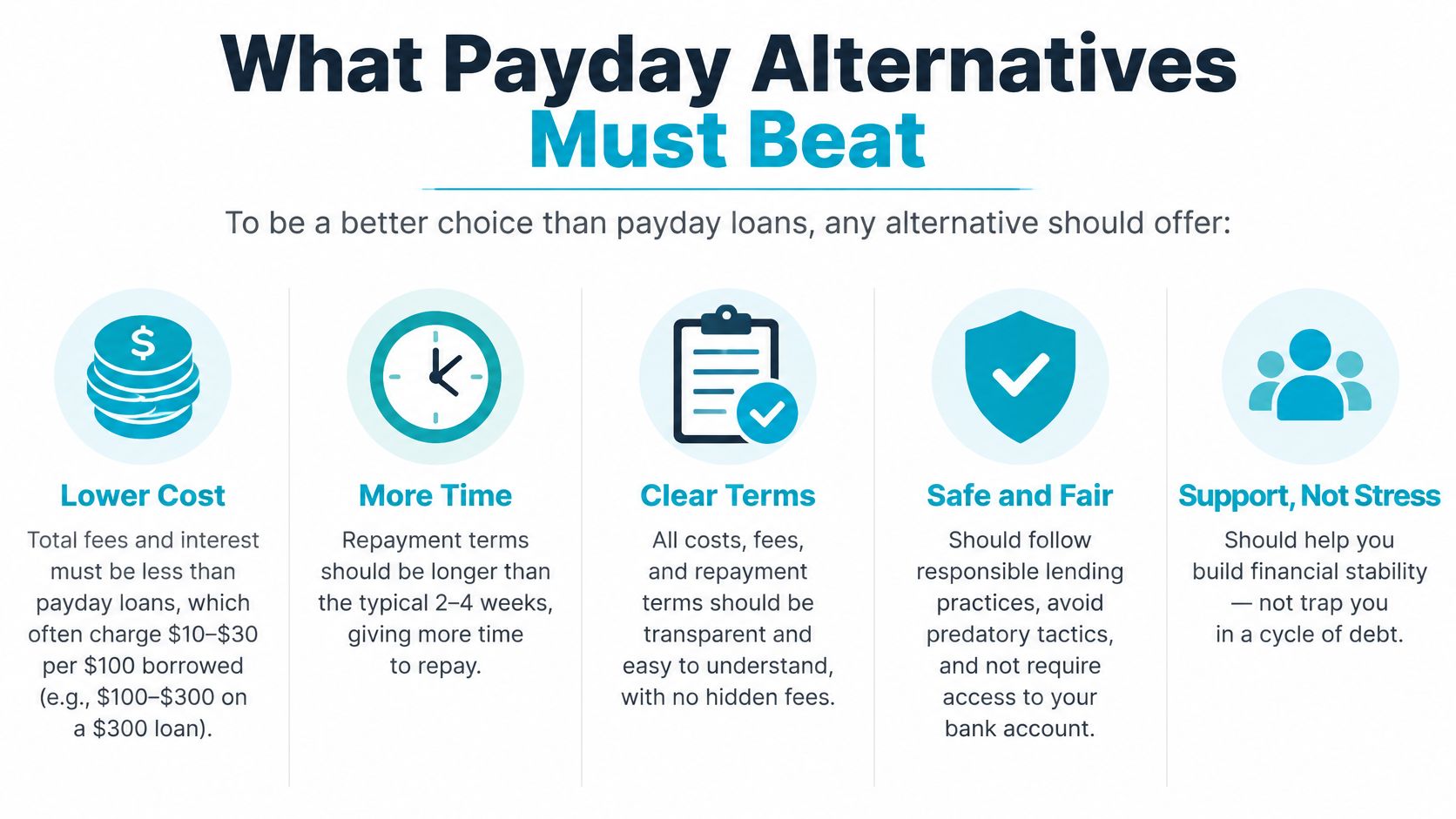
An alternative earns that name only when it improves the repayment outcome. A smaller advertised payment isn't enough if the lender stretches repayment so far that you pay much more overall.
Practical rule: Reject any loan that solves today's bill only by creating an unfunded bill on your next payday.
Use these tests before considering how quickly a lender can deposit money:
- Total cost: Compare the cash you'll receive with every dollar you'll repay, including required fees.
- Payment fit: Put the scheduled installments beside actual paycheck dates and essential spending.
- Clean exit: Make sure you can finish repayment without refinancing, renewing, or replacing the loan.
The historical payday-lending figures describe broad borrowing patterns, not a forecast for any particular marketplace or applicant. Their practical lesson is to evaluate the whole borrowing period, not just the first deposit.
Read APR and dollars together
Annual percentage rate, or APR, helps compare borrowing costs across different terms. Total repayment tells you how much money must leave your budget before you're finished. You need both.
A fee that sounds manageable in isolation can become expensive when the repayment period is short. Conversely, a long installment schedule can make each payment look comfortable while increasing the total amount paid.
Our explanation of payday loan rates can help you distinguish a quoted fee from an annualized borrowing cost. Don't compare a lender's fee-only advertisement with another lender's fully disclosed APR and assume the smaller-looking number is cheaper.
Keep the bill, the deadline, and the available repayment money in front of you while shopping. Those are your limits. A lender's willingness to offer more money doesn't change them.
How to Find Loans That Serve Your State
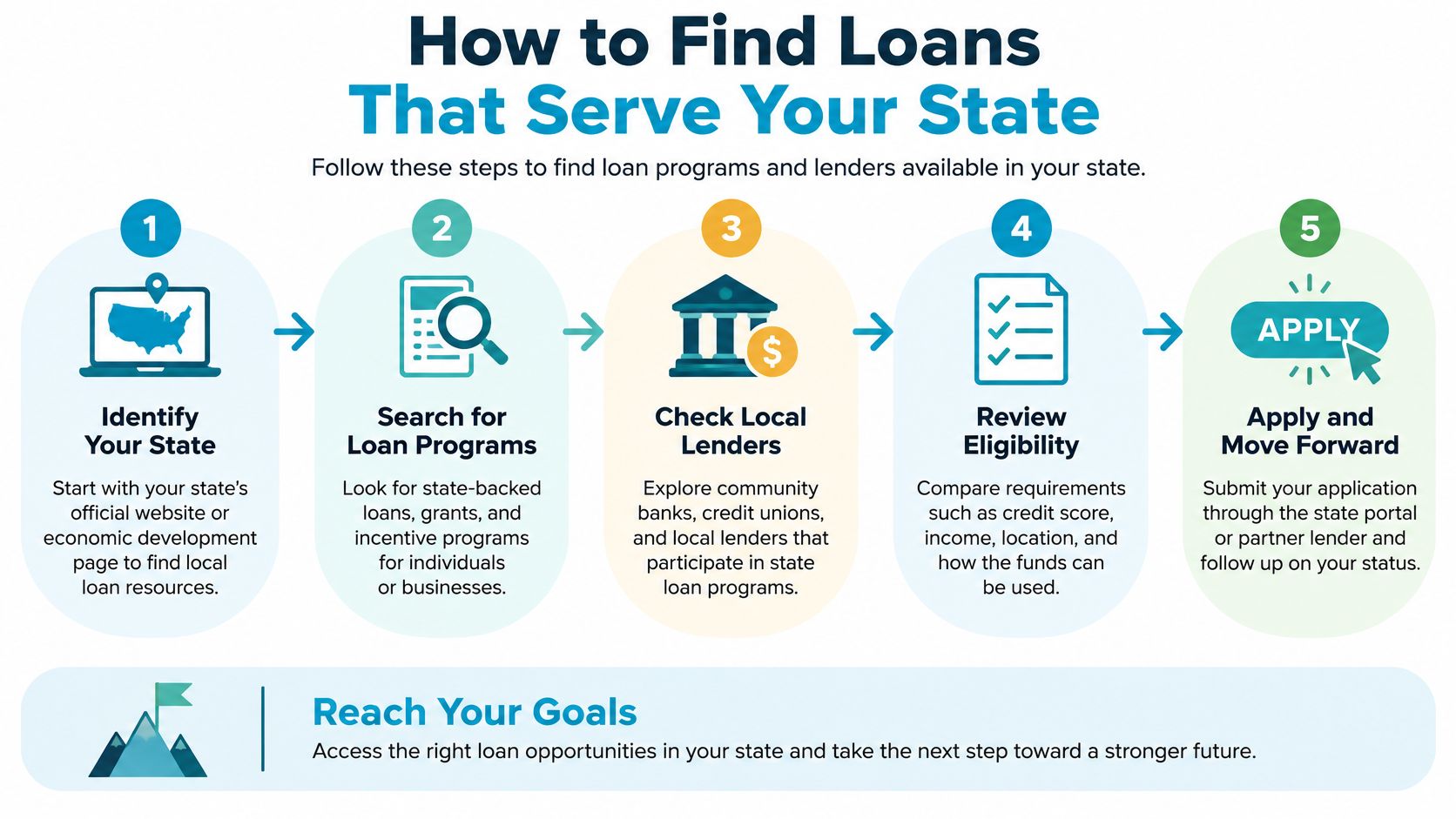
Near me is the wrong map for online borrowing. Your residence, the lender's authorization to operate there, and applicable state rules matter more than the location of its nearest office.
A federal credit-union payday alternative loan, commonly called a PAL, is a specific product category. An online installment loan advertised as an alternative to payday lending isn't automatically that product. The National Credit Union Administration's quarterly data summary treats federal credit-union payday alternative loans as a distinct lending category.
Don't accept an advertising label as a contract description. Ask who lends the money and what loan product appears in the agreement.
Find the product before submitting a request
Where to find each option and what to confirm
| Option | Where to look | Confirm first |
|---|---|---|
| Federal credit union PAL | Local, employer, association, or online credit union you can join | Whether it offers PAL I or PAL II, membership timing, and the application fee |
| Online installment or personal loan | Online request form that routes to partner lenders | Your state is served, the lender is named, and APR and total repayment are shown |
| Conventional payday loan | Storefront or online payday lender | Finance charge, APR, and renewal rules |
| Credit-card cash advance | Your card issuer | Cash-advance fee, applicable APR, and when interest begins |
| Earned-wage or employer advance | Your employer's benefits office or participating app | Subscription, flat fee, or tip, and paycheck collection date |
| Payment plan with the biller | Billing office, landlord, or service provider | Whether fees are waived and whether you can meet the split dates |
Start with a credit union you already belong to. If you aren't a member, check institutions connected with your employer, association, or community and ask about membership eligibility.
Be precise when you call: ask whether the institution offers PAL I or PAL II, not merely whether it makes personal loans. Ask when you could become eligible, what documents it needs, and when approved funds would be available.
Use an online request deliberately
Write down the exact bill, the payment deadline, and the paycheck dates available for repayment before completing a form. Then confirm geographic availability before sharing personal information.
At NextStopLoans, our service is limited to eligible U.S. residents and isn't offered in Arkansas, New York, Vermont, or West Virginia. Our online request form takes minutes and asks for the loan amount, personal information, and where funds should be deposited.
Our basic personal-loan requirements include being at least 18 years old, having a checking account, and being employed with regular income and pay frequency. Meeting those requirements doesn't guarantee approval. Review our payday loan requirements before submitting a request.
Use this sequence rather than sending applications indiscriminately:
- Check eligibility. Confirm your state is served and that you meet the stated application requirements.
- Submit a considered request. Our single intake can be evaluated by multiple participating lenders, reducing the need for separate applications.
- Identify each response. Label it as a credit-union PAL, installment or personal loan, or payday-style product.
- Separate response from approval. Our network lenders are standing by to respond in minutes, but they make the credit decision and determine the terms.
A marketplace is a connector. The lender named in the agreement is the party whose price, payment schedule, and servicing arrangements you must evaluate.
Payday Alternatives Compared by Cost and Term
Payday alternatives by amount, cost, and repayment
| Option | Typical amount | Cost signal | Repayment | Fits when |
|---|---|---|---|---|
| Federal credit union PAL | The amount available under the credit union's PAL program | Confirm the program's rate limit and application fee | Scheduled installments under the PAL agreement | You're eligible for membership and need a small, structured loan |
| Online installment or personal loan | Our request options are $500, $1,000, $2,500, $5,000, $7,500, $10,000, or $20,000 | Our partners offer APRs of 5.99% to 35.99%; certain offers may be higher | Our partners offer terms of 61 days to 84 months | The expense needs a manageable installment schedule |
| Conventional payday loan | The amount permitted by the lender and applicable rules | Compare the full finance charge and APR | Short repayment period, potentially with a lump-sum balance | Avoid when repayment would require renewal |
| Credit-card cash advance | Up to the card's available cash-advance limit | Advance fee, applicable APR, and interest timing | Revolving balance until repaid | You have a firm payoff date and have priced the advance |
| Earned-wage or employer advance | The amount available against eligible wages | Subscription, flat fee, transfer charge, or optional tip | Collection from upcoming pay | You can cover essentials after the deduction |
| Payment plan with the biller | The unpaid bill or agreed portion | No financing cost if the provider waives all fees | Agreed payment dates | The biller will split the expense affordably |
Read the installment row carefully
Our lending partners' advertised APR range isn't a promise of your individual rate. Loans from a state with no limiting laws, or from a bank not governed by state laws, may carry a higher APR. Some applicants may also receive tribal-lender offers with higher rates and fees than state-licensed lenders.
Request amount isn't approved amount, and approved amount isn't the amount you should borrow. Choose the smallest available option that meets the actual need, then examine whether the proceeds will cover the bill after any applicable deductions.
A longer term can lower the scheduled payment without making the loan cheaper overall. Compare total repayment before choosing a schedule, and don't assume the longest available term is the safest choice.
The distinction between installment loans and payday loans matters most at repayment. Installments can spread the obligation across pay periods, but the schedule helps only if the payments remain affordable after normal living costs.
A fixed payment is predictable. It isn't automatically affordable.
For a car repair, compare the loan payment with what remains after transportation, housing, food, and existing debts. Don't count the same paycheck balance twice because separate bills have different due dates.
Don't overlook the nonloan rows
A biller payment plan deserves a serious comparison because it may eliminate the need for a new lender. Ask the provider to put the balance, payment dates, and any fees in writing before agreeing.
An earned-wage advance has a different weakness: it reduces the paycheck you're waiting for. Before accepting it, calculate what remains after collection. If you'd immediately need another advance to buy groceries or reach work, it hasn't resolved the gap.
A credit-card cash advance also needs its own price check. Don't assume your purchase APR, purchase grace period, or available credit describes the cash-advance terms. Read the issuer's cash-advance disclosure and make a payoff plan before using it.
Choose the row that fits the expense, not the row with the easiest-looking application. For a negotiable medical bill, that may be a provider arrangement. For an urgent repair the shop won't split, a suitably priced installment loan may be more workable.
The conventional payday row should face the toughest test. If the only way to clear its balance is another borrowing transaction, reject it rather than treating renewal as part of the budget.
Read the Offer and Avoid a Rollover
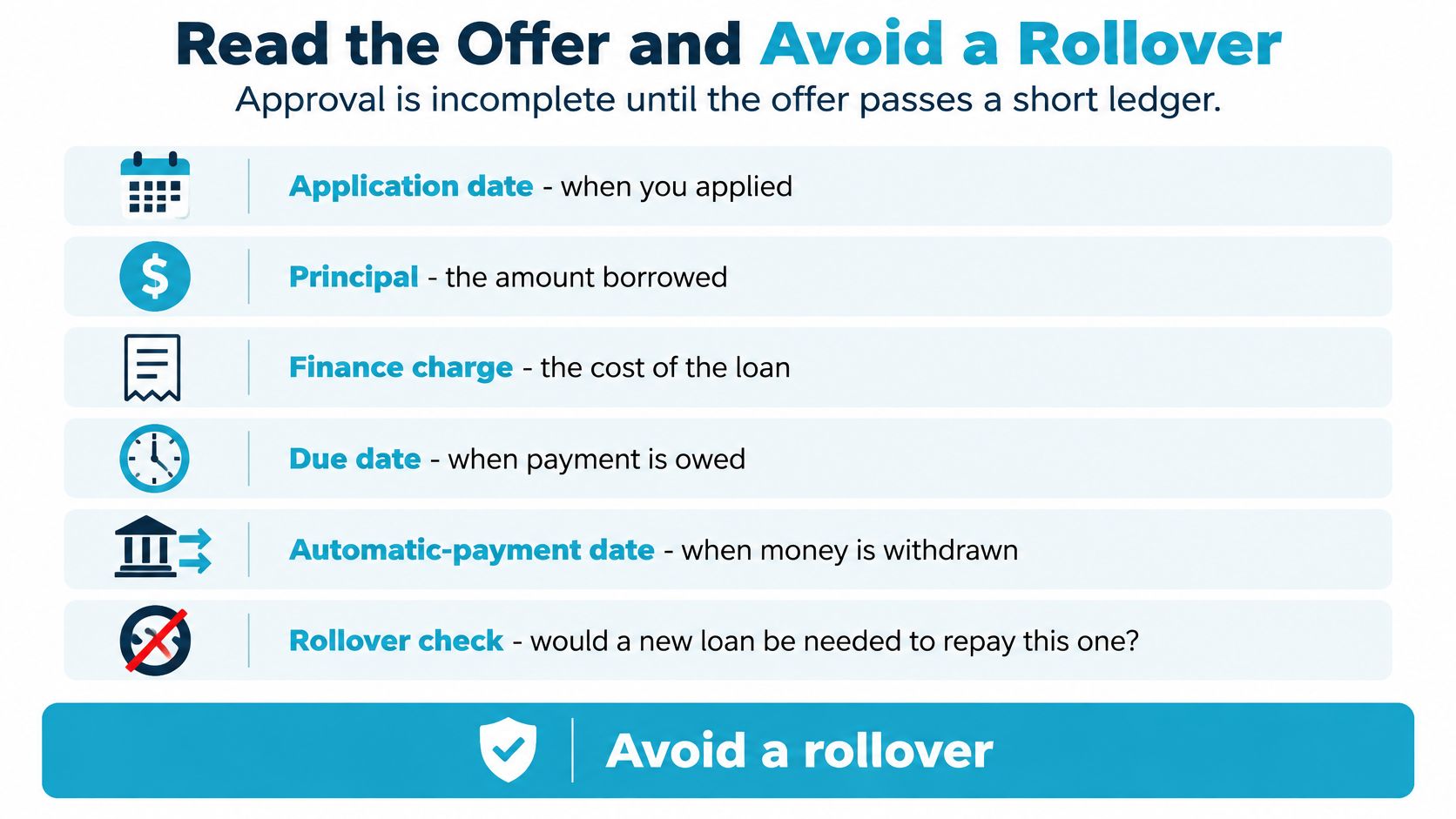
Approval is incomplete until you've built a repayment ledger. Use a spreadsheet, a notes app, or paper, but record the offer before signing it.
List the application date, principal, finance charge, due date, automatic-payment date, and whether you'd need another loan before this balance is cleared. Keep related borrowing in the same record so refinancing doesn't disguise the growing cost.
Track the whole borrowing sequence
The CFPB's payday-lending report found that 22% of loan sequences extended to at least seven loans, and 15% extended to ten or more. Tracking the sequence matters because a new agreement can look manageable while continuing the same underlying shortfall.
Add the charges across every related transaction. If a lender offers a replacement loan, record any new fee and whether the prior balance disappears or is folded into the replacement.
Don't judge the transaction by whether the account appears current today. Judge whether your own income can retire the debt.
Offer checks before you accept
| Check | Acceptable sign | Pause if |
|---|---|---|
| Price | APR and total dollars to repay are both shown | Only a periodic fee or weekly cost is quoted |
| Schedule | Fixed payments fit your pay dates and essential expenses | A balloon payment exceeds your available cash |
| Renewal | Repayment stands on its own without replacement borrowing | Renewal is presented as the way to stay current |
| Fees | Origination, documentation, and late fees are disclosed before signing | The cost remains unclear after approval |
| Credit check | You're told whether a major or alternative bureau may be checked | Nobody identifies who makes the credit decision |
| Payment control | Repayment methods and any available state extended plan are explained | Debit authorization or relief options remain unclear |
| Who lends | A named credit union or lender provides the agreement | Only the marketplace brand appears, or tribal terms are unexplained |
Inspect fees and payment authorization
Origination, documentation, and other additional fees may apply to an online personal loan through our network. Late-payment, nonpayment, and other penalties may apply to both short-term and online personal loans.
Put each applicable charge in the ledger. If a fee is deducted from the proceeds, check that the amount arriving in your account still covers the expense. If it's financed, include it in what you owe.
Read the electronic-payment authorization separately from the repayment schedule. Ask whether you can repay without mandatory bank debit, when withdrawals will occur, and how the lender handles payment changes.
Ask about any no-cost extended-payment plan available under applicable state law. Don't assume a relief option will be offered automatically or that every lender provides the same arrangement.
Know who checks credit and handles disputes
We don't pull your credit or evaluate creditworthiness. Participating lenders may verify identification and obtain credit history from major credit bureaus and alternative bureaus such as Teletrack or DP Bureau.
Ask the lender whether a credit inquiry may affect your credit file and whether it reports payments. A marketplace's no-credit-pull statement doesn't mean participating lenders won't check credit.
We also can't provide the exact APR you'll be charged if approved. Only the actual lender's offer supplies that answer, so don't treat a marketplace range as your final price.
If the offer comes from a tribal lender, inspect both the pricing and the dispute terms. Such lenders may charge more than state-licensed lenders and may require disputes to be resolved in a tribal jurisdiction.
Decline signal: If you can explain how the loan gets funded but not how it gets paid off, you aren't ready to accept it.
The CFPB's 2014 analysis found that only 15% of payday borrowers repaid all payday debt when due without reborrowing within 14 days. That's the outcome to protect: repayment from your resources, not a balance shifted into another contract.
Never stack a payday loan beside a new installment loan to cover the same expense. If the offered proceeds or schedule don't work, return to the biller with a revised payment proposal instead of adding another withdrawal to the same paycheck.
Choose a Credit Union PAL or an Online Request
Choose the credit-union path first when membership and timing work. It's the right starting point when you need a small loan and want to evaluate a defined PAL product rather than sift through loosely advertised alternatives.
Call with your bill amount and deadline ready. Ask the credit union to confirm membership eligibility, the specific PAL program, the proposed payment schedule, and when funds could reach you.
Don't choose it on reputation alone. A credit-union offer still needs to leave enough money for your essential expenses, and an approval that arrives after the bill's deadline won't solve that deadline.
Use the online path for a specific financing need
Choose an online request when the credit union can't help in time or the expense calls for another loan structure. Keep the request focused on an installment or personal-loan agreement you can afford, rather than accepting whichever product appears first.
At NextStopLoans, we connect applicants with lenders from our network; we don't lend money or make credit decisions. Registering is free for consumers, and independent third-party lenders pay us for potential customer referrals.
Our intake can be evaluated by multiple lenders, but you aren't obligated to accept an offer. You may decline every response if none meets your needs.
If a lender approves and completes funding, funds are deposited directly into your bank account, usually as fast as the next business day, subject to that lender's processes. Don't promise a biller payment until the funding timing is confirmed.
Make declining part of the decision
A loan request is a way to find out whether a workable offer exists. It isn't a commitment to take whatever comes back.
Use firm stop conditions:
- Unavailable service: Don't submit through a marketplace that excludes your state.
- Unfunded essentials: Decline if repayment would leave you unable to cover housing, food, transportation, or existing obligations.
- Unclear contract: Don't sign while the lender's identity, required charges, or payment authorization remains unresolved.
- Dependence on renewal: Walk away if the repayment plan assumes future refinancing or another advance.
Keep copies of the offer and agreement you review. Save the payment schedule somewhere you can check before spending from the account used for repayment.
The decision isn't between borrowing quickly and doing nothing. It's between a contract that fits your finances and one that pushes the same emergency into another pay period.
Call an eligible credit union about a PAL, or use a single online request to evaluate named lenders' offers. Accept only when you can identify a realistic final payment date without relying on replacement debt.
NextStopLoans offers a free online request service connecting eligible applicants with independent lenders, not a federal credit-union PAL program. Visit NextStopLoans to request an online option, then review the lender's APR, fees, and payment schedule before deciding. Decline any offer that requires another loan to make repayment work.