
Instant Loans Online: A Complete Guide to Fast Cash

Your car needs an unexpected repair, rent is due, or a medical bill has arrived before payday. You search for instant loans online because the application appears faster than visiting a branch. The important question isn't only whether a lender can approve you quickly. It's whether the money will arrive when you need it, what access to your financial data you're granting, and whether the repayment plan will leave enough for your ordinary expenses.
A fast application can solve an urgent gap, but it can also hide delays, fees, and risks behind a simple “apply now” button. This guide explains how the process works, what different loan types are designed for, and how to judge an offer before accepting it.
Table of Contents
- What Instant Loans Online Actually Mean
- How Instant Online Loan Applications Work
- Types of Instant Loans and When to Use Each
- Typical Requirements and Eligibility Explained
- Risks, Costs, and Regulatory Considerations
- How Loan Marketplaces Connect Borrowers to Lenders
- How to Choose Safely and Avoid Common Mistakes
What Instant Loans Online Actually Mean
Suppose your vehicle breaks down on the way to work. You complete an online form during your lunch break, upload identification, and receive a lender response shortly afterward. That response may feel like the emergency is over, but approval and funding are separate events. A lender can make a decision quickly while your bank still needs additional time to receive and settle the transfer.
Instant online loans usually refer to credit applications handled through a website or mobile app. Digital lending can include borrower onboarding, identity checks, credit decisioning, documents, disbursement, and servicing through digital channels. The market for this model was estimated at USD 507.27 billion in 2025, with projections of USD 566.52 billion in 2026 and USD 985.03 billion by 2031, representing a projected 11.68% CAGR from 2026 to 2031, according to Mordor Intelligence's digital lending market analysis. North America is identified as the largest market in that study.
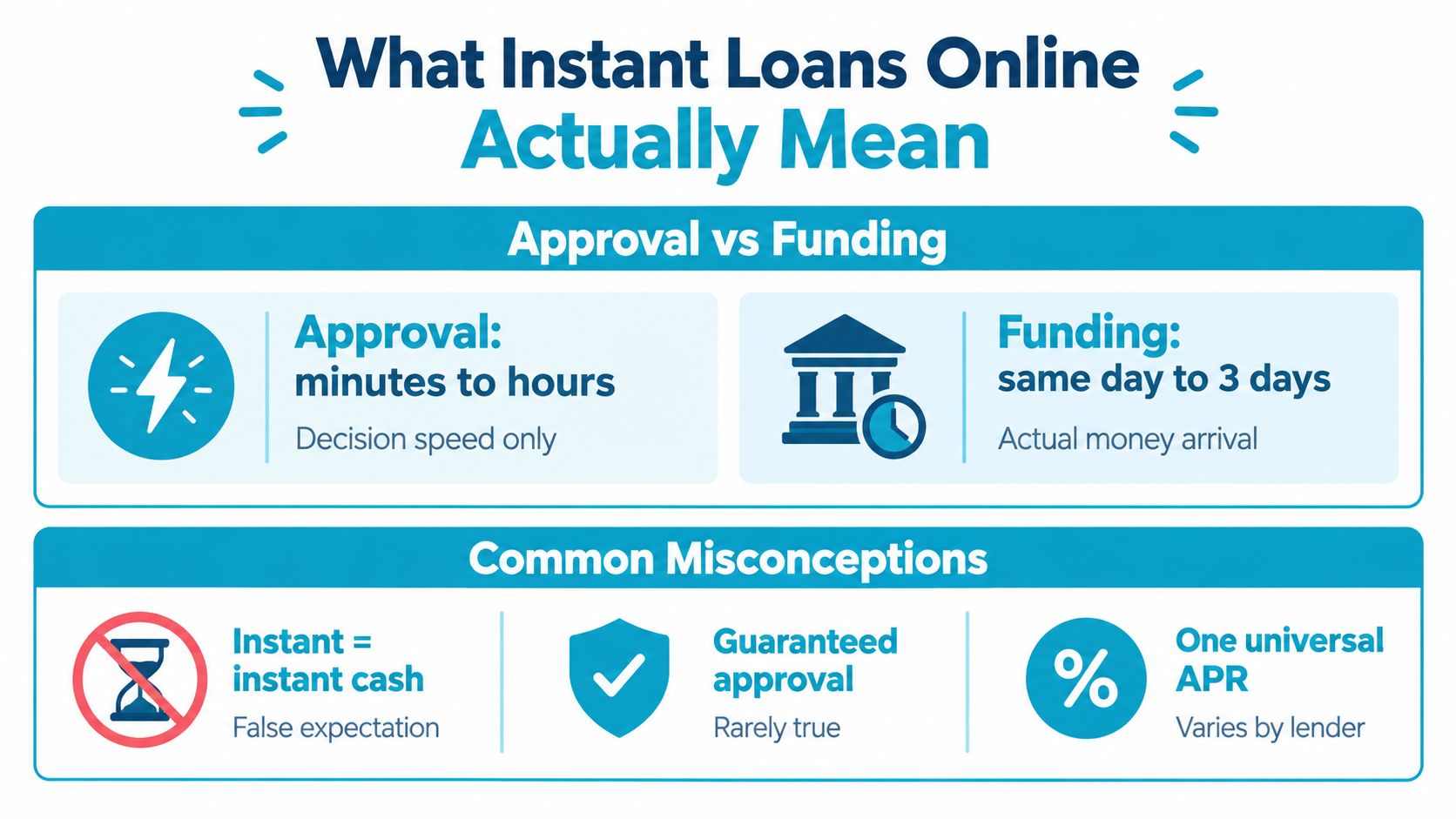
Approval and funding are different clocks
Approval means a lender has assessed the information available and decided whether to present terms. Funding means the lender has sent money and your bank has made it available. Those events may happen close together, but they don't have to.
Practical rule: Treat “instant approval” as a decision-time promise, not a guarantee that cash is already in your account.
The transfer method matters. Electronic payments through ACH can settle later than the underwriting decision, while faster payment rails require the lender and receiving bank to support them. A marketplace may route your request within minutes, but the lender controls the offer and the transfer process.
The phrase also doesn't promise guaranteed acceptance. Lenders still apply their own eligibility rules, assess repayment risk, and determine rates and fees. Speed can reduce paperwork and waiting, but it can't remove the financial assessment or the need to read the agreement.
How Instant Online Loan Applications Work
The application feels simple because software compresses several tasks into one flow. Behind the screen, however, different parties may verify different pieces of information before funds can move.
Step one, submit identity and contact details
You generally provide your name, address, contact information, employment details, requested amount, and bank-account information. A lender or marketplace may request identity documents, electronic consent, or permission to verify information. Submit these details only through a secure site with clear privacy and lending disclosures.
Step two, verify income and banking information
Income can be reviewed through payslips, employer information, or connected bank data, depending on the lender. Bank information helps a lender assess where funds should be deposited and whether repayment can be collected from the account. The request for bank access deserves careful attention. Read what data the connection can view, how long permission lasts, and whether another verification method is available.
Step three, screen the application
Automated systems can compare identity, income, account, and repayment-risk signals quickly. A soft inquiry may let you browse possible options without affecting your credit score, but participating lenders can use their own credit checks. A marketplace doesn't necessarily make the credit decision itself.
Step four, route the request and return offers
A marketplace can send one request to multiple independent lenders, reducing repeated forms. Each lender may return different terms, or none at all. Review the lender's name, annual percentage rate, fees, repayment schedule, and funding conditions before moving forward. You can learn more about the general workflow in how an online loan request works.
Step five, sign and wait for settlement
After accepting an offer, you may sign electronically and authorize direct deposit or ACH repayment. The lender then sends the funds through its chosen payment rail. CFPB materials describe short-term loan proceeds deposited electronically and later collected through ACH debit, illustrating why a rapid decision isn't identical to real-time cash. The CFPB's review of payday and deposit-advance products explains this distinction.
A “next business day” statement usually depends on completed verification, lender processing, banking cutoffs, weekends, holidays, and the receiving bank. Ask when the transfer is initiated, not just when approval is issued.
Types of Instant Loans and When to Use Each
The right loan depends on the problem you're solving and the payment you can realistically make. A product that works for planned consolidation may be unsuitable for a bill due tomorrow.
| Loan type | Common fit | Repayment shape | Main concern |
|---|---|---|---|
| Personal loan | Larger planned expenses or debt consolidation | Often scheduled installments | Compare total cost and term length |
| Payday loan | A short gap before expected income | Usually short-term repayment | A missed payment can create severe pressure |
| Installment loan | A defined expense requiring predictable payments | Fixed schedule set by the lender | A longer term can increase total interest |
| Title loan | Borrowers using vehicle equity as collateral | Terms vary by lender | The vehicle is exposed if repayment fails |
| Emergency or signature loan | Urgent expenses without pledged collateral | Depends on the agreement | Fast access doesn't guarantee affordable terms |
A personal loan may make sense for debt consolidation only when the new payment and total cost improve the situation. An installment loan can be easier to budget because payments follow a schedule, but the schedule still needs to fit your income. Ask whether the lender charges an origination fee, a late fee, or a penalty for early repayment.
Payday loans target short periods between paychecks. That narrow use case is risky if your next income won't cover both the loan and essential living costs. Historical demand shows why the product matters. A Federal Reserve discussion reported that U.S. lenders extended about USD 40 billion in payday credit and generated USD 7.4 billion in revenue in 2010, while more recent research cited by the Center for Responsible Lending found borrowers took out over 20 million payday loans totaling nearly USD 8.6 billion in 2022.
Title-backed borrowing adds collateral risk. If you can't repay, your vehicle may be at risk under the agreement. Before choosing any product, compare the amount received with the total amount repaid, then test whether the payment remains affordable after rent, food, utilities, transport, and existing debts.
Typical Requirements and Eligibility Explained
Online lenders don't use one universal approval formula. They may consider identity, residence, age, income, employment, active bank access, requested amount, and repayment history. The marketplace may collect the request and send it to lenders, while each participating lender applies its own underwriting rules.
A low or limited credit history doesn't automatically mean no options exist, but it usually means fewer offers or more expensive terms. Some lenders consider bank activity, income patterns, or other information alongside traditional bureau data. That broader review can help applicants with thin files, but it doesn't remove the need to demonstrate a reasonable ability to repay.
Information lenders commonly request
- Identity details: Your legal name, address, date of birth, and identification document help establish who is applying.
- Income evidence: Payslips, employer information, or bank records may help confirm regular income.
- Banking information: Lenders may need an account for deposit and, where authorized, scheduled repayment.
- Credit information: The lender may check a major or alternative bureau according to its policy.
- Contact information: A working phone number and email allow the lender to send disclosures and verification requests.
Some applications produce a possible match before a lender completes its full review. That isn't the same as a final approval. Read the wording carefully for conditions such as document verification, minimum income, an open bank account, or a requirement that your information match external records.
You should also distinguish between a soft credit check and a hard inquiry. A soft check may be used for initial matching and generally isn't presented as a borrowing decision. A lender can still perform its own inquiry later, so ask whether accepting an offer will create a hard inquiry and where that policy appears in the disclosures.
Eligibility isn't only about getting a yes. The useful question is whether the lender offers terms you can meet without skipping essentials. If the payment works only under perfect conditions, the loan is probably too tight for the situation.
Risks, Costs, and Regulatory Considerations
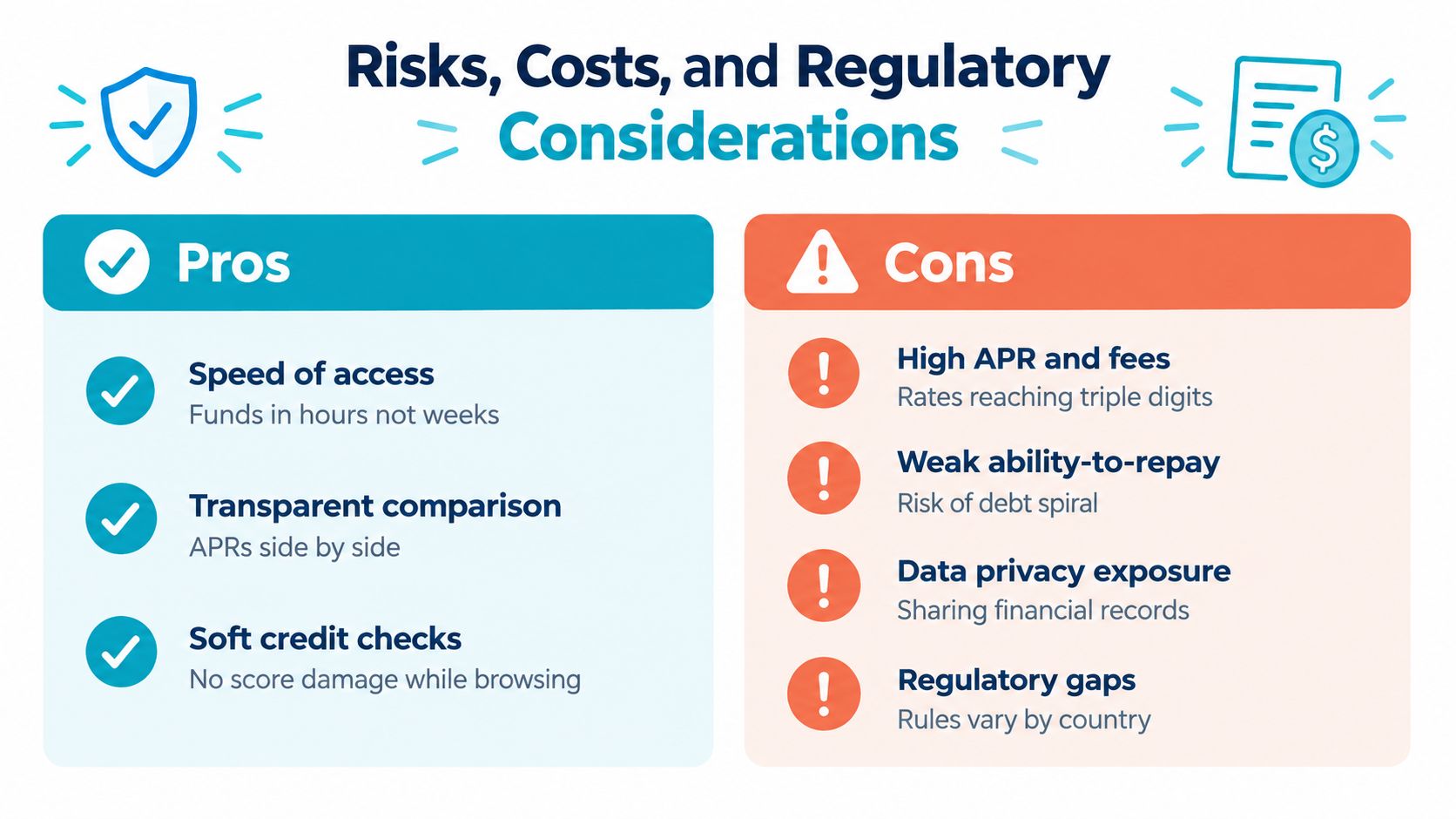
Fast approval can distract you from the most important test, ability to repay. A lender may collect a payment successfully while the borrower struggles to cover food, housing, transport, or other necessary costs. In its review of payday and deposit-advance products, the CFPB warned that limited underwriting and repayment structures can trap consumers in debt. The agency's discussion of how payday and deposit-advance loans can trap consumers is a useful reminder that collection success isn't proof of affordability.
Cost is more than the advertised rate
Look beyond the headline APR. Check the amount you receive, origination fee, late fee, repayment frequency, total repayment, and any early repayment charge. Independent consumer guidance notes that emergency loans can include origination fees of up to 12%, late fees, early repayment penalties, and triple-digit APRs for some payday products. Review Bankrate's emergency-loan cost guidance before treating a fast loan as a cheap loan.
ACH repayment creates another layer of exposure. Online lending depends on account data, electronic consent, and payment instructions. Federal Reserve Financial Services has reported rising ACH fraud exposure associated with social engineering and email compromise, which makes identity verification, bank authentication, and transaction monitoring important safeguards.
Regulatory rules don't replace personal review
Lending rules, licensing requirements, disclosure obligations, and product availability vary by jurisdiction. A policy page should identify the lender, governing terms, fees, privacy practices, and complaint channels. If the offer hides the lender's identity or pressures you to accept before showing the agreement, stop.
A loan can be rational when the expense is urgent, the alternative is more damaging, and the repayment is comfortably affordable. It becomes dangerous when you need another loan to make the first payment, when the lender emphasizes speed but obscures cost, or when repayment depends on income that isn't certain.
For a practical explanation of how rates affect the final repayment burden, review this guide to payday loan rates.
How Loan Marketplaces Connect Borrowers to Lenders
A loan marketplace is a connector, not automatically the company lending the money. You submit one request, and the platform may route it to independent third-party lenders. Those lenders decide whether to offer credit, set the terms, verify the remaining information, and send the funds.
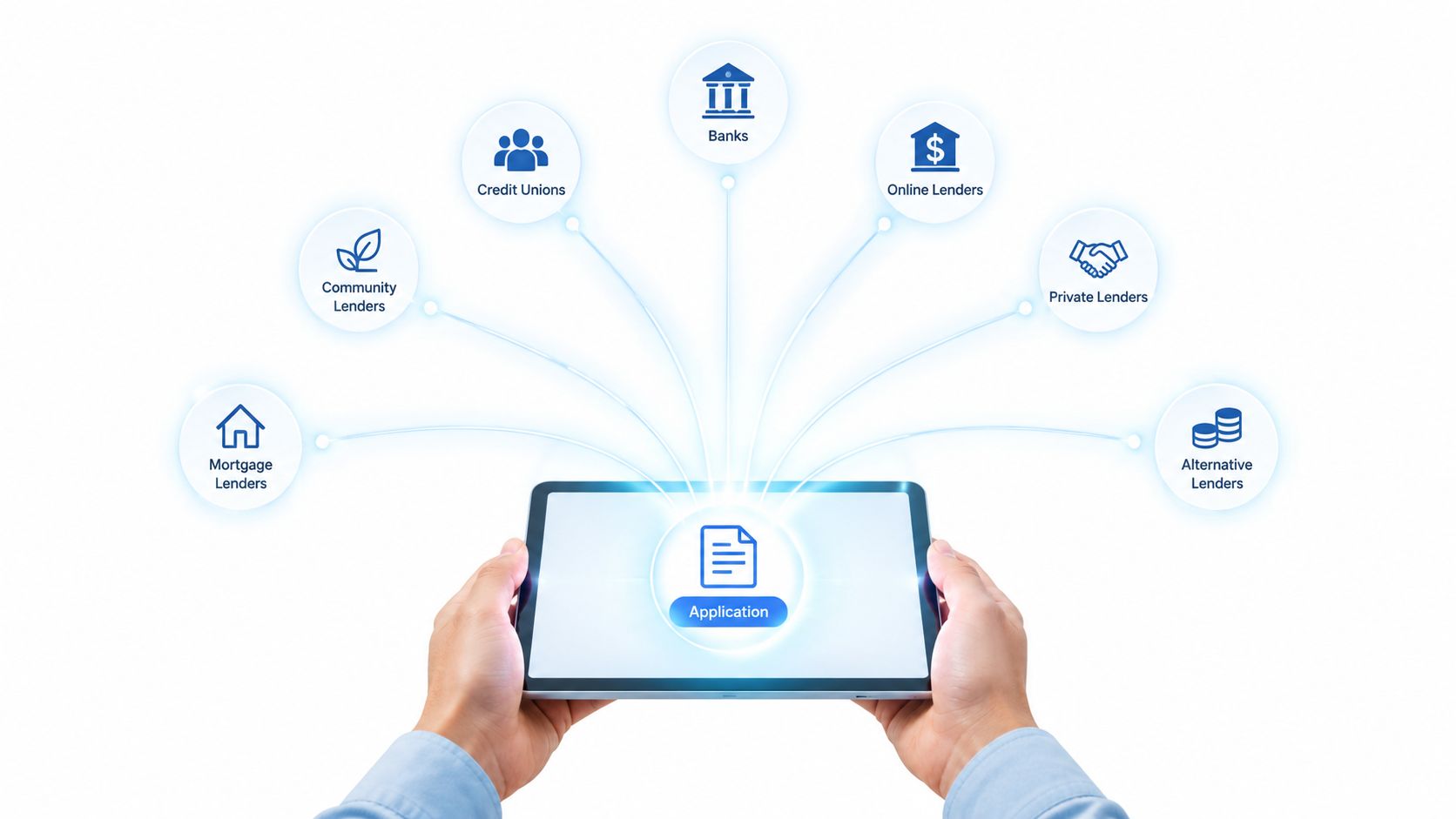
The practical benefit is reduced repetition. Instead of entering the same income, contact, and banking information into several separate forms, a single intake can be evaluated by multiple participating lenders. That can help borrowers compare possibilities, especially when credit history is limited or branch access isn't convenient.
NextStopLoans operates this kind of online marketplace for eligible U.S. consumers. Its secure request process uses encryption and electronic consent, then routes applications to independent lenders. It isn't a lender and doesn't set credit terms. Lenders handle decisions, agreements, and funding, while applicants can review and decline an offer.
A marketplace can shorten the search. It can't guarantee approval, control a lender's APR, or make a bank transfer settle instantly.
After a match, examine the lender's disclosures rather than relying only on the marketplace's summary. Confirm the lender's name, repayment dates, total cost, privacy permissions, and the timing conditions for direct deposit. A response within minutes still may require additional documents or verification before money is sent.
Marketplace guidance can also clarify what happens to your information and whether the service operates in your state. Before submitting sensitive data, review the platform's explanation of quick credit connections and then compare any actual offer with alternatives from a bank, credit union, or existing creditor.
How to Choose Safely and Avoid Common Mistakes
Start with the lender's identity, not the promised speed. You should be able to find the lender's legal name, contact details, licensing information where applicable, privacy policy, rates and fees, and lending policy. A legitimate offer should show the repayment obligation before you commit.
Use this short screening checklist:
- Confirm the money timeline: Ask when the lender sends funds, which payment rail it uses, and whether weekends or bank cutoffs affect availability.
- Calculate the full repayment: Compare the amount deposited with principal, interest, origination charges, late fees, and any other stated costs.
- Check data permissions: Understand whether an app can view account history, initiate ACH debits, or retain connected-bank access.
- Reject pressure: Don't accept an offer because a countdown timer or representative tells you the terms will disappear immediately.
- Verify the lender: Confirm that the named company is real, authorized where required, and consistent across the agreement, website, and payment instructions.
- Test affordability: Subtract the proposed payment from reliable income after essential expenses, existing debts, and a modest buffer for surprises.
Be cautious with guaranteed approval, unexplained upfront payments, missing policy links, and requests to send sensitive information through an unverified channel. A lender that refuses to explain fees or repayment dates isn't giving you enough information to make a responsible decision.
The data-access question deserves equal weight. Online applications can be convenient, but sharing checking-account records or repayment permissions creates a trust decision. Use only the access needed for verification, read the consent language, and revoke permissions when the provider's terms allow it.
Before submitting a request, write down the amount you need and the maximum payment you can sustain. If the offer exceeds that limit, decline it. NextStopLoans can connect eligible applicants with independent lenders through an online request process, but the lender's agreement remains the document that determines your cost, obligations, and funding terms.
If you need to compare a possible fast-cash option without repeating multiple applications, visit NextStopLoans to submit an online request for consideration by participating lenders. Review every lender's terms, funding timeline, and data permissions before deciding whether to accept an offer.