
How to Complete an Installment Loan Application

An unexpected car repair can turn an ordinary week into a search for money you need quickly. You may be weighing a loan against other options, wondering what an application asks for, or worrying that one mistake could stop the process. Knowing what happens at each stage can make the decision feel more manageable.
An installment loan application is the start of a review, not a promise of approval or funding. You provide information, lenders assess it, and only then might you receive an offer to consider. The process works best when you treat each stage as a separate decision and check the full cost before accepting anything.
Table of Contents
- Understand What the Application Evaluates
- Prepare the Information Lenders Need
- Complete Every Field Accurately
- Follow Verification and Underwriting
- Compare Offers by Total Cost
- Use an Online Marketplace Form
- Review Your Application Before Submitting
Understand What the Application Evaluates
Suppose you need to pay for a car repair and are considering borrowing the amount you can't cover from savings. The application may ask about your identity, residence, income, existing obligations, credit history, requested amount, loan purpose, and preferred repayment term. A lender uses that information to assess whether you meet its criteria and whether the proposed payments appear manageable.
A payment that looks affordable on its own doesn't tell the whole story. A lender may consider how it fits alongside rent, utilities, insurance, and other debt payments, as well as the reliability of the income you report. The lender's own criteria determine how it weighs those details, so there's no single application answer that guarantees the same result everywhere.
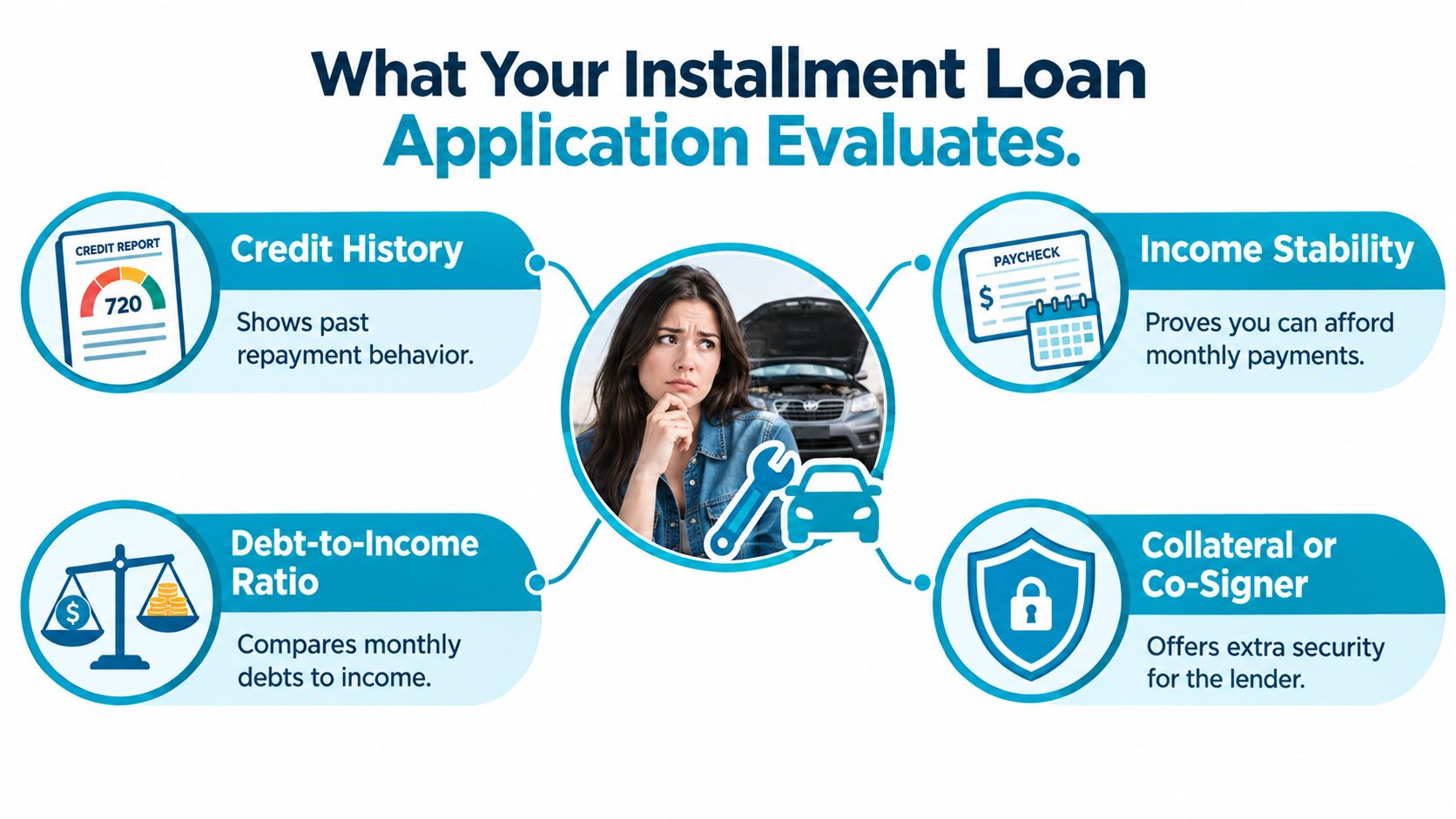
It helps to separate the steps that are often mistaken for one another: completing an application, receiving a lender response, getting approved, accepting an offer, and receiving funds. An application can be complete without qualifying for an offer. An offer can be available without being affordable, and accepting an agreement doesn't mean funds have already arrived.
What a marketplace does, and what it doesn't
An online marketplace can collect a request and route it to participating independent lenders for consideration. It isn't the same as a lender: the marketplace doesn't make the credit decision or set the terms. Lenders decide whether to proceed, whether to request more information, and what terms to offer.
For a plain-language overview of how loan payments and schedules work, see this guide to how installment loans work. Keep that distinction in mind throughout the process: a match or response is a step in the review, not a guarantee of approval or funding.
Prepare the Information Lenders Need
Preparation starts with putting together one accurate picture of your finances. You don't need to assume every lender will ask for the same paperwork, but having key details at hand can help you fill in the application consistently and respond if a lender requests verification.
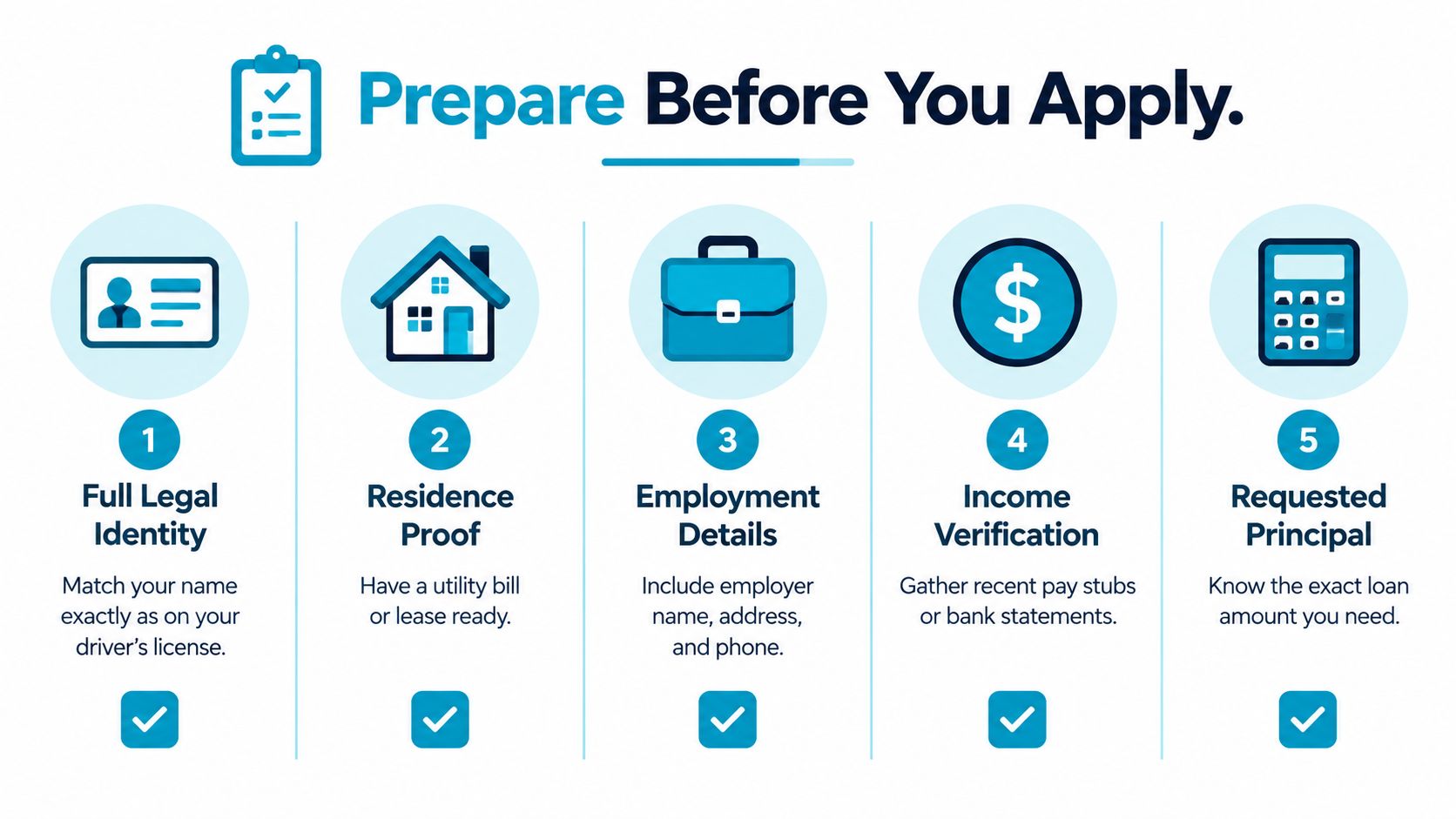
Assemble your details before you start
Check that you can provide:
- Identity and contact details: Your full legal name, date of birth, current contact information, and any other details requested to identify you.
- Residence information: Your current address and, if relevant, records that help confirm it.
- Income and work information: Your employer or other source of income, how often you receive it, and an accurate account of your income.
- Monthly obligations: Regular debt payments and other recurring commitments that affect what you can comfortably repay.
- Loan request: The amount you need, the purpose, and a preferred repayment schedule if the form asks.
- Potential verification records: Documents such as pay statements, bank records, or other income evidence, depending on what a lender requests.
The useful records depend on your situation. A wage earner might keep recent pay statements nearby. Someone who's self-employed may want to review business income records and bank activity so they can report income consistently. If you're consolidating debt, gather current account balances and required payments so your request reflects the obligations you're trying to manage.
Practical rule: Enter only information you can explain and support if a lender asks for clarification.
Imagine entering one income figure on the form but giving a different figure in a later conversation, or using an old address in one place and a current address elsewhere. A lender may need to pause and resolve the inconsistency before continuing. Before you begin, estimate a request that addresses the need without assuming the lender will approve the full amount.
Complete Every Field Accurately
Move through the form carefully rather than rushing to the final button. Each answer should describe your own circumstances and agree with the information you could provide if a lender checks it.
Start with your contact and identity details. Enter your legal name and current contact information as requested, then check your residence details for accuracy. A small typing error can make it harder to match the application with information used for verification.
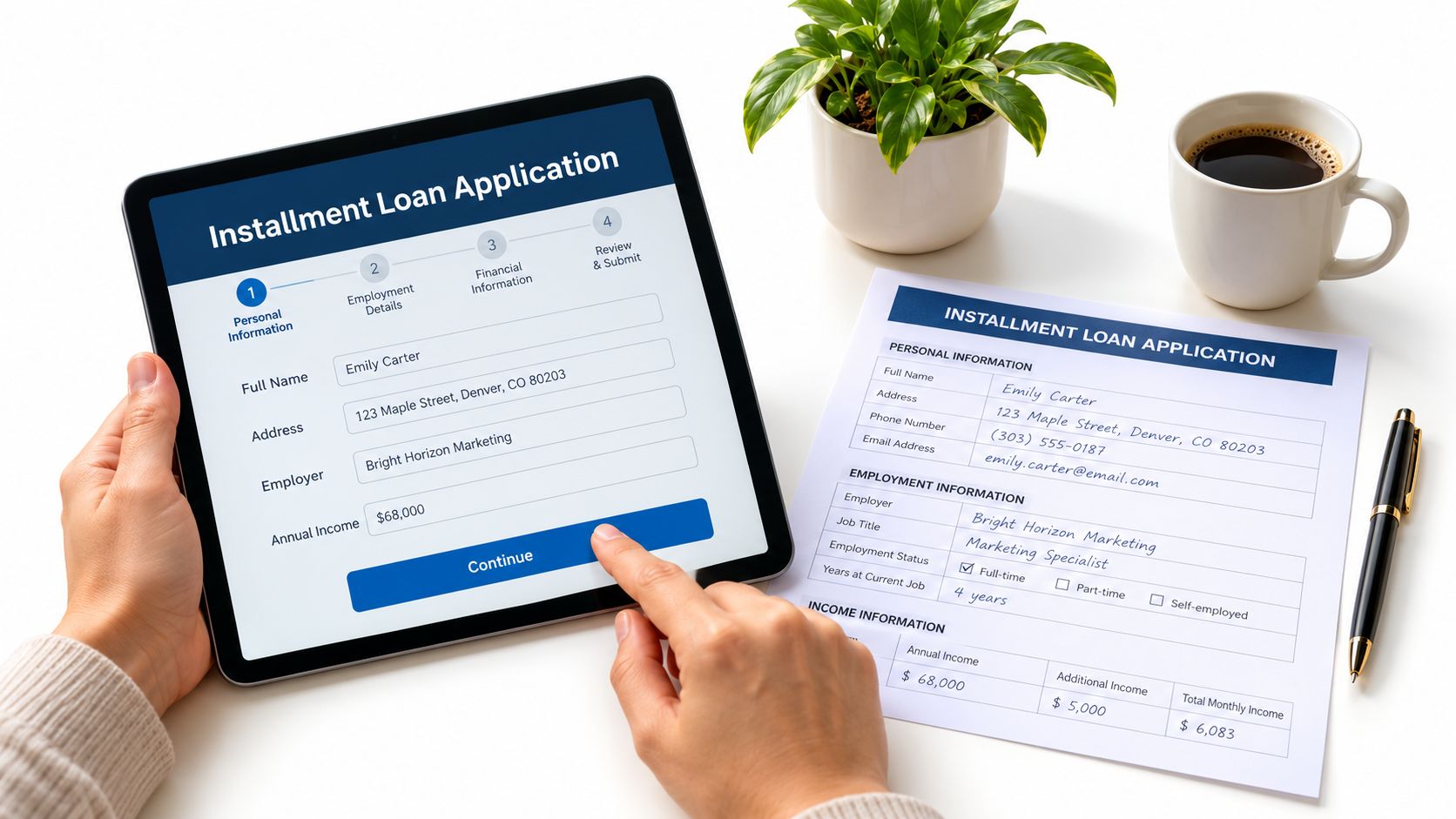
Make income, request, and purpose agree
When the form asks about employment or income, use figures that reflect your actual situation. Don't treat an irregular payment as guaranteed income, and don't count the same source twice. If your work or income has changed, answer according to the form's instructions rather than copying an old number from a previous application.
Next, enter the principal you're requesting, the reason for borrowing, and your preferred term if that choice is available. The purpose could be a repair, a medical expense, a major purchase, or debt consolidation. Be truthful and specific enough to explain the request; don't choose a purpose just because you think it will improve your chances.
List recurring obligations completely. Leaving out a payment can make your budget look different from the one a lender later reviews. Before submitting, check that your income, work details, address, requested amount, and debts tell a consistent story.
Read consent before you submit
Review any electronic consent language and understand what you're authorizing. Depending on the lender and process, an applicant-authorized credit check may be part of the review. A marketplace may route one request to eligible independent lenders, but a lender match isn't approval. The lender makes its own decision and may request additional information.
Read the information shown before signing electronically. Confirm that it is yours, that you answered the questions truthfully, and that you understand what the consent covers. A careful final review can prevent avoidable clarification requests, but it cannot guarantee a particular lender response.
Follow Verification and Underwriting
After submission, an application may go through several activities: an initial review, verification, underwriting, offer presentation, and acceptance. The order and details can vary. Not every applicant will move through every stage, and a request for more information doesn't necessarily mean the application has been approved.
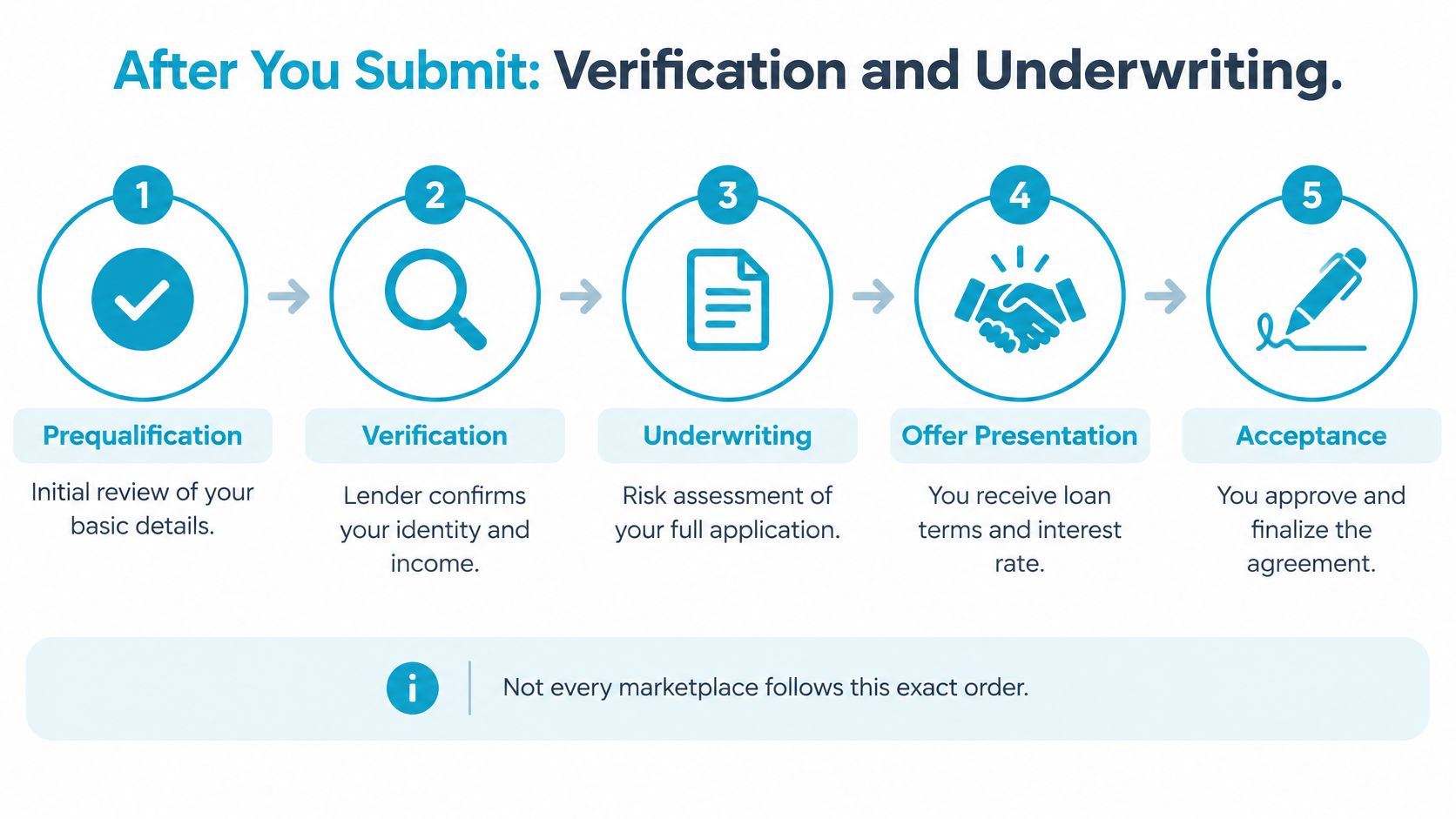
What lenders may check
A lender may verify your identity and review details for possible errors or fraud. It may ask you to provide income or residence evidence, and it may review credit information if you've authorized the relevant check. The lender can also consider your existing debt payments in relation to your income as part of its assessment of repayment risk.
For example, a lender could ask a wage earner for income evidence before deciding whether to continue. In another application, an address or income mismatch might send the file back for clarification. Respond to requests through the lender's stated process, and make sure any documents you provide are current and belong to you.
For more on the factors lenders may consider, read this explanation of personal loan eligibility. The lender controls its underwriting rules, so another person's outcome won't predict yours.
Keep expectations grounded
An online response may arrive quickly, but a quick response isn't the same as a final decision or a deposit. NextStopLoans says responses are typically issued within minutes, while funding and lender decisions aren't guaranteed. Availability is limited to eligible U.S. residents, and the service isn't available in Arkansas, New York, Vermont, or West Virginia.
If a lender presents terms, read them before deciding whether to accept. The lender may still need completed verification or other steps before funding. Treat each notification as information to review, not as an instruction to borrow.
Compare Offers by Total Cost
A monthly payment is only one part of an offer. Compare the lender, APR, fees, payment amount, term, total repayment, rate behavior, prepayment rules, late-payment consequences, and any information about payment reporting. If an offer doesn't make an important detail clear, ask the lender before accepting.
| Comparison Point | Offer A | Offer B | Why It Matters |
|---|---|---|---|
| Lender and APR | Record the lender and stated APR | Record the lender and stated APR | Shows who sets the terms and helps compare borrowing cost |
| Fees | Note origination or documentation fees | Note any fees and when they apply | Fees can add to the cost beyond the scheduled payment |
| Payment and term | Write down the payment and repayment schedule | Write down the payment and repayment schedule | A lower payment may come with a longer repayment period |
| Total repayment | Add up the amount due over the full term | Add up the amount due over the full term | Reveals the full cost rather than just the next payment |
| Other terms | Check rate changes, prepayment, late payments, and reporting | Check the same details | These conditions affect your options and possible consequences |
Consider two hypothetical offers with similar periodic payments. One has a shorter repayment schedule, while the other stretches payments over a longer schedule and costs more in total. That example doesn't predict what a lender will offer; it shows why you should compare the full written terms instead of choosing by payment size alone.
Check what remains after repayment
Work out whether the proposed payment still leaves enough for rent, utilities, food, insurance, and existing obligations. A lender's approval doesn't decide what's comfortable for your household, and accepting an offer is separate from receiving an offer. If the payment leaves too little room for ordinary expenses, decline or consider a different option.
For help understanding the annualized cost shown in an offer, review this guide to personal loan APR rates. Save each written offer so you can compare them side by side. Ask about late-payment consequences, whether the rate stays the same, whether early repayment is allowed, and whether the lender reports payment activity to credit bureaus.
Use an Online Marketplace Form
Before entering personal information online, check who operates the service and read its disclosures and privacy information. Confirm that the request is available where you live, that you understand the electronic-consent language, and that you can tell the difference between marketplace matching and lender underwriting.
NextStopLoans describes a secure online request process with 256-bit SSL encryption and electronic consent. It routes requests to participating independent third-party lenders. This describes how the request is handled; it doesn't mean the marketplace decides eligibility, sets loan terms, or guarantees an offer.
Complete the intake on your device
Whether you use a phone or computer, prepare your details before typing. On a phone, pause to check names, dates, and figures before moving between fields. On a desktop, you may find it easier to compare the form against your records, but the same rule applies: report accurate information and don't guess when you can verify it.
Before submitting, check:
- Request details: Confirm the amount and purpose reflect your actual need.
- Consent: Read what you authorize, including any credit-check permission.
- Availability: Make sure the service accepts requests from your state.
- Privacy: Review how your information may be handled and shared.
- Next steps: Note how lenders will contact you and where to watch for notices.
If a lender asks for documents, follow its instructions and provide the requested information through the channel it specifies. Save written offers and messages so you can review the terms without relying on memory. If you're unsure whether a credit check will be soft or hard, ask the lender before giving consent.
A missing field may be fixable by returning to the form. Inconsistent or unsupported income calls for a correction, not a guess. If the amount would strain your budget, reconsider the request; if you receive a match, remember that it isn't approval. Avoid repeatedly submitting applications without checking whether participating lenders may make additional credit inquiries.
Review Your Application Before Submitting
Before you send the form, confirm that your identity, address, income, work details, and obligations are accurate. Check that the amount is realistic, the purpose is truthful, and you understand the consent you're providing.
If you receive an offer, review the lender's terms, total repayment, late-payment consequences, and reporting practices. On-time payments may help your credit only if the lender reports them and the relevant scoring model can use the information; negative payment information may also affect your credit. Ask the lender how it handles reporting rather than assuming the loan will build credit.
NextStopLoans doesn't make lender decisions, set terms, pull credit, or guarantee funding. Participating lenders handle those matters, and direct-deposit funding may be available as soon as the next business day, subject to lender processes. Submit only when your information is ready, then keep reviewing your options until you decide whether an offer fits.
If you're ready to compare a lender response with your budget, prepare your details and review the terms before accepting. NextStopLoans offers an online request routed to participating independent lenders, with no obligation to accept an offer. Visit NextStopLoans to begin a request and review the information provided during the process.