
Emergency Loan for Car Repair: Fast Funding Guide

Your car is in the shop, your commute depends on it, and the mechanic has given you an estimate that may be higher than the cash in your account. The pressure is immediate, but borrowing the fastest available amount can create a second emergency when the monthly payments arrive.
An emergency loan for car repair can be useful when the vehicle is essential and the repair can't wait. It can also become expensive debt if you borrow before the diagnosis is complete, choose a loan secured by your vehicle, or focus only on getting approved. The right approach is simple: confirm the repair, borrow as little as practical, compare the full cost, and reject any payment that doesn't fit your budget.
Table of Contents
- Assessing the True Cost of Your Car Repair
- Comparing Emergency Funding Options
- Preparing Your Documents for a Fast Application
- Submitting Your Request Through an Online Marketplace
- Evaluating Loan Offers and Avoiding Predatory Traps
- Smart Strategies to Reduce Repair and Borrowing Costs
Assessing the True Cost of Your Car Repair
The mechanic says your vehicle needs more work, but the diagnosis is not finished. That is the worst time to choose an emergency loan amount. A suspected alternator, transmission, or engine problem can become a larger bill after testing, disassembly, or parts delays. Borrowing the maximum available before the shop confirms the repair leaves you paying interest on money you may never need.
AAA estimates that maintenance, repairs, and tires for a new vehicle cost 11.04 cents per mile. With U.S. drivers traveling about 31.1 miles per day, that equals roughly $3.43 per day or $103 per month for routine upkeep, according to AAA's auto repair budgeting guidance. Those recurring costs make a sudden breakdown harder to absorb, especially when the repair involves a battery, alternator, transmission, or engine.
Repair and maintenance costs rose 43.6%, from $290.76 in January 2019 to $419.42 in January 2025, according to Cars.com's review of Bureau of Labor Statistics-based figures. In that same coverage, industry estimates place routine repairs at $548.32 and major work at $838. These figures describe different repair categories, so do not treat them as competing prices for the same job.
Do not borrow from a guess
Request an itemized estimate before applying. It should separate diagnosis, parts, labor, shop fees, taxes, and recommended work. Then ask:
- What must be repaired now? Separate safety or vehicle-stopping problems from maintenance that can wait.
- What could change the estimate? Ask whether the quote depends on further inspection, hidden damage, or parts availability.
- How should I budget for labor overruns? Ask for the likely additional labor range and the point at which the shop will call for approval.
- What happens if the final bill is lower? Confirm that you can decline optional work and avoid using unused loan proceeds.
Build a modest buffer for confirmed labor uncertainty, not every possible failure. If the shop has not finalized the diagnosis, delay borrowing when you can. If the car must be repaired immediately, use a smaller bridge amount for approved work and increase it only after the mechanic confirms the added cost. That approach limits interest while still giving the shop room to complete the repair.
Practical rule: Choose the loan amount from the confirmed repair, plus a clearly discussed labor buffer. Do not finance hypothetical work.
Comparing Emergency Funding Options
Before choosing a loan, reduce the amount you need to borrow. Check an emergency fund, warranty, insurance coverage, or repair-shop payment plan. Our guide to how to get emergency cash covers non-debt options first. If the repair followed an accident or another covered event, review your policy before applying, even if you still owe a deductible.
Do not borrow from a mechanic's first guess. Wait for an itemized estimate that separates diagnosis, parts, labor, fees, taxes, and recommended work. If the diagnosis is incomplete, ask the shop to identify the confirmed repair, the likely labor overrun, and the point at which it will call for approval. Borrow for the approved work plus a modest, documented buffer. Do not fund hypothetical failures.
For a confirmed bill you cannot cover, an unsecured personal installment loan is generally a safer structure than a payday or title loan. Fixed payments make the balance easier to plan around, and the vehicle is not collateral. Funding may arrive the same day or within one business day after approval, depending on verification and bank processing. As described in this guide to auto repair loans, market guides show APRs from about 6.24% to 35.99%, loan amounts from around $1,000 to $50,000, and St. Louis Fed data cited there show that about 80% of payday loans are rolled over while 20% end in default.
| Funding Type | Best For | Primary Risk |
|---|---|---|
| Emergency fund | A repair you can pay without disrupting essential bills | Depleting your cash reserve |
| Shop payment plan | A smaller confirmed repair with scheduled payments | Promotional or deferred terms becoming expensive after missed conditions |
| Credit union PAL or personal loan | Borrowers who qualify for membership and need structured repayment | Limited loan size, eligibility, or funding speed |
| Cash-advance app | A minor urgent expense repayable from known income | Fees, short repayment timing, and repeat use straining cash flow |
| Unsecured personal installment loan | A larger confirmed repair requiring predictable payments | Interest and fees increasing the final cost |
| Payday loan | Only when no safer option exists and immediate repayment is verified | Rollovers and high costs creating a debt cycle |
| Auto title loan | No repair scenario justifies risking transportation casually | Losing the vehicle after default |
Payday loans deserve a hard stop unless repayment is certain and immediate. A typical two-week payday loan can carry roughly 391% APR if repaid late, and Pew found that only 14% of borrowers could afford to repay an average payday loan from monthly budgets. A short approval window does not make the debt affordable.
A title loan carries a different risk. The vehicle secures the balance, so an unaffordable payment can cost you the transportation the repair was meant to preserve. For a small repair, compare a shop arrangement with a credit union option. For a larger confirmed bill, an unsecured installment loan usually protects the vehicle better.
The Federal Reserve survey cited in this emergency car repair funding overview found that 37% of Americans could not cover a $400 emergency expense without borrowing. Urgency is real. It is not a reason to accept debt that your post-repair budget cannot support.
Preparing Your Documents for a Fast Application
Speed comes from preparation, not from skipping the review. Gather your information before you open an application so you can answer verification requests without searching through email, banking apps, or a glove compartment.
Build a lender-ready file
Keep clear digital copies of the following:
- Government identification: A valid driver's license or other accepted identification confirms who you are.
- Income evidence: Recent pay statements, benefits documentation, or bank records help verify the income available for repayment.
- Bank details: Confirm the account and routing information used for any potential direct deposit.
- Address information: Have your current address and housing payment details available.
- Repair paperwork: Save the mechanic's preliminary estimate, diagnostic notes, and any revised itemized quote.
- Vehicle records: Keep registration, insurance information, and ownership details accessible in case an option asks for them.
- Existing debt details: List current monthly payments for credit cards, loans, housing, and other obligations.
Calculate your monthly debt-to-income ratio before applying. Add required monthly debt payments, divide that amount by gross monthly income, and use the result as a reality check rather than a target. Then subtract the proposed repair payment from the money left after housing, utilities, food, transportation, and other essential expenses.
Don't inflate income or omit obligations to improve an application. A lender may verify the information, and an approved payment can still damage your budget if the figures weren't honest.
Before submitting a request, write down the maximum payment you can handle without delaying rent, utilities, food, or existing debt. That number should guide the loan term and amount, not the maximum displayed by an application form. For additional preparation, use this loan application form guide to organize the information a lender may request.
Submitting Your Request Through an Online Marketplace
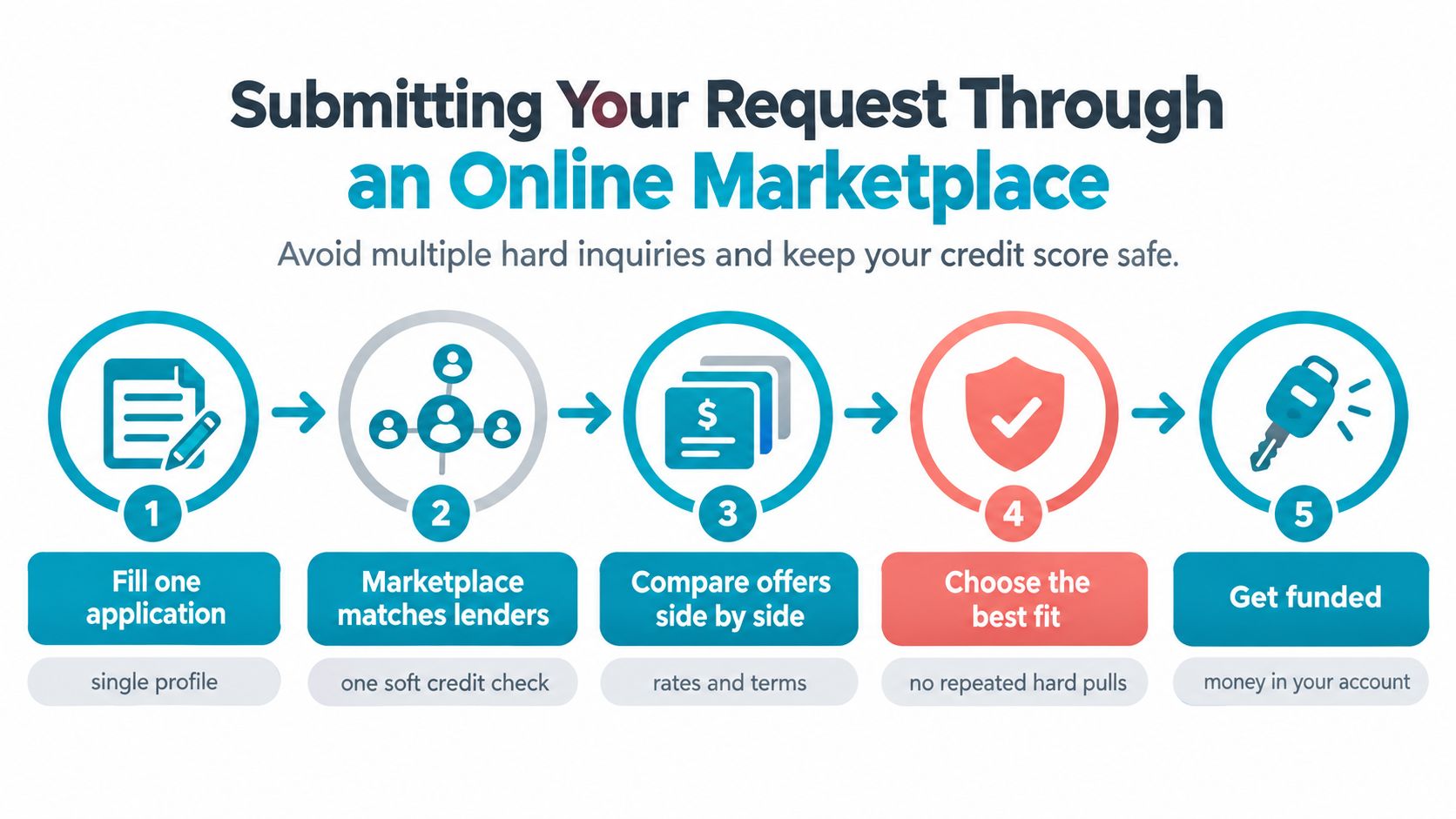
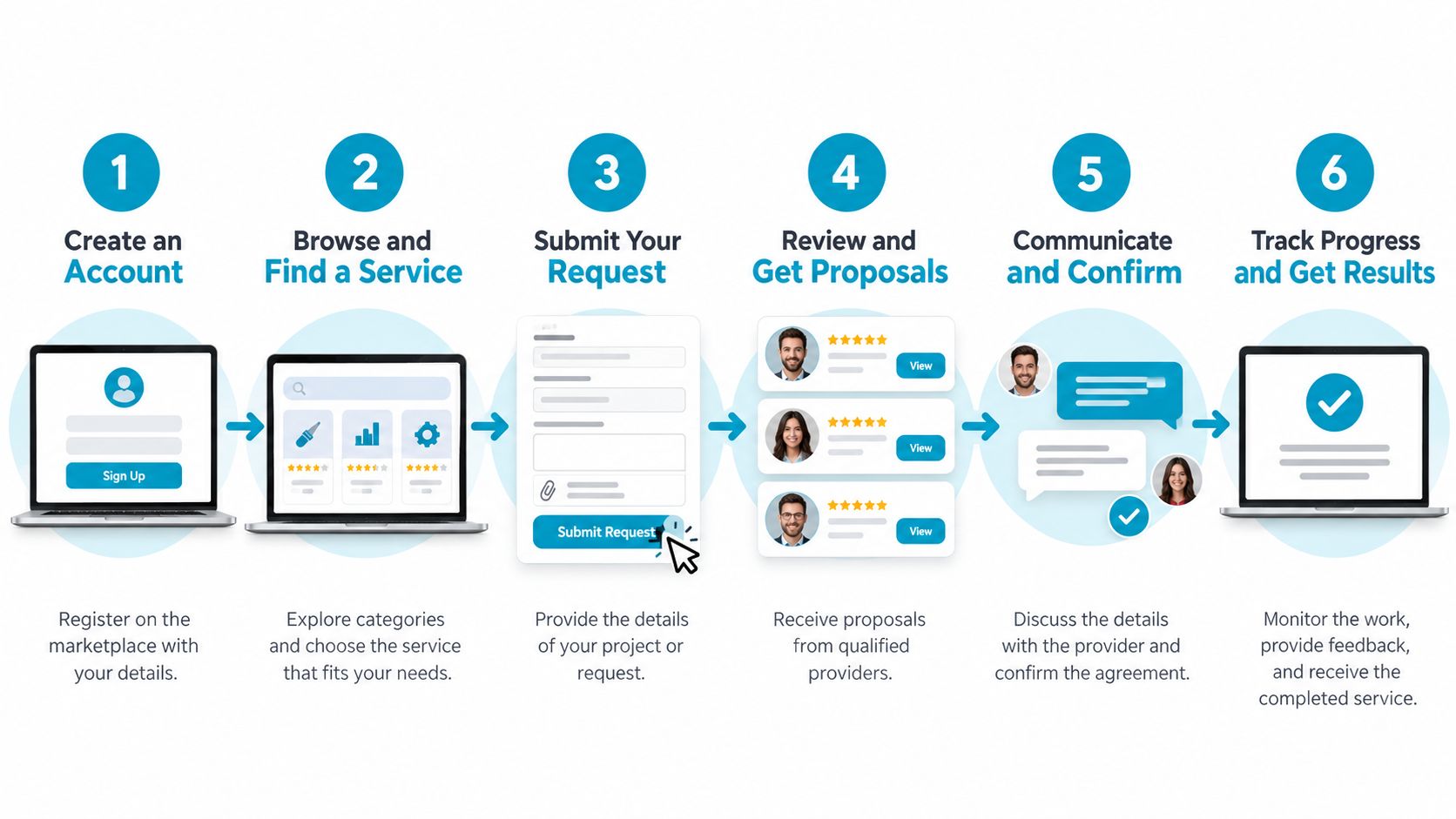
Applying separately with every lender creates unnecessary work. A multi-lender marketplace lets you submit one request, provide consent electronically, and potentially receive responses from participating lenders without completing a new form for each one.
The marketplace isn't the lender. Independent third-party lenders make the approval decision, set the APR, determine the loan amount, and handle funding. That distinction matters because the marketplace can present potential options, but it can't promise approval or improve terms that a lender hasn't offered.
Follow the process carefully
- Complete one secure application. Enter your identity, income, housing, employment, and requested repair amount accurately.
- Review the consent language. Electronic consent allows the request to be evaluated and may authorize participating lenders to review relevant information.
- Wait for potential matches. A marketplace can route the request to participating lenders in real time, with responses often appearing within minutes.
- Compare before accepting. Review APR, fees, payment amount, term, funding method, and total repayment for each offer.
- Finish with the selected lender. The lender may request additional documents, conduct its own credit review, and provide final disclosures before funding.
A soft inquiry may allow you to view potential options without affecting your credit score, but don't assume every later step works the same way. Participating lenders may use major or alternative credit bureaus, and accepting an offer can involve a hard inquiry. Read the disclosure before giving final authorization.
Security still requires your attention. Use a reputable site with secure servers, 256-bit SSL encryption, and clear privacy and advertiser disclosures. Never send identification or bank credentials through an unsolicited text, social message, or email link.
You aren't required to accept an offer just because a marketplace displays it. If the payment exceeds your written budget, decline it. A fast response is useful only when the final terms solve the repair problem without creating an unaffordable monthly obligation.
Evaluating Loan Offers and Avoiding Predatory Traps
Approval isn't the finish line. It only tells you that a lender is willing to offer money under specific conditions. Your job is to decide whether those conditions are acceptable.
Start with the APR, not the advertised monthly payment. The APR reflects interest and certain borrowing costs, making it more useful for comparing offers with different fees or terms. Then inspect the principal, payment schedule, loan term, origination fee, late fee, and total amount of payments.
Read beyond the payment
A low monthly payment may result from a longer term. That can ease short-term cash flow while increasing the total interest paid. A shorter term may cost less overall but leave you with a payment that competes with essentials. Neither is automatically correct. The right offer is the one whose payment fits your budget and whose total cost you understand.
Check whether the lender deducts an origination fee from the amount deposited. If your repair requires a specific amount, a fee taken from the proceeds may leave you short at the shop. You may need to borrow less, adjust the requested amount, or reject the offer if the net funds don't cover the confirmed invoice.
Look for these warning signs:
- Pressure to accept immediately: A legitimate lender should provide disclosures for review.
- Unclear total repayment: You should be able to determine what you'll repay, not just the scheduled payment.
- Prepayment penalties: These can reduce the benefit of paying the loan off early if the final repair is cheaper than expected.
- Unexpected collateral language: An unsecured loan shouldn't become a vehicle-secured obligation without warning.
- Upfront payment demands: Be wary of anyone asking you to pay a fee before releasing a promised loan.
- Payment access you don't understand: Don't authorize automatic withdrawals until you know how payment dates and failed withdrawals work.
Before signing, compare the net amount you receive with the finalized repair invoice. If the mechanic lowers the bill, don't automatically spend the difference. Ask whether you can reduce the borrowing amount before acceptance, or use the unused money for an immediate principal payment if the lender permits it without a penalty.
A repair loan should have a clear purpose, a known payment, and an exit plan. If one of those is missing, stop and review the offer.
Smart Strategies to Reduce Repair and Borrowing Costs
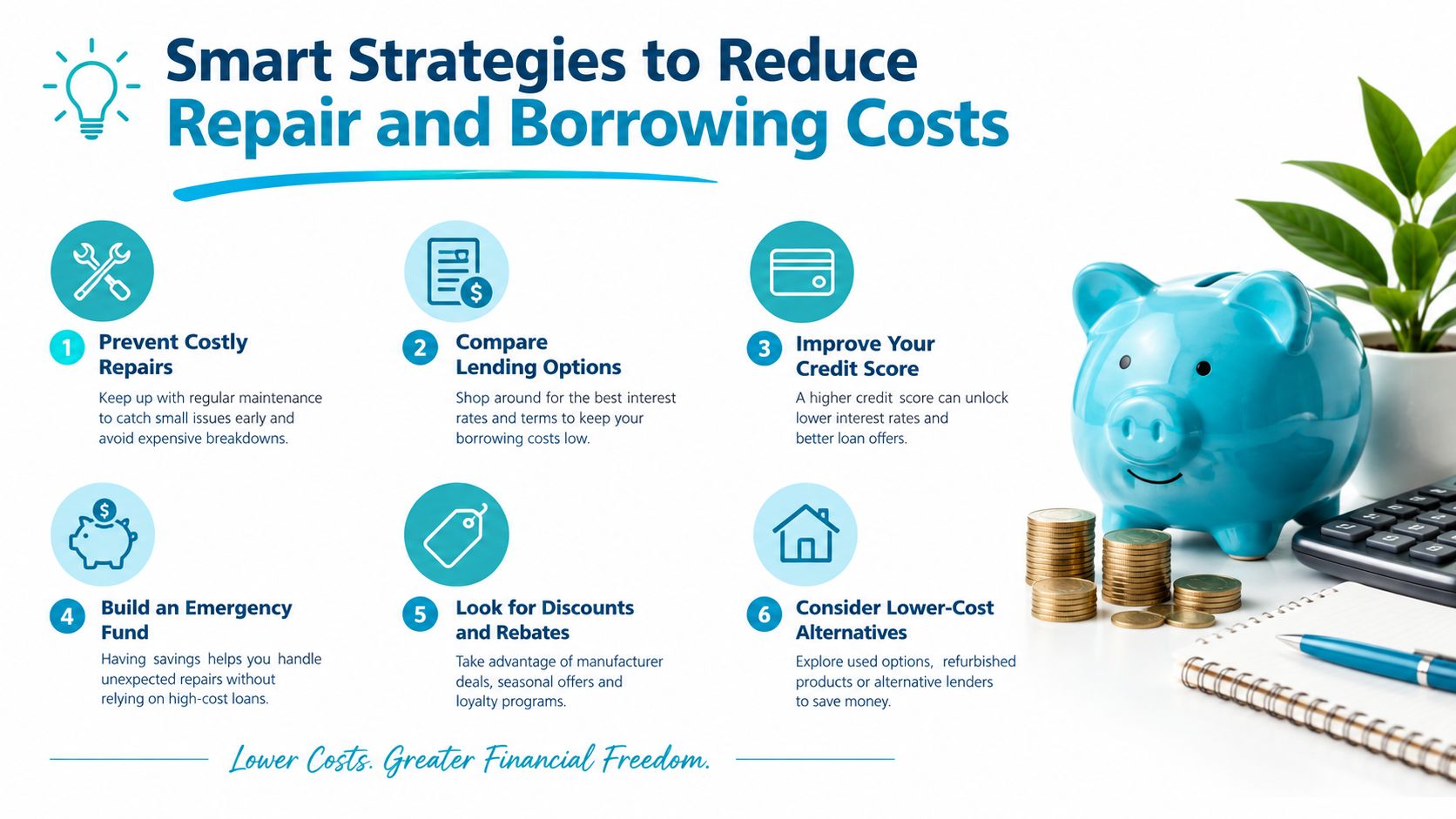
The most effective way to lower loan cost is to finance less. That means negotiating the repair bill with the same discipline you use to compare lenders.
Ask the mechanic to separate parts, labor hours, labor rate, diagnostic charges, shop supplies, taxes, and optional recommendations. Request an explanation for every line item you don't understand. A written breakdown makes it easier to compare another shop and prevents a broad estimate from becoming an open-ended authorization.
For major work, get a second opinion from an independent mechanic. This is especially important when the first diagnosis points to a transmission or engine problem. You may discover that the issue is smaller, that a component can be repaired rather than replaced, or that another shop charges less for the same labor.
Reduce the invoice before you reduce the balance
Discuss parts choices, but don't make price the only criterion. Ask whether the shop will install a reputable aftermarket or remanufactured part, whether you can supply an approved part yourself, and how that choice affects the warranty. Some shops won't install customer-supplied components, so confirm the policy before ordering anything.
Ask what can safely wait. A mechanic should identify work that affects immediate safety or drivability separately from maintenance that can be scheduled later. Don't defer brakes, steering, tires, or another safety issue just to reduce the bill, but don't borrow for optional work just because the vehicle is already in the bay.
Once the final amount is known, request only what you need. If you receive a loan, schedule payments automatically on a date that follows your income. An additional payment made every other week can reduce the balance faster if the lender applies it to principal and doesn't charge a prepayment penalty. Verify those terms first, and never use a payment schedule that leaves you short for essentials.
For borrowers comparing structured options, auto repair financing for bad credit can help frame the questions to ask about eligibility, collateral, repayment, and total cost. The objective isn't only to get the car released. It's to get it repaired while keeping the debt small enough to eliminate.
If you need to compare potential funding for a confirmed auto repair, NextStopLoans offers an online request process that can route your information to independent lenders for possible loan offers. Submit your request only after reviewing the mechanic's final estimate, then compare each lender's APR, fees, payment, and total repayment before accepting.