
10 Auto Repair Financing for Bad Credit Options
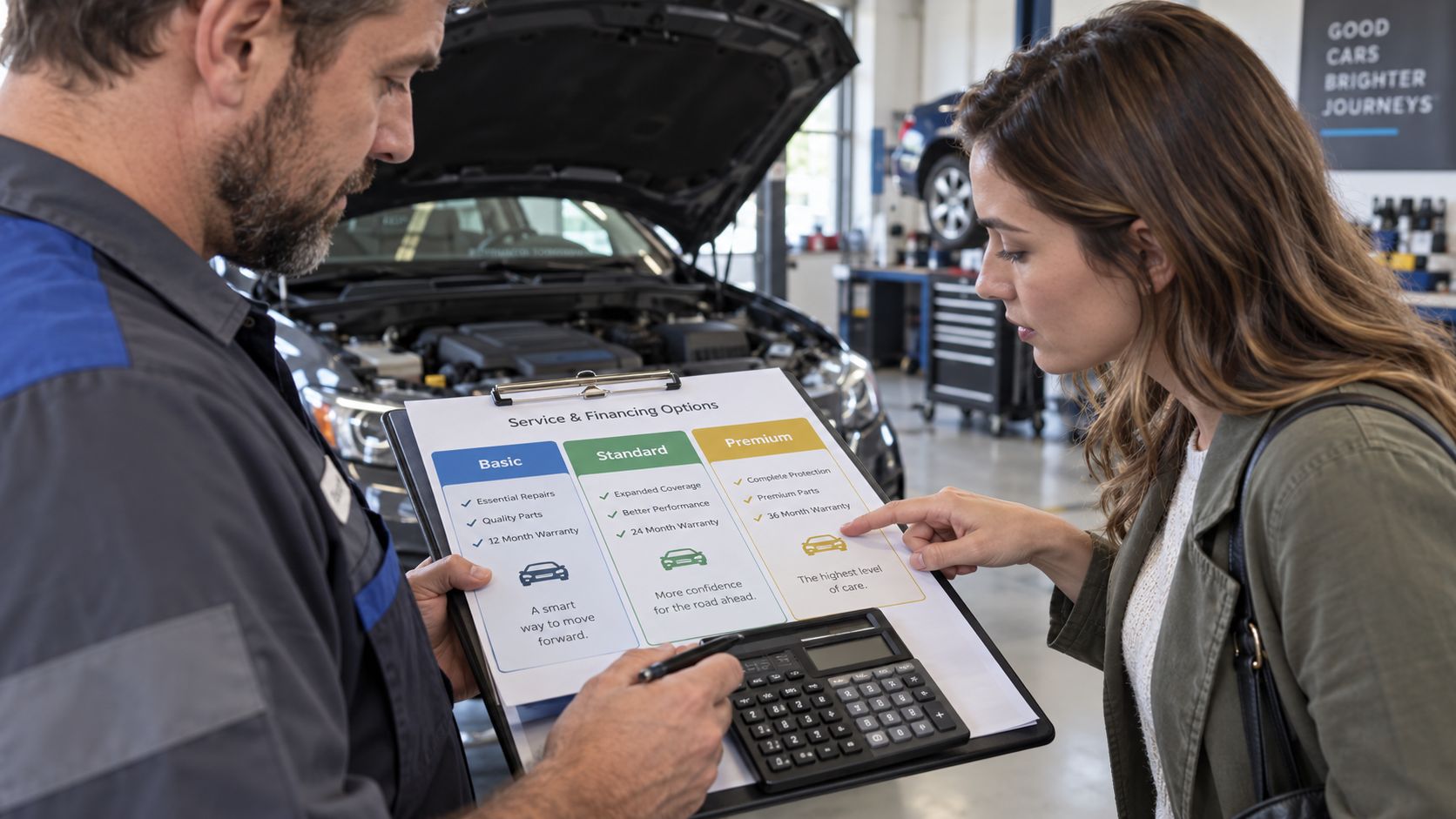
Your car needs an urgent repair, but your credit history makes a conventional loan difficult to obtain. The shop has given you an estimate, the vehicle may be essential for work or family responsibilities, and waiting could turn a manageable problem into a larger one. An average car repair costs $838, according to Kelley Blue Book's March 2025 repair-cost report. For someone with limited savings, that bill can create an immediate borrowing decision.
This guide compares auto repair financing for bad credit by how you receive the money or credit: through a repair shop, tire retailer, auto-specific lender, credit card, marketplace, or personal-loan provider. Approval isn't guaranteed, and lender decisions, rates, fees, and funding times come from the respective providers.
Before accepting an offer, compare the total repayment amount, promotional deadline, credit-check type, collateral risk, merchant restrictions, and consequences of a missed payment. A low monthly payment can still produce an expensive payoff if the term is long, a deferred-interest balance expires, or a lease-to-own contract runs to its full schedule.
Table of Contents
- 1. NextStopLoans
- 2. Sunbit
- 3. DigniFi
- 4. Snap Finance
- 5. Koalafi
- 6. American First Finance
- 7. Acima Leasing
- 8. Synchrony Car Care Credit Card
- 9. CFNA
- 10. OneMain Financial
- Bad-Credit Auto Repair Financing, 10-Lender Comparison
- Choose the Lowest-Risk Path You Can Repay
1. NextStopLoans
A repair estimate can exceed what you can pay today, while the shop's financing plan may limit where the money goes. NextStopLoans offers a different route: one online request can be evaluated by multiple independent lenders. It is a marketplace, not a lender. Each participating lender decides whether to approve you, which terms to offer, and how to fund the loan.
Best use case
Use this marketplace when the repair shop does not offer suitable financing, you need money that is not restricted to one merchant, or you want to compare personal, installment, signature, cash, or vehicle-equity-based options through one application. Some lenders may review information beyond a conventional credit score.
For an $838 repair, a marketplace route can make more sense than a shop-tied plan if you need to compare total repayment or use part of the funds for related transportation costs. A shop plan can be faster at checkout, but it may restrict spending to that merchant and may include a promotional deadline. An outside loan adds another approval and funding step, yet gives you more control over the repair provider and repayment structure.
NextStopLoans does not set your APR, fees, term, or funding date. Participating lenders may use major or alternative credit bureaus, and some may be tribal entities with different legal terms. Availability also depends on your state. The service is unavailable in Arkansas, New York, Vermont, and West Virginia.
Practical rule: Treat each matched offer as a separate credit product. Read the lender's disclosure, payment schedule, and default terms rather than relying on the marketplace summary.
The marketplace lists pricing guidance of roughly 5.99% to 35.99% APR, with terms from about 61 days to 84 months, on its loan marketplace website. Its example of a $5,000 loan includes an 8% origination fee, a 19.25% APR, a $134.16 monthly payment over 48 months, and $6,439.50 in total repayment. That illustration shows why a lower payment can still produce a higher final cost. It does not predict your offer.
Pros
- One online request: Multiple independent lenders may review one application.
- Flexible use: Funds may not be tied to a specific repair shop.
- Bad-credit pathways: Some lenders consider more than standard credit-score signals.
- Digital process: Application, consent, and signatures can be completed online.
- No marketplace fee: NextStopLoans does not charge consumers to be matched.
Cons
- No guaranteed approval: Lenders make the decisions and set the terms.
- Potentially high cost: Lower-credit offers can carry expensive APRs and fees.
- Collateral risk: A title-backed product can put your vehicle at risk after default.
- State restrictions: Eligibility depends on your location and lender requirements.
Review this guide to flex loans for bad credit for broader borrowing structures, but compare the full payoff before choosing flexible access.

2. Sunbit
Sunbit works at the point of service. You apply from your phone or in the service lane, and the financing is tied to a participating dealership, independent repair shop, or tire retailer. That makes it useful when the vehicle is already on a lift and you need a decision without arranging a separate cash loan.
Sunbit generally starts with a soft credit check for prequalification. A hard inquiry may occur if you accept an offer. Many participating merchants offer a promotional option with no interest when the balance is paid within 90 days, but the exact promotion, eligibility rules, and consequences of missing the deadline must come from the merchant and financing agreement.
Why service-lane financing can work
The product removes a major delay. You don't have to wait for a personal-loan deposit, transfer money to the shop, or find a mechanic willing to accept an outside lender. Sunbit's own survey of more than 500 dealerships found that approved customers completed the repair order more than 70% of the time, and the repair order value nearly doubled. Nearly one-third of dealerships reported higher CSI scores when financing was available, according to Sunbit's dealership survey release.
Those figures describe merchant-reported operational results, not a promise that you'll receive approval or a specific price. Lower-credit applicants may receive higher APRs, and the account won't help if your mechanic isn't in the network.
Choose Sunbit when:
- The shop participates: Confirm availability before authorizing the repair.
- You can clear a promotion: Verify the exact payoff date in writing.
- You need an immediate decision: Point-of-sale approval can reduce paperwork.
- You want to avoid vehicle collateral: Review whether the offer is unsecured before signing.
Don't accept a promotion based only on “no interest.” Ask whether interest is deferred, whether unpaid interest can be imposed after the promotional period, and what minimum payment keeps the account current.
3. DigniFi
DigniFi focuses on auto-related expenses. Its RoadWay product is an installment loan, while ExpressWay is a revolving service credit line for repeat repairs, parts, warranties, and deductibles. The choice affects repayment risk. RoadWay sets a balance and payment schedule at origination. ExpressWay can remain available after repayment, but repeated borrowing can leave you carrying new balances.
DigniFi offers soft-pull prequalification, allowing you to review potential options before submitting a full application. Accepting an offer may trigger a hard inquiry. Because applications run through partner merchants, confirm that your mechanic or tire retailer participates before relying on this option.
Match the product to the repair
RoadWay fits a one-time repair more cleanly because the repayment schedule is defined from the start. ExpressWay may fit recurring service needs, but use it only with a written limit and payoff plan. A credit line can make another repair easier to charge while extending the time you remain in debt.
DigniFi lists RoadWay loan amounts commonly ranging from $300 to $10,000 and a partner network of 1,200+ locations across all 50 states on its official auto-financing site. Those details do not guarantee approval, a specific rate, or availability at your preferred shop. Income, credit profile, requested amount, and lender review determine the offer.
DigniFi reports payments to credit bureaus. On-time payments may strengthen your payment history, while late payments can hurt it. Before applying, ask which bureau receives reports, when reporting begins, and whether the offer is an installment loan or revolving account.
Borrow only what restores safe transportation. Leave optional maintenance, accessories, and unrelated purchases out of the application unless you can repay them without extending the debt.
Use this guide to personal loans for bad credit to compare a fixed loan with revolving credit. DigniFi remains restricted to participating merchants, so choose it when the shop accepts it and the repair fits a defined payoff schedule. Compare the total repayment cost with a marketplace or personal loan before signing.
4. Snap Finance
Snap Finance targets applicants who may not qualify for conventional credit. It offers point-of-sale financing for tires, wheels, and selected auto services through participating merchants. Depending on the state and merchant, the transaction may use a lease-to-own arrangement, retail installment contract, or loan.
That structure is more complicated than a standard personal loan. A quick approval and low initial payment don't tell you what the full contract will cost. Snap commonly presents approval amounts from $300 to $5,000, but the actual offer, product type, payment schedule, and payoff rules depend on the merchant and your application.
Early payoff is the central question
Some merchants provide an early-payoff or 90-day payoff option. If you consider Snap, ask the shop for the exact early-payoff amount, deadline, and payment instructions before signing. Put that date on your calendar and confirm whether paying early eliminates future charges or only reduces them.
Lease-to-own products can become expensive when carried through the full term. A contract that looks manageable month to month may cost far more than the repair if you don't use the early purchase option.
Check these points at the counter:
- Product classification: Determine whether you're signing a lease-to-own agreement, retail installment contract, or loan.
- Full-term cost: Ask for the total amount paid if you make every scheduled payment.
- Early-purchase price: Get the amount and deadline in writing.
- Merchant limitation: Confirm that the financing covers the exact repair, not only selected tires or services.
- Missed-payment result: Ask about late fees, default, repossession rights, or contract termination.
Snap's official financing information explains its merchant-based application model. It isn't a direct cash loan, so you can't generally take the proceeds to any mechanic. For more context on why “guaranteed approval” language deserves caution, read this explanation of installment loans marketed with guaranteed approval.

5. Koalafi
Koalafi is obtained through participating repair shops, tire retailers, and parts providers. The merchant determines which product is available, and state rules can affect the offer. That makes it useful at checkout, but it limits your choice of repair location.
The platform combines lease-to-own financing with loan programs. Its application is designed for applicants who may not receive traditional credit approval, yet approval still creates a repayment obligation. Koalafi states that its network includes 28,000+ merchants, although your specific store and repair must qualify.
Before accepting an offer, open the payoff tools and compare two totals: the amount due under the early-purchase option and the amount paid over the full term. Koalafi commonly presents early-purchase periods of 90 to 120 days, but your agreement controls the deadline and payoff amount. Save both figures and the deadline before authorizing the repair.
A short-term cash gap is the strongest fit. If you can complete the early purchase, the product may help you avoid delaying necessary work. If that payoff plan is unrealistic, compare a fixed personal loan or another repair-shop option. Carrying lease-to-own financing through its full duration can cost substantially more than paying cash.
Use Koalafi only after checking:
- Merchant access: Confirm the repair provider participates and can finance the exact work.
- Product type: Identify whether the offer is a lease-to-own agreement or loan.
- Payoff risk: Ask what changes after the early-purchase period ends.
- Total cost: Compare the full-term amount with other available financing.
- Deadline control: Put the early-purchase date on your calendar.
Koalafi's merchant financing platform provides access to its application and payoff tools. Read the agreement for fees, missed-payment consequences, ownership terms, and restrictions before signing. “No credit needed” does not remove repayment risk.
6. American First Finance
A repair shop offers American First Finance, or AFF, when a customer needs work completed but cannot qualify easily for a standard card or personal loan. You may apply in the shop or through the merchant's application link, so approval can happen alongside the repair decision. That convenience comes with a narrower choice of merchants and contract types.
AFF commonly lists new-customer approval amounts from $300 to $5,000, with higher amounts possible for repeat customers. Treat those figures as product guidance, not available credit. The repair provider, your state, the work being financed, and the underwriting decision determine what you receive.
Put the payoff risk first
Before authorizing the job, ask the merchant to identify the agreement as a loan, installment contract, or lease-to-own product. Record the cash price, every scheduled payment, the full-term total, and the exact amount needed for early payoff. A lower initial payment can still produce a high total if you keep the account open for the full schedule.
Confirm which parts of the invoice qualify. Parts, labor, tires, warranties, and deductibles may not receive identical treatment, and merchant restrictions can leave part of the repair unpaid. Check that the approved amount covers the complete job before work starts.
AFF programs may report payment history to selected credit bureaus. Ask whether your specific account reports, which payments qualify, and when reporting begins. On-time payments may support credit-building, while a missed payment can hurt your credit and leave the repair balance due.
Use this short checklist with the merchant:
- Early payoff: Ask which future charges disappear after early payment.
- Credit inquiry: Confirm whether the application uses a hard inquiry.
- Default terms: Review late charges and other contract remedies.
- Budget fit: Test the payment after rent, utilities, insurance, fuel, and existing debt.
Read the current disclosures on AFF's official consumer financing page. Choose this route only when the payment is affordable and you understand the full payoff amount, reporting rules, and merchant limits.
7. Acima Leasing
A tire fails before payday, and the retailer accepts Acima. This lease-to-own option can provide access when a conventional card or loan is unavailable, especially for tire and wheel purchases. Approval decisions are made at the point of sale, but merchant participation and product eligibility limit where you can use it.
Acima is not a cash personal loan. You cannot take the funds to any repair shop, and a participating location may exclude certain mechanical work. Ask the retailer to confirm that the tires, installation, and related services qualify before authorizing the job.
Compare the buyout, not just the payment
The early-purchase terms determine whether Acima fits an urgent tire expense. Early purchase windows are commonly presented as 90 to 120 days, according to Acima's lease-to-own auto financing information. Your agreement controls the deadline, payment schedule, fees, and total cost.
Request these figures in writing:
- Cash price: What would the same tires and services cost without financing?
- Early-buyout amount: How much must you pay, and by what exact date, to purchase early?
- Full-term total: What will you pay if you make every scheduled payment?
- Payment frequency: Are payments weekly, biweekly, or monthly?
- Missed-payment terms: Can the retailer or leasing company repossess the tires, charge fees, or require another remedy?
- Coverage: Does the agreement include installation, warranties, or other invoice items?
Compare the cash price with both the early-buyout total and the full-term total.
Acima makes the most sense when the tires are necessary, the merchant participates, and you can reliably complete the early purchase. Choose another route if the early payoff is uncertain, the full-term cost strains your budget, or the vehicle has other unresolved problems that could create more debt.
The retailer must provide the controlling agreement. Ignore verbal claims about “low payments” or “no credit needed” until the written terms confirm them.
8. Synchrony Car Care Credit Card
A repair bill of $838 can become two separate promotional purchases on a Synchrony Car Care credit card. That may help divide the immediate charge, but each purchase can have its own terms and payoff deadline. Confirm those details before authorizing the work.
The card is a revolving account accepted by participating auto repair, parts, and fueling merchants. It can work for a repair shop you already use and may remain available for future eligible purchases. That flexibility also creates a risk: reused credit can turn one repair into a longer-term balance, and acceptance is limited to participating locations.
Match the card to your payoff ability
Qualifying purchases may receive offers such as no interest when paid in full within six months. The checkout offer controls the purchase threshold, promotional term, and other conditions. Treat the deadline as a fixed target, not as permission to make minimum payments indefinitely.
Before accepting the card, ask the merchant to show:
- Purchase allocation: Will the repair be posted as one transaction or separate promotional purchases?
- Payoff deadlines: Does each purchase have its own date and required payment?
- Post-promotion APR: What rate applies to any remaining balance?
- Merchant limits: Can the card be used at this exact location and for every part of the proposed job?
- Application inquiry: Will the application use a soft or hard inquiry?
Synchrony's Car Care cardholder account page provides account-management information and a merchant locator. Approval is not guaranteed with bad credit, and the account may become expensive once promotional terms end.
Use this option only if the repairer accepts it, you can calculate a monthly payment that clears every promotional balance on time, and you will not reuse the available credit. Set reminders for each deadline, then compare the required payoff with a fixed installment loan if your budget cannot handle the promotional schedule. A card offers purchase flexibility, while an installment loan offers a defined repayment end, so choose based on the total cost you can manage.
9. CFNA
CFNA issues store-branded credit cards for affiliated tire and service providers, including Firestone Complete Auto Care, Tires Plus, and Wheel Works locations. They can finance tires, brakes, and mechanical work, but only where the specific CFNA program is accepted.
Use CFNA when the repair shop is already part of your plan. Before authorizing work at Firestone or Tires Plus, ask the service adviser to separate the estimate into tires, parts, and labor, then confirm which items qualify for the promotion. A card may cover the full invoice, or the shop may apply different terms to tires and repair labor.
CFNA's official card and account information can help you identify affiliated providers and review account details. Confirm the exact location before applying. A nearby branch, independent mechanic, or other tire retailer may not accept the card.
Verify the payoff before you approve the repair
CFNA promotional financing and cardholder programs are offered through affiliated shops. Standard APRs on carried balances are commonly in the high-20% range, according to the product plan notes. Check the disclosure for your account because the rate, fees, and promotional terms can differ.
Ask these questions at checkout:
- Eligible work: Are tires, labor, parts, and diagnostics included under the same terms?
- Transaction setup: Will the shop post one purchase or separate charges?
- Promotional deadline: What date and payoff amount avoid added interest?
- Regular APR: What rate applies to any balance left afterward?
- Credit inquiry: Is prequalification available, or will the application create a hard pull?
CFNA fits a borrower who uses an affiliated shop and can clear the balance by the stated deadline. If the estimate includes work outside the promotion, calculate that cost separately. If you need an independent mechanic or expect to carry the balance, compare the card's full repayment cost with an unrestricted loan before accepting it.
10. OneMain Financial
A trusted mechanic may not offer point-of-sale financing. OneMain Financial provides secured and unsecured personal loans through online and branch channels, so you can pay an eligible repair shop without limiting the transaction to participating merchants. That flexibility helps when the repair requires an independent provider or when merchant financing covers only certain services.
Start with prequalification, which uses a soft inquiry before the full application. A secured offer may improve approval fit for some borrowers, but it places the vehicle at risk. If you default, the lender may have rights against the collateral. A lower monthly payment does not justify that exposure unless you can handle the loan reliably.
Match the loan to the repair, not the other way around
Get a written estimate before applying and borrow only what the necessary work requires. Personal loans can provide fixed payments and a defined payoff date, but they also make it easy to finance optional repairs or unrelated expenses. Compare the total repayment with the invoice, then check whether the payment still fits after rent, insurance, and existing debt.
OneMain's official personal-loan information describes its online and branch application channels. APRs may be significantly higher than prime personal-loan rates and vary by state. Funding may arrive as soon as the next business day after finalization, although timing depends on the application and lender process.
For borrowers comparing options, this guide to personal loans for a 500 credit score offers broader context. Your approval, rate, fees, and repayment terms will come from the actual OneMain offer.
Choose an unsecured loan if you need mechanic flexibility, want to keep the vehicle free of a lien, and can afford the fixed payment. Review the term and total repayment, not just the monthly amount. For a secured offer, read the lien terms, default consequences, insurance requirements, and payoff process before signing.
Bad-Credit Auto Repair Financing, 10-Lender Comparison
| Product (Channel) | Speed & UX (★) | Target Audience (👥) | Unique Selling Points (✨ / 🏆) | Pricing & Approvals (💰) |
|---|---|---|---|---|
| 🏆 NextStopLoans | Responses in minutes; mobile & secure (256‑bit SSL) ★★★★ | Consumers needing fast funding, bad/limited credit, variety of loans 👥 | 🏆 Single secure form routed to multiple lenders; no consumer fee; bad‑credit pathways; next‑day funding possible ✨ | Lender‑set APRs ~5.99%–35.99%; sample fees shown; lenders may pull credit 💰 |
| Sunbit | Fast in‑lane soft‑pull prequal; mobile-friendly ★★★★ | Auto service customers at participating shops; subprime‑friendly 👥 | Soft pull prequal; common 90‑day no‑interest promos; built for service lanes ✨ | APRs vary by tier; higher for lower credit; merchant‑only offers 💰 |
| DigniFi | Soft‑pull prequal ~2 min; nationwide partner network ★★★★ | Auto repair customers; repeat service needs 👥 | RoadWay installment & ExpressWay revolving line; reports to credit bureaus ✨ | Approval/APR profile dependent; hard pull on acceptance; merchant use 💰 |
| Snap Finance | Quick in‑lane approvals; 'no credit needed' model ★★★ | Subprime/limited‑credit shoppers at merchant partners 👥 | Multiple product types (lease‑to‑own, RIC, loans); early‑payoff promos ✨ | Lease/RIC can be costly if carried full term; merchant‑only 💰 |
| Koalafi | Fast in‑store approvals; large merchant footprint ★★★ | Limited‑credit borrowers shopping at participating merchants 👥 | Large merchant network; early‑buyout discounts & payoff tooling ✨ | Lease-to-own can be expensive without early buyout; availability varies 💰 |
| American First Finance (AFF) | Quick in‑store or link‑to‑apply flows ★★★ | Imperfect‑credit customers at partner repair shops 👥 | Pay‑over‑time options; reports to select bureaus; early payment options ✨ | May trigger hard inquiry; costs high if balances carried long 💰 |
| Acima Leasing | Fast approvals; low initial payments at POS ★★★ | Tire/wheel shoppers and subprime applicants at merchants 👥 | Lease‑to‑own focused for tires; early‑purchase discounts commonly offered ✨ | Lease costs can exceed cash if not bought out early; merchant‑limited 💰 |
| Synchrony Car Care | Card approval & promos; mobile account mgmt ★★★ | Consumers with credit approval who frequent auto merchants 👥 | Deferred‑interest promotions; wide merchant acceptance; revolving card ✨ | Deferred‑interest risk (retroactive interest if unpaid); requires credit 💰 |
| CFNA (Credit First) | In‑store card issuance; frequent POS promotions ★★★ | Customers of CFNA‑affiliated chains (Firestone, Tires Plus, etc.) 👥 | Store‑branded cards with shop promotions; some rewards ✨ | Store‑specific acceptance; carried balances often high‑20% APR 💰 |
| OneMain Financial | Soft prequal; branch + online channels; next‑day funding common ★★★★ | Borrowers needing unsecured/secured personal loans; lower credit with collateral 👥 | Secured & unsecured loan options usable at any mechanic; branch access ✨ | APRs vary; higher for lower credit; secured loans risk repossession 💰 |
Choose the Lowest-Risk Path You Can Repay
Start with the repair itself. Ask the mechanic for a written estimate that separates safety-critical work from recommended maintenance, then confirm whether a warranty, recall, insurance policy, or existing service plan could cover any portion. You shouldn't borrow for a repair that another provider is already obligated to pay.
Next, ask the shop about its in-house plans and every participating provider. A repair-shop option can produce a fast decision and direct payment, but it restricts you to that merchant. A personal loan or marketplace offer can give you more flexibility, while a credit card may work across a broader network. Tire-focused lease-to-own products can help with an urgent tire purchase, but they may not cover engine, electrical, or diagnostic work.
Compare the offer in this order:
- Total repayment: Add principal, interest, origination charges, service fees, and any required payments.
- APR and term: A lower monthly payment isn't a lower total cost if repayment lasts longer.
- Product type: Identify whether you're accepting an installment loan, revolving account, deferred-interest promotion, or lease-to-own contract.
- Promotion deadline: Verify the exact early-payoff or promotional expiration date in writing.
- Credit inquiry: Ask whether prequalification uses a soft pull and whether acceptance triggers a hard inquiry.
- Merchant restriction: Confirm where the funds or account can be used.
- Collateral exposure: Understand whether the vehicle secures the debt and what default could mean.
- Payment reporting: Ask whether payments go to credit bureaus and which bureau receives them.
For a repair bill of a few hundred dollars, avoid stretching repayment across a long term unless the payment is unaffordable otherwise. Industry survey data indicates that 28% of Americans couldn't cover a $500 car repair without taking on debt, and more than one-third say an unexpected repair above $500 would be difficult to afford, according to LendingTree's car-repair debt survey. That financial pressure explains why fast approval matters, but urgency doesn't remove the need to calculate the final cost.
The CFPB has warned that repair-shop loans may be secured by the vehicle, and its subprime auto data point highlights the importance of comparing lender types and contract terms in subprime auto finance. Treat a vehicle lien as a serious risk, especially when you depend on the car for work, medical appointments, or family transportation.
Prequalify where available, but don't submit unnecessary full applications. If a provider shows a soft-pull offer, read the final disclosures before accepting because the hard inquiry and binding terms may appear at that stage. Never assume “no credit needed,” “no interest,” or “low payment” means low total cost.
NextStopLoans is worth considering when you want one secure online request evaluated by multiple independent lenders. It can connect borrowers with personal, installment, emergency, signature, or vehicle-equity-based options, but it remains a connector rather than a lender. Participating lenders determine approval, APR, fees, collateral terms, and funding, so compare each offer independently and decline any option you can't repay.
NextStopLoans lets you submit one secure, mobile-friendly request to a network of independent lenders, which can help you compare potential funding for an urgent repair when traditional approval is difficult. Visit NextStopLoans to review your available options, lender disclosures, and eligibility before accepting any offer.