
Flex Loans Bad Credit
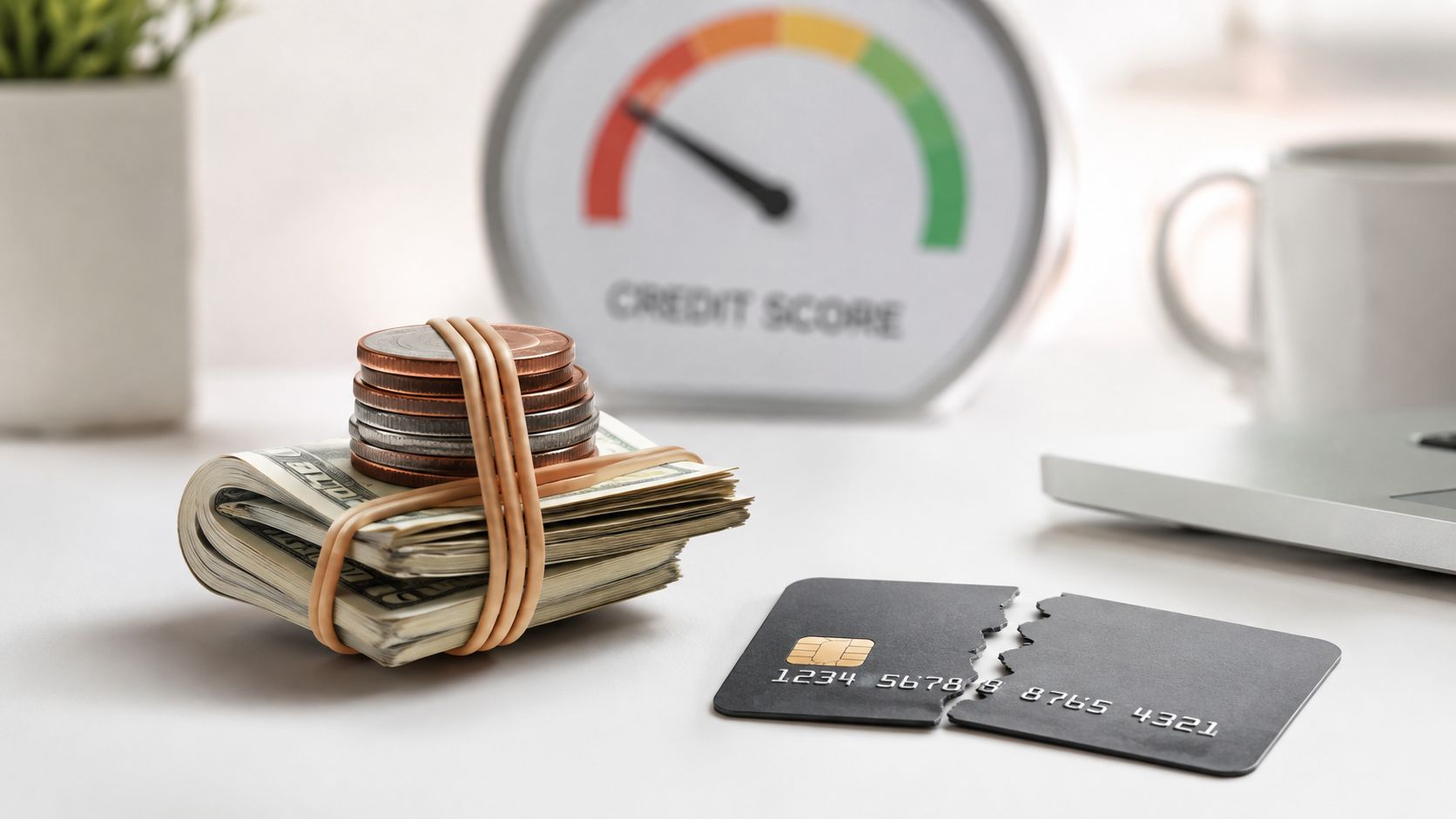
A sudden car repair, vet bill, or utility shutoff notice can turn your browser into a search box. You type “flex loans bad credit” because a bank has already said no, your savings won't cover the bill, and another application feels exhausting.
The word flex sounds reassuring. It may suggest smaller payments, an adjustable schedule, or access to cash when you need it. But flex loan isn't one universal product with one standard contract. The label can describe a line of credit, a payday-style advance, or an installment loan with limited payment options.
That difference matters more than the advertising. Before you apply, you need to know what the lender is evaluating, what the loan will cost, how repayment works, and whether the flexibility lowers pressure or keeps a balance alive. The following guide treats the product as a decision to inspect, not a promise to accept.
Table of Contents
- Why People Search for a Flex Loan When Credit Is Rough
- What Flex Loans Mean in Practice
- Who Bad-Credit Flex Loans Are Built For
- How Lenders Actually Decide to Approve You
- Comparing Flex-Style Options for Bad-Credit Borrowers
- The Pricing and Rollover Risk Behind Flexible Loans
- A Pre-Application Checklist That Protects Your Budget
- Smart Next Steps Before You Submit a Request
Why People Search for a Flex Loan When Credit Is Rough
The search often happens late in the day, after several other options have failed. A borrower may have enough income to cover regular bills but not enough cash available today. A traditional lender sees a damaged credit file, recent missed payments, or a high balance on existing accounts and declines the request. An online advertisement then offers a simpler path, perhaps with a soft credit check or language about approval for borrowers with poor credit.
That offer can feel like relief. It may also encourage a rushed decision. Urgency narrows attention, so borrowers often focus on the amount deposited and overlook the total repayment, the payment schedule, or the consequences of missing a due date.
Practical rule: Treat “approved” and “affordable” as separate questions.
A flex-style product may solve a timing problem, such as moving an expense from today to a later payday. It won't automatically solve an income problem. If the bill is larger than the amount your next pay cycle can absorb, changing the payment date may only postpone the same shortfall.
Why the label creates confusion
Different lenders use “flex loan” to describe different mechanics. One offer may let you draw from a revolving credit line and make minimum payments. Another may provide a single advance with a short repayment window. A third may use fixed installments but allow limited term changes.
The advertising language can therefore hide the most important details. Ask what happens after the first payment, whether the balance can be borrowed again, how fees accrue, and whether the lender can automatically withdraw money from your bank account.
Slow down the first decision
You don't need to reject every offer just because your credit is poor. You do need to compare the offer with alternatives using the same facts. Write down the amount you need, the date you can repay it, and the maximum payment your budget can handle after housing, food, utilities, transportation, and existing debts.
That simple pause changes the search from “Who will approve me?” to “Which product can I repay without creating another emergency?”
What Flex Loans Mean in Practice
Flex loans share a common thread: the contract defines what “flexibility” means, not the marketing label. A fixed installment loan provides a set amount, scheduled payments, and a stated finish date. A flex-style offer may let you adjust payment amounts, draw funds more than once, or choose between minimum and accelerated payments.
“Flex loan” is a marketing description, not a single product type. The agreement underneath may be a payday-style loan, a revolving line of credit, or an installment contract that permits early payoff or term adjustments. Those structures can create very different costs and repayment risks.

Identify the underlying structure
Read the agreement in this order:
- How funds are delivered. Is there one deposit, or can you draw repeatedly from an available limit?
- How repayment is calculated. Does the contract require one payment, fixed installments, or a percentage of the outstanding balance?
- What “flexibility” changes. Can you move a due date, extend the term, reduce a payment temporarily, or borrow again after paying?
- How charges accrue. Look for interest, finance charges, origination fees, account fees, late fees, and withdrawal fees.
- What happens after a missed payment. The agreement may describe automatic debits, additional charges, default reporting, or collection activity.
State law can change the product as well. Licensing, fee limits, and repayment rules vary, so a lender may offer one structure in one state and another elsewhere. An advertisement or explainer from another state may not describe your contract.
Gather the same records you would use to compare any borrowing option. You may need identification, income records, bank information, housing costs, employment details, and permission for a credit or alternative-data review. Comparing these facts across flex-style offers and mainstream alternatives shows whether the flexibility changes your repayment burden or only changes its timing.
Who Bad-Credit Flex Loans Are Built For
Flex-style products aimed at poor credit generally serve borrowers outside the prime market. The Federal Reserve defines nonprime borrowers in its small-dollar lending analysis as consumers with Equifax Risk Scores below 720, while subprime borrowers have scores below 620. Its Federal Reserve analysis of small-dollar loans reports that subprime borrowers hold almost 70% of all small-dollar loan balances.
That concentration helps explain the intended audience. These products are structured for people who may have recent delinquencies, high credit utilization, thin credit files, inconsistent income, or limited access to conventional borrowing. A poor score can close some doors, but it does not describe the borrower's entire financial position.
| Credit Tier | Typical FICO Range | Flex Loan Fit |
|---|---|---|
| Prime | Above the subprime range | Usually has broader, lower-cost alternatives |
| Nonprime | Below 720 in the Federal Reserve definition | May qualify when income and repayment ability are strong |
| Subprime | Below 620 | Common target segment for small-dollar products |
| Deep subprime or limited file | Varies by lender | Approval depends heavily on cash flow, documentation, and lender policy |
These labels are guideposts, not approval decisions. Someone with a low score and steady direct deposits may look safer to a lender than someone with a higher score, unstable income, and repeated overdrafts. The categories describe credit history, while the application review examines whether repayment appears workable.
Small-dollar borrowing also includes more than one structure. The Federal Reserve reports that nearly one-third of small-dollar loan balances are secured and about half are fixed-rate. Some products require collateral, some rely on income verification, and others use a revolving account structure.
The practical conclusion is simple: bad-credit borrowers are a major part of the small-dollar market, but flex loans are still risk-priced products. They may be available to people mainstream lenders reject, yet access does not make the financing inexpensive or suitable for every emergency. Compare the payment, total charges, and repayment timing against mainstream alternatives using the same checklist.
How Lenders Actually Decide to Approve You
A weak credit score doesn't end the review. It changes what the lender needs to understand. The lender wants evidence that money regularly enters your account, essential expenses leave room for a payment, and the requested amount won't overwhelm your cash flow.
Start with income, not promises
Income verification may include pay stubs, bank statements, employer contact details, benefit records, or other documentation. A lender may also consider self-employment or gig income, but irregular deposits can require more explanation than a consistent payroll pattern.
Make the application match your records. Inflated income, omitted debts, or unexplained deposits can create problems during verification. If your income varies, prepare a clear record showing the normal pattern rather than relying on one unusually strong month.
Map the monthly pressure
Lenders may review your debts and housing costs to estimate repayment capacity. The exact formula differs, but the question is consistent: after existing obligations, is there enough dependable money for this payment?
Your bank account history can matter too. Regular deposits and a stable balance may support an application, while repeated overdrafts, returned payments, or recent negative balances can weaken it. A lender may also review alternative signals, such as rent or utility payment history, when traditional credit data doesn't tell the full story.

Improve what you can before submitting
You can't remove an accurate late payment immediately, but you can make the application easier to evaluate. Gather current income records, check that your bank account is open and usable, list every existing debt, and request only the amount tied to the actual expense.
A paid collection account may help explain your history, but current cash flow still matters. If your account has recently experienced overdrafts or returned payments, waiting for a more stable pattern may be safer than applying repeatedly and accepting the first expensive offer.
Approval is a judgment about repayment capacity, not a reward for having a perfect credit history.
Comparing Flex-Style Options for Bad-Credit Borrowers
The right comparison starts with the repayment problem, not the product name. A borrower who needs one predictable payment has a different need from someone who expects several expenses and wants reusable access to funds.
| Product Type | Typical Funding Speed | Min. Credit Profile | Repayment Structure | Collateral Needed | Interest Reduces With Early Payoff |
|---|---|---|---|---|---|
| Installment loan | Varies by lender | May consider poor or limited credit | Fixed payments over a stated term | Usually unsecured, but contract controls | Often, depending on the agreement |
| Cash advance | Often designed for urgent access | May rely more on income than score | Short repayment window or single payment | Usually unsecured | Limited benefit when the charge is fee-based |
| Line of credit | Varies by lender and account setup | Often requires stronger cash-flow review | Minimum payment with reusable borrowing | Usually unsecured, though terms vary | Usually, because charges apply to outstanding use |
| Credit-builder loan | Funding and access depend on the program | May accommodate limited history | Scheduled payments, often with funds held or structured by provider | No traditional collateral, but contract controls access | Depends on the agreement |
An installment loan tends to fit a one-time expense when a fixed payment can fit your budget. Its scheduled payoff date can make progress easier to track, but a longer term may keep you paying charges for longer.
A cash advance can address a short timing gap, but it becomes dangerous when repayment depends on borrowing again. Historical CFPB research found that the median payday loan term was 14 days, and nearly half of borrowers had more than 10 payday transactions in a year. Those figures appear in the CFPB report on payday and deposit advance lending.
A line of credit offers access flexibility, which can help with uneven expenses. The same feature can make the balance feel permanent if you make only minimum payments or repeatedly draw funds.
A credit-builder loan is less suited to an immediate emergency because its main purpose is establishing payment history or savings discipline. It may be a better fit when the urgent bill has another solution and your longer-term goal is rebuilding credit.
The Pricing and Rollover Risk Behind Flexible Loans
A flexible loan can solve a short cash gap while creating a longer repayment problem. The total cost depends on how fees are charged, how long the balance remains open, how the lender calculates the amount owed, and whether the agreement allows renewal or extension.
Payday-style loans commonly charge $10 to $30 per $100 borrowed, with $15 per $100 described as typical. On a 14-day term, that typical charge annualizes to roughly 391% APR, according to the Consumer Financial Protection Bureau's payday-loan cost guidance. The same CFPB material reports that online payday loans can cost about $4 more per $100 than storefront loans, or roughly 100 percentage points higher in APR after accounting for borrower and loan characteristics.
Why renewal changes the risk
A renewal keeps the account available but may leave the principal mostly untouched. You pay another charge, postpone the balance, and reach a new due date without closing the original budget gap.
CFPB research found that more than 80% of payday loans were rolled over or renewed within 14 days, while over 60% occurred in sequences lasting at least seven loans. Its installment-loan analysis also reported default in over 40% of online payday installment loans and 55% of online payday installment loan sequences.
Check the agreement for terms that can raise the cost or reduce your options:
- Automatic debit authority: The lender may make repeated withdrawal attempts from your account.
- Renewal or extension terms: A new charge may apply without reducing the principal.
- Default reporting: The lender may report the account or send it to a collector.
- Arbitration provisions: Dispute-resolution choices may be limited.
- Collateral language: A secured loan can place an asset at risk.
A line of credit can leave a balance open when minimum payments cover charges but reduce principal slowly. Before accepting access to additional funds, calculate the result of making only the required payment and having no new borrowing available for the next bill. That comparison shows whether the offer solves the shortfall or merely postpones it.
A Pre-Application Checklist That Protects Your Budget
Use the contract, your budget, and your repayment date together. A loan can look manageable in isolation and still fail once it competes with rent, food, transportation, and existing obligations.
Identify what secures the loan. Confirm whether the offer is unsecured. If a vehicle, bank account, or other asset is involved, write down exactly what the lender can claim after default.
Calculate the complete repayment. Include the principal, interest, origination charge, account fees, late charges, and any extension cost. Don't compare offers using the advertised payment alone.
Test the payment against real cash flow. Use your current budget, not an optimistic future budget. If the payment works only when nothing unexpected happens, the loan is fragile.
Confirm documentation requirements. Ask whether the lender needs pay stubs, bank statements, employer information, benefit records, or proof of residence. Missing documents can delay funding or change the offer.
Read early-payoff language. Check whether paying ahead reduces future interest, whether a fee applies, and whether the lender applies extra money to principal.
Verify state availability and licensing. A product offered online may not be available in every state. Confirm the lender's legal name, license information, governing law, and complaint process.
Also look for grace periods, rollover language, automatic withdrawals, and credit-bureau reporting. Reporting can help establish a stronger record when payments are made on time, but missed payments can deepen existing damage.

Smart Next Steps Before You Submit a Request
Start with the full disclosure, not the application button. Read the loan agreement, payment schedule, fee table, privacy terms, and default policy. Marketing pages often summarize the product, while the contract explains how charges, withdrawals, renewals, and disputes work.
Pull your credit reports and check for errors before submitting multiple requests. An incorrect balance, duplicate account, or outdated delinquency can affect how lenders evaluate you. If you find an error, dispute it with the relevant reporting agency and keep copies of your documents.
Compare offers on one page
Create a simple comparison sheet with these fields:
- Amount deposited
- Total repayment
- APR or finance-charge method
- Payment amount and due dates
- First payment date
- Early-payoff terms
- Late and extension charges
- Automatic withdrawal authority
- Credit reporting policy
- State license and lender name
A single application marketplace, such as NextStopLoans, can route a request to independent lenders for consideration, but the participating lenders make the decisions and set the terms. Review any offer independently, and remember that you aren't required to accept an offer just because you submitted a request.
If the numbers don't fit, contact a nonprofit credit counselor before borrowing. Ask an employer about a wage advance, check local utility or emergency assistance programs, and consider whether a small emergency reserve can be built gradually after the immediate bill is handled. Sometimes the least expensive loan is the one you avoid by combining assistance, a payment arrangement, or a delayed purchase.
Write your repayment plan down before accepting anything. Put every due date on your calendar, keep the lender's disclosures, and monitor your bank account for authorized withdrawals. A flex loan should be judged by whether it leaves your next pay cycle stable, not merely by whether it gets approved today.
If you're comparing flex-style options with poor credit, visit NextStopLoans to submit one secure request for consideration by independent lenders. Review the available terms, fees, repayment schedule, and lender disclosures carefully before deciding whether any offer fits your budget.