
10 Loans Without Credit Check: Safer Options
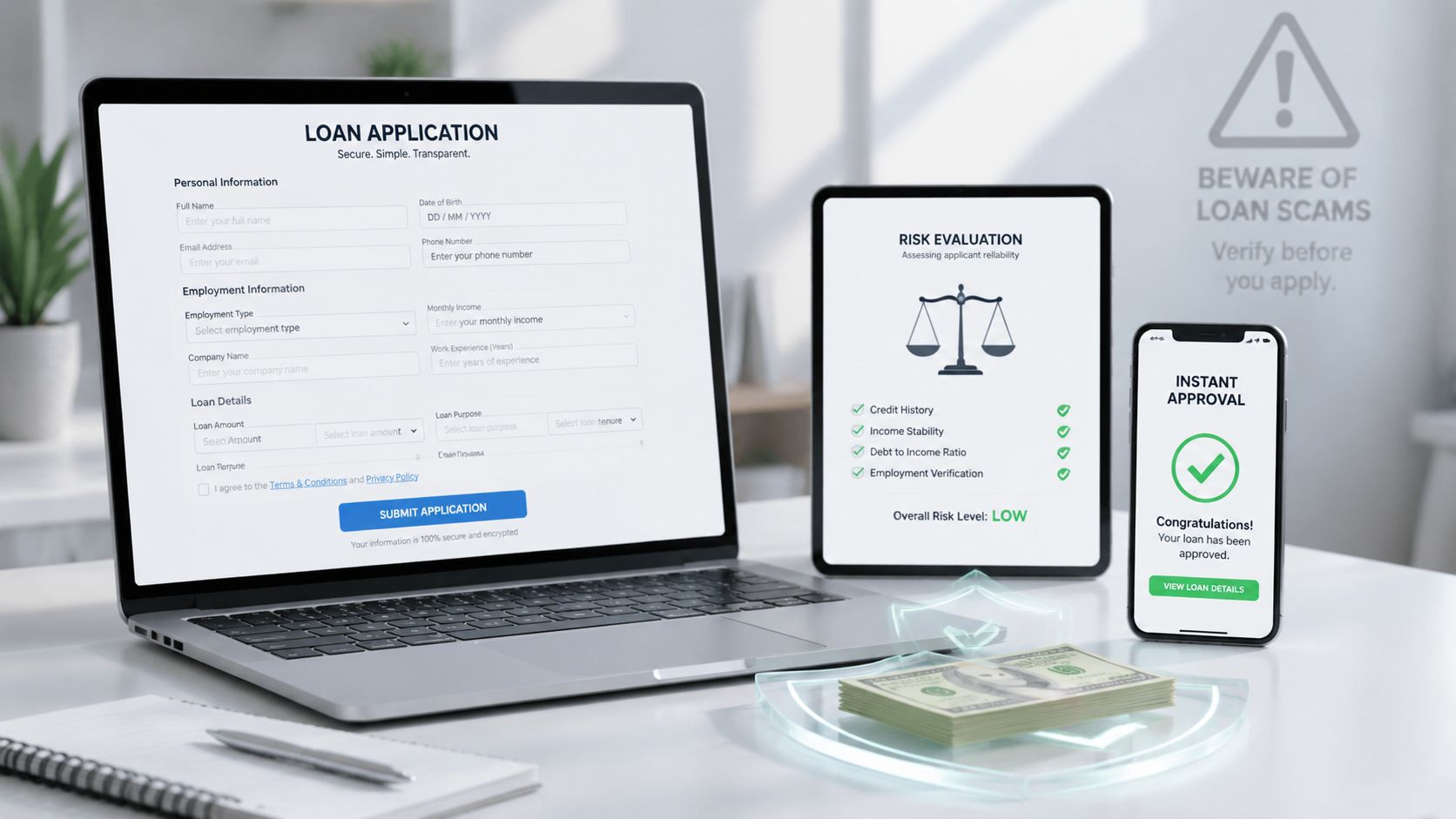
A “no credit check” loan rarely means no underwriting at all. In U.S. payday lending, the median loan is $350 for 14 days, with an implied 391% annual percentage rate, and more than 80% of payday loans are rolled over or reborrowed within 30 days. Providers may instead review bank data, income, employment, account activity, alternative reporting, or collateral, while costs and eligibility vary by state.
The popular advice is simple: search for “loans without credit check” and choose the fastest approval. That advice skips the most important question, which is how the provider evaluates your ability to repay. A marketplace may not pull your credit, while a participating lender still uses cash-flow information or an alternative bureau. A cash advance may not be a loan at all. A title lender may care less about your score because your vehicle secures the balance.
This guide compares ten resources by their risk signal, repayment structure, likely speed, data requirements, collateral exposure, state availability, and total-cost risks. NextStopLoans is a connector, not a lender. It routes a request to independent third-party lenders, but those lenders make the decisions, set the terms, and handle funding.
Before accepting anything, read the lender name, APR or fee schedule, repayment dates, authorization language, privacy terms, and consequences of a failed payment.
Table of Contents
- 1. Bad Credit Loans by Location | Next Stop Loans
- 2. Advance America
- 3. ACE Cash Express
- 4. Speedy Cash
- 5. Possible Finance
- 6. MoneyLion Instacash
- 7. Dave ExtraCash
- 8. EarnIn
- 9. Brigit Instant Cash
- 10. ChoiceCash Title Loans
- No-Credit-Check Loans, Top 10 Comparison
- Compare the Repayment Risk Before You Apply
1. Bad Credit Loans by Location | Next Stop Loans
A marketplace organized around eligibility and location
Next Stop Loans' Bad Credit Loans by Location hub is built for borrowers who have poor or limited credit and want to see options available in their state or city. Instead of submitting separate applications to multiple providers, you complete one secure, mobile-friendly request that can be routed to independent third-party lenders.
The marketplace doesn't make a lending decision or promise approval. Its role is to connect applicants with lenders that may consider non-prime profiles and information beyond a traditional bureau score. Depending on the lender and the state, a response may relate to a personal loan, installment loan, payday loan, title loan, emergency cash product, or another short-term option.
That range is useful, but it also creates the central risk. A single application can lead to very different offers, and the lowest-friction option isn't necessarily the least expensive. NextStopLoans states that participating lenders may use credit checks, including alternative bureaus, even though the marketplace itself doesn't pull credit.
What to review before accepting a match
The application process uses secure servers, 256-bit SSL encryption, and electronic consent workflows. The site also provides links to its rates and fees, lending policy, privacy policy, advertiser disclosure, and trusted-partner information. Those disclosures help explain the connector relationship, but they don't replace the lender's final agreement.
Potential responses may arrive within minutes, and lenders may offer direct-deposit funding as soon as the next business day, subject to their own processes. Treat those timelines as possible outcomes, not guarantees.
Practical rule: Use the marketplace to compare access, then judge each offer separately. Check the lender's identity, total repayment, payment dates, state license or availability, and bank-account authorization before signing.
The location structure can help you avoid researching products that aren't offered where you live. Availability is restricted in some states, including Arkansas, New York, Vermont, and West Virginia. A lender may also impose additional requirements, such as proof of income, an active bank account, employment information, or a hard or soft credit inquiry.
This option fits borrowers who value a single intake and want to review several kinds of products. It doesn't solve affordability by itself. If the proposed payment would cause another shortfall, declining the offer is the safer decision.
2. Advance America
Advance America combines online applications with physical storefront service in eligible states. Its product lineup includes payday loans, installment loans, and lines of credit, although availability, eligibility, fees, and repayment rules depend on state law and the specific product.
The company says applying for a cash advance doesn't affect FICO or Vantage scores. That statement addresses the effect of an application or inquiry on those scoring systems. It doesn't mean the provider performs no review, and it doesn't tell you whether another consumer-reporting source, income check, bank-account review, or repayment-capacity assessment will be used.
For someone who needs an in-person option, a storefront can offer a different experience from an app-only provider. Where permitted, same-day in-store access may be available, while online funding may arrive as soon as the next business day. Both outcomes depend on approval, document verification, banking conditions, and state-specific procedures.
The cost question matters more than the speed claim
Payday products are designed for short repayment periods. The Consumer Financial Protection Bureau's payday-loan research found a median term of 14 days and a median amount of $350, with an implied 391% annual percentage rate. More than 80% of payday loans were rolled over or reborrowed within 30 days, which shows why a quick advance can become recurring borrowing.
Advance America offers multiple product categories, so you shouldn't assume every offer has payday-loan terms. Compare the exact APR, finance charge, due date, renewal rules, and consequences of a returned payment. A line of credit can also create repeated access to borrowing, which may make it harder to identify when short-term use has become ongoing debt.
3. ACE Cash Express
ACE Cash Express offers payday and installment products through online and in-store channels. Its materials state that it may use non-traditional consumer reporting agencies and that those inquiries won't affect a FICO Score. That makes ACE a useful example of the difference between no FICO impact and no underwriting.
A lender can avoid a traditional scoring inquiry while still reviewing information about your financial behavior. Alternative reporting, income, employment, bank activity, or other application details may influence the decision. Borrowers should ask which information the lender will access, why it needs that information, and whether the authorization continues after the application.
ACE presents payday and installment loans as distinct products. A payday structure usually places repayment close to the next paycheck, while an installment structure divides repayment across scheduled payments. The second format may feel easier to manage because each payment is smaller, but that doesn't automatically make the total cost low.
Match the payment schedule to the cash flow
ACE advertises no application fee through its online process, but that doesn't mean the loan has no cost. State-specific fee and APR disclosures control the offer, and the lender's agreement should show the amount you receive, the finance charge, the total repayment, and the exact dates.
A lender can say that an inquiry won't affect your FICO Score while still deciding eligibility from other data. Read the underwriting disclosure, not just the headline.
The practical advantage is speed and channel choice. You may be able to apply online or visit a store, depending on location and product availability. The main drawback is that high-cost short-term credit can become difficult to close out when the original due date arrives.
4. Speedy Cash
Speedy Cash offers payday loans, installment loans, and lines of credit through online and storefront channels in eligible states. Its state-by-state product pages are especially relevant because short-term lending rules, fees, maximums, and repayment structures can change based on where you live.
Speedy Cash also addresses a point many “no credit check” pages avoid: removing a traditional credit pull doesn't remove the cost of risk. The provider's educational material warns that products marketed this way may carry higher APRs. That warning is more useful than a generic promise of easy approval because it directs attention to the trade-off between access and affordability.
Three products, three repayment risks
A payday loan typically concentrates repayment into a short window. An installment loan spreads scheduled payments over a longer period, which can improve short-term cash-flow management while extending the relationship with the lender. A line of credit offers reusable access, but repeated draws can turn an emergency solution into a recurring balance.
Use the state product page to confirm:
- Product identity: Determine whether you're reviewing a payday loan, installment loan, or line of credit.
- Total cost: Compare APR, finance charges, late fees, and any origination or delivery charges.
- Repayment mechanics: Check whether the lender will automatically debit your account and what happens after a failed payment.
- Renewal exposure: Find out whether the balance can be renewed, redrawn, or refinanced.
The provider's online and storefront availability may suit borrowers who need a quick response and want several product types in one place. It doesn't make the product affordable. The CFPB's historical payday-lending findings found that four out of five payday loans were rolled over or renewed within 14 days, while only 15% of borrowers repaid all payday debts when due without re-borrowing. That pattern is a warning to examine whether your next income payment can cover both the loan and ordinary expenses.
5. Possible Finance
Possible Finance takes a different approach from a traditional payday storefront. The company states that it doesn't perform a FICO check and instead uses alternative data and bank-transaction underwriting. That means the application may still involve a detailed look at account activity, deposits, and cash flow.
Possible typically structures its product as a short-term installment loan repaid in four biweekly payments. It displays a flat fee per $100 borrowed before acceptance, with the actual fee varying by state. This upfront presentation can make comparison easier than a product that reveals the cost only after a borrower reaches the final agreement.
A clearer schedule doesn't eliminate repayment pressure
The app includes payment scheduling and rescheduling tools, and Possible states that it reports positive payments to credit bureaus. That reporting may be relevant to someone trying to establish a payment history, but it isn't a guarantee of credit improvement. A missed or late payment can still create financial consequences under the agreement, and the product remains short term.
The key question is whether four scheduled withdrawals fit your income pattern. A biweekly payment can collide with rent, utilities, transportation, or other fixed expenses even when the individual amount looks manageable.
- Review the displayed fee: Treat the flat fee as a financing cost, not as a free service.
- Confirm the payment dates: Check whether dates can be changed and what conditions apply.
- Inspect the bank authorization: Understand how the app accesses transaction data and initiates repayment.
- Compare alternatives: A transparent high-cost product can still be more expensive than a credit-union option, employer resource, payment plan, or other solution.
Possible Finance is most distinguishable for its alternative underwriting, fixed short repayment pattern, and visible fee structure. Its limitations are equally important. Availability and pricing vary by state, and the cost may exceed mainstream personal-loan alternatives.
6. MoneyLion Instacash
MoneyLion Instacash is a non-recourse cash advance, not a conventional personal loan. MoneyLion states that Instacash doesn't require a credit check, carries no interest, and can use an optional tip model. Expedited delivery may involve a fee.
The product connects to external bank accounts or MoneyLion accounts, and eligibility and limits depend on the account setup and the provider's conditions. The commonly advertised limit is up to $500 for many users, with higher limits associated with certain account arrangements. Because the amount and access can change, don't treat a displayed maximum as an amount you should borrow.
The repayment risk sits in the next cash-flow cycle
A non-recourse advance differs from secured lending because the borrower doesn't pledge a vehicle or another asset. That can reduce collateral exposure, but it doesn't make early access to income costless. An optional tip, expedited-transfer fee, membership condition, or account requirement can affect the effective price and the amount available for ordinary spending.
The distinction between an advance and a loan also changes how you should compare it. Don't compare only the advertised absence of interest. Calculate what you pay for delivery, tips, subscriptions, or related account services, then ask whether the repayment withdrawal will leave enough money for upcoming bills.
Look past the zero-interest label: A product can avoid interest and still reduce your next available cash through fees, tips, or automatic repayment.
Instacash may fit a small, short-lived cash gap when the user understands the account conditions and can cover the repayment. It isn't a substitute for stable income or a sustainable emergency fund. Limits tied to account activity can also make access unpredictable when your finances are already under pressure.
7. Dave ExtraCash
Dave positions ExtraCash as a cash advance with no credit check, no interest, and no late fees. It requires users to open a Dave Checking and ExtraCash account, so the product isn't just a standalone application for a one-time loan.
The account structure is central to the evaluation. Dave considers account history and activity when determining access, and the available advance depends on those factors. Rapid approval and instant-transfer options may help with urgency, but some delivery choices can carry fees.
Account access is part of the trade-off
“No credit check” describes the credit-screening feature, not the absence of eligibility rules. A provider can use deposit patterns, account activity, and other information to decide whether an advance is available and how much can be accessed. Opening a financial account also means reviewing privacy permissions, data sharing, automatic repayment terms, and any subscription or service conditions.
The absence of interest and late fees may make the product look less expensive than a payday loan. That's a meaningful difference in structure, but the right comparison is still the total amount paid and the effect on your next cash-flow period. If you borrow repeatedly, a product that feels inexpensive per transaction can become a regular response to a recurring deficit.
Consider these questions before using ExtraCash:
- Do you need the account afterward? Confirm whether access depends on continued use of Dave's banking structure.
- What delivery speed do you need? Check whether instant or expedited transfer adds a fee.
- What supports eligibility? Review the role of account history, deposits, and activity.
- Can you repay without another advance? If not, the product isn't resolving the underlying gap.
Dave may suit someone who wants a small advance and accepts the required account relationship. It won't suit a borrower who wants no new financial account or who can't absorb repayment from the next available funds.
8. EarnIn
EarnIn is an earned-wage access service rather than a traditional loan. It lets eligible users access part of wages they've already earned but haven't received. The service states that it doesn't require a credit check, doesn't charge mandatory fees or interest, and uses a non-recourse structure.
That distinction matters. EarnIn isn't underwriting a conventional debt balance against a promised future repayment schedule in the same way as a payday or installment lender. It verifies earned wages and pay patterns, then provides access before the employer's normal payday. Advance amounts remain tied to those patterns, so someone with irregular income may find access limited.
Early access can still compress the next paycheck
EarnIn says nonpayment isn't reported to credit bureaus, and users can choose to tip. Some transfer options can carry service fees, particularly when the user wants money faster. The absence of mandatory interest doesn't mean every use has the same cost, so check the delivery choice and optional payment screens carefully.
The main risk is timing. Accessing wages early can leave less money available when the regular paycheck arrives. If the same rent, food, transportation, and utility obligations still need to be paid, the advance may shift the shortfall rather than remove it.
A practical comparison should include:
- Income verification: Confirm how EarnIn identifies earned wages and employment.
- Transfer cost: Separate the no-mandatory-fee structure from optional tips and express fees.
- Advance limits: Check the amount available for your actual pay pattern.
- Repeat use: Ask whether early access is becoming part of every pay cycle.
EarnIn may be less exposed to the APR and collateral risks associated with payday and title loans. It still requires discipline because the service changes when you receive your money, not how much you earn.
9. Brigit Instant Cash
Brigit Instant Cash offers cash advances advertised from $25 to $500, with no credit check, no interest, and no late fees. Users connect a checking account and must meet deposit and activity criteria. Some services, including higher advance access, may require a Brigit Plus subscription.
The product evaluates financial behavior through the linked account rather than relying on a traditional credit score. That can help explain why “no credit check” shouldn't be read as “everyone qualifies.” Deposits, account history, balance patterns, and other eligibility conditions may determine whether an advance appears and how much is available.
Subscription cost changes the comparison
The no-interest positioning is relevant when comparing Brigit with payday credit, but it isn't the entire cost analysis. If a subscription is needed for a feature or a higher advance, include that recurring charge in the calculation. Express delivery can also change the amount you ultimately pay.
Brigit's budgeting tools and optional credit-building features may be useful for someone who wants financial tools alongside a cash advance. They don't eliminate the repayment obligation or guarantee that the next deposit will cover ordinary bills after the advance is collected.
Before connecting your account, examine:
- Eligibility data: Identify which deposits and activity patterns the service uses.
- Membership requirements: Determine whether Brigit Plus is required for the feature you want.
- Delivery pricing: Compare standard and express delivery costs.
- Repayment timing: Confirm the withdrawal date and how the service handles insufficient funds.
Brigit can be a practical fit for a modest, temporary gap when the account conditions and subscription economics make sense. It becomes less attractive when the user pays for ongoing access but repeatedly needs advances to cover routine expenses.
10. ChoiceCash Title Loans
ChoiceCash Title Loans, serviced by LoanMart, uses vehicle equity rather than a strong traditional credit profile as the central security for the loan. The product is marketed to borrowers with bad, limited, or no credit, and the application can include remote vehicle inspections in many cases.
That collateral changes the risk calculation completely. An unsecured lender may pursue collection or other remedies after missed payments. A title lender can place the vehicle at risk because the car secures the debt. If you rely on that vehicle for work, childcare, medical appointments, or daily transportation, repossession could create consequences beyond the balance itself.
ChoiceCash offers online applications and multiple disbursement methods, including cash pickup and debit disbursement in applicable situations. Fast access may be valuable during an emergency, but speed doesn't reduce the total repayment amount or make the collateral risk easier to absorb.
Compare the vehicle risk with the cash need
Title-loan APRs and terms vary by state and contract. Read the exact agreement for the finance charge, payment schedule, renewal provisions, late fees, repossession language, and any costs connected with the title or vehicle inspection. Don't rely on the lender's approval message as evidence that the payment is affordable.
A title loan deserves extra scrutiny when:
- The vehicle is essential: Losing it could threaten income or basic access to services.
- The payment depends on another loan: Replacing one shortfall with another raises the chance of debt cycling.
- The total cost is unclear: Stop until the lender gives a complete repayment figure.
- The contract allows renewal: Repeated extensions can increase what you owe while the vehicle remains pledged.
Title-secured borrowing may provide access when unsecured options reject an applicant. That access comes with a higher-stakes consequence for missed payments. Treat the vehicle as the price of failure, not merely as paperwork supporting approval.
No-Credit-Check Loans, Top 10 Comparison
| Product | Core Offering | UX & Speed | Cost & Value 💰 | Target & USP 👥✨ | Quality & Risks ★🏆 |
|---|---|---|---|---|---|
| Bad Credit Loans by Location (Next Stop Loans) | Marketplace routing one secure app to multiple lenders; personal, installment, payday, title, emergency | Mobile/desktop; real‑time matching; responses in minutes; possible next‑business‑day funding | 💰 No marketplace fee; lender rates vary (can be high) | 👥 Non‑prime/limited credit; ✨ Location‑based hub, single intake to many lenders | ★★★★; 🏆 Fast matching; risk = lender terms vary |
| Advance America | Payday, installment loans, lines of credit; storefront + online | In‑store same‑day cash; online next‑day; fast decisions | 💰 High-cost payday pricing; state‑dependent fees | 👥 Short‑term cash seekers; ✨ Nationwide storefront network | ★★; 🏆 Wide access; risk = high APRs |
| ACE Cash Express | Payday & installment; online + stores; non‑traditional reporting | Quick in‑store and online approvals | 💰 High fees typical of short‑term credit | 👥 Urgent small‑dollar needs; ✨ Uses alternative reporting | ★★; Risk = state APR variation |
| Speedy Cash | Payday, installment, line of credit; online + storefronts | Fast funding where permitted; clear state product pages | 💰 Often high APRs; fees vary by state | 👥 Small‑dollar borrowers; ✨ Educational content on tradeoffs | ★★☆; Risk = triple‑digit APRs in some states |
| Possible Finance | Short‑term installment loans (4 biweekly payments); alternative underwriting | In‑app flow; scheduling/rescheduling; quick decisions | 💰 Transparent flat fees per $100; higher than mainstream credit | 👥 Credit‑building seekers with bank data; ✨ No FICO check; reports positive payments | ★★★★; 🏆 Transparent fees; limited state availability |
| MoneyLion, Instacash | Non‑recourse cash advance (commonly up to ~$500); no credit check | Fast advances; integrates with bank accounts | 💰 Typically cheaper than payday; optional tip/expedite fees | 👥 Users needing small advances; ✨ No interest model, account‑based limits | ★★★★; Risk = limits tied to account setup |
| Dave, ExtraCash | Cash advances up to ~$500; no credit check; no interest | Rapid approval; instant transfers (fees may apply) | 💰 Low‑cost alternative to payday; may require service fees | 👥 Short‑term advance users; ✨ No interest/no late fees (product) | ★★★★; Risk = requires Dave account/history |
| EarnIn | Earned‑wage access (access earned wages); no credit check | Quick access to earned wages; optional express transfers | 💰 No interest; optional tips/transfer fees | 👥 Workers needing payroll advances; ✨ Non‑recourse, no credit impact | ★★★★; 🏆 Low cost vs payday; limits tied to pay |
| Brigit, Instant Cash | Instant advances $25–$500; no credit check; budgeting tools | Fast delivery; in‑app budgeting and subscriptions | 💰 No interest/no late fees; some features require subscription | 👥 Account‑linked users; ✨ Budgeting + credit tools; subscription tiers | ★★★★; Risk = subscription cost for higher access |
| ChoiceCash Title Loans (LoanMart) | Vehicle title‑secured loans using car equity | Online app + remote inspections; fast funding in many areas | 💰 Potentially very high total cost; state‑varying APRs | 👥 Borrowers unable to get unsecured credit; ✨ Approval when unsecured options fail | ★★; Risk = repossession; high cost |
Compare the Repayment Risk Before You Apply
Start by identifying what you're considering. A payday or installment product is a loan. Instacash, ExtraCash, and similar products are cash advances. EarnIn is earned-wage access. The repayment rules, disclosures, credit reporting, account permissions, and consumer protections can differ substantially across those categories.
Next, identify every input used to evaluate repayment risk. A lender or app may review a bureau report, a soft inquiry, income, employment, bank transactions, deposit history, account activity, an alternative reporting agency, or vehicle equity. A marketplace may submit your request without making the decision, while its participating lenders may apply their own underwriting criteria.
The CFPB reported that around half of consumers who used payday, auto title, or pawn loans in June 2019 were still using those services in June 2020. That persistence suggests you should evaluate repeat-use risk before focusing on application speed. Ask whether the product helps you handle a one-time timing problem or makes recurring income pressure easier to borrow against.
Use this sequence before accepting an offer:
- Confirm the product type: Determine whether it's a loan, a cash advance, or earned-wage access.
- List the underwriting inputs: Find out what data the provider will access and whether it uses a hard or soft credit inquiry.
- Check state eligibility: Verify that the product is offered where you live and that the displayed disclosures apply to your state.
- Calculate the full cost: Compare APR, fees, tips, subscriptions, renewal charges, transfer costs, and the total amount repaid.
- Mark every repayment date: Make sure automatic withdrawals won't collide with rent, utilities, food, transportation, or other essential expenses.
- Assess collateral exposure: If your vehicle secures the balance, consider what losing it would do to your income and daily life.
- Read permissions and disclosures: Review privacy terms, electronic consent, lender identity, advertising disclosures, and bank-account access.
Customer sentiment can also be misleading if it measures convenience rather than affordability. Pew-summarized survey data found 18% of payday borrowers were very satisfied and 41% somewhat satisfied, while 26% were somewhat dissatisfied and 14% very dissatisfied. Access and speed may produce satisfaction at origination, but those feelings don't prove that the repayment outcome was sustainable.
NextStopLoans can route a request to independent lenders, but it doesn't make decisions or set terms. If you receive an offer, compare it with other available solutions and decline it if repayment would create another shortfall.
Watch for these warning signs:
- Guaranteed approval claims: Legitimate eligibility still depends on provider criteria.
- Upfront payment requests: Be cautious when someone demands money before explaining the loan.
- Unclear lender identity: You should know who makes the decision and who will collect payments.
- Missing fee disclosures: Don't accept a product without a complete cost and repayment schedule.
- Pressure to accept immediately: Urgency shouldn't replace time to read the agreement.
- Unexplained bank permissions: Ask why an app needs account access and how it will use your data.
NextStopLoans offers a secure, mobile-friendly application that can connect eligible U.S. consumers with independent lenders considering personal, installment, payday, title, and emergency-loan requests. To compare potential options without submitting separate applications, visit NextStopLoans, review every lender's terms carefully, and accept only an offer you can repay without creating another financial gap.