
Fast Food Res: What It Means and Why It Matters
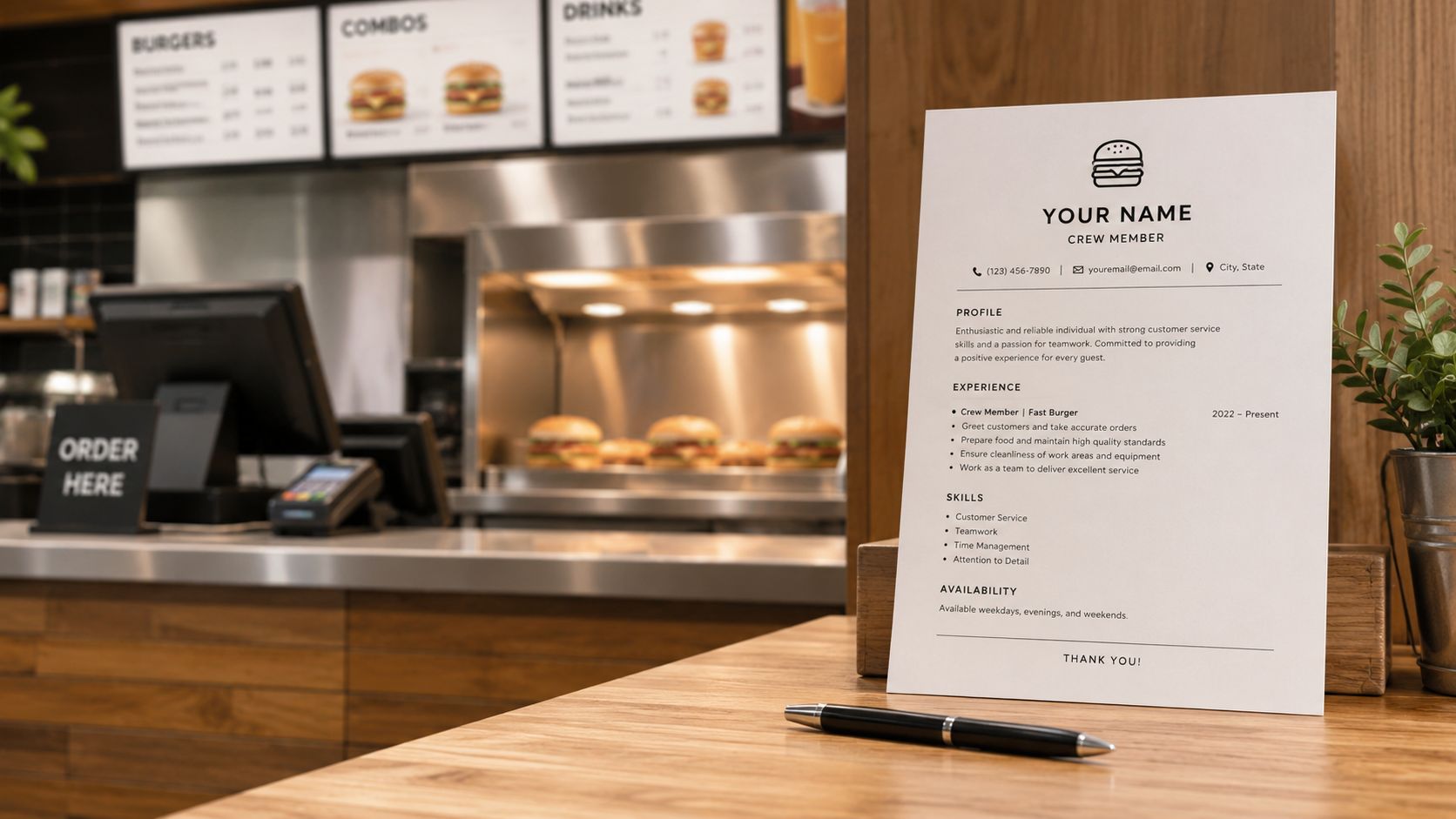
What does a search for fast food res mean, a restaurant industry snapshot, or a resume guide for getting hired in quick-service food? That ambiguity is the point. Search engines often return both, because people use the same shortcut phrase when they want either fast food restaurants or a fast food resume, and the best answer has to serve both intents without forcing the reader to guess.
Table of Contents
- Understanding the Fast Food Res Search Intent
- The State of Fast Food Restaurants in 2026
- Which Fast Food Formats Are Winning Traffic
- Building a Strong Fast Food Resume
- How Fast Food Experience Translates to Career Growth
- Common Misconceptions About Fast Food Industry Health
- Next Steps for Job Seekers and Industry Observers
Understanding the Fast Food Res Search Intent
A truncated query like fast food res is one of those searches that looks simple but hides two different jobs-to-be-done. Some readers want to understand the fast food restaurant industry, while others are trying to write a fast food resume that gets noticed. Both interpretations are valid, and both deserve a direct answer.
Search behavior usually pushes these two paths together. Someone typing fast into a phone may rely on autocomplete, while another person may be looking for restaurant trends after seeing traffic change in their neighborhood or for a first job application after hearing about a local opening. The phrase itself doesn't tell the whole story, so the result set often blends industry pages, hiring advice, and broader food-service commentary.
The safest way to read a vague search term is to ask, “What problem is the reader trying to solve right now?”
For that reason, the most useful approach is to cover both angles in one place. If you're tracking the business side, you'll get a current view of the fast food restaurant market, consumer traffic, and the formats that are still pulling visits. If you're job hunting, you'll also get practical resume guidance that fits the reality of QSR hiring, where clear skills and measurable results matter more than generic duties.
The State of Fast Food Restaurants in 2026
The fast food sector is still a huge global business, not a niche convenience category. Industry analysis puts global fast food restaurants at 588,107 businesses in 2025, up 1.3% from 2024, and estimates the broader market at about $1.1 trillion in 2026 with 4.1% annualized growth over the prior five years (Market Data Forecast). Another market estimate places the global fast food market at roughly $775.34 billion in 2025 and projects $1.162 trillion by 2034 at a 4.60% CAGR, while a broader estimate projects $1.78 trillion in 2026 (Mordor Intelligence). The exact scope varies by report, but the direction is consistent. The category is still expanding.
That growth, though, doesn't mean every operator is seeing the same demand. Recent QSR data show that in Q4 2025, U.S. traffic fell 2.0% year over year even as net sales rose 1.3% and average prices rose 2.8% (Revenue Management). In plain terms, revenue growth is being helped by pricing more than by more visits. That distinction matters for owners, investors, and applicants trying to judge whether a chain is busy or just charging more per order.
Fast Food Industry Key Metrics 2026
| Metric | 2025 Value | 2026 Value | YoY Change |
|---|---|---|---|
| Global fast food restaurant count | 588,107 businesses | Not stated in VERIFIED DATA | +1.3% from 2024 |
| Global fast food market estimate | $775.34 billion | $1.1 trillion or $1.78 trillion depending on market scope | Not directly stated |
| Broader fast food market estimate | Not stated in VERIFIED DATA | $1.78 trillion | Not directly stated |
| U.S. QSR traffic | Not stated in VERIFIED DATA | Down in Q4 2025 | -2.0% |
| U.S. net sales | Not stated in VERIFIED DATA | Up in Q4 2025 | +1.3% |
| Average prices | Not stated in VERIFIED DATA | Up in Q4 2025 | +2.8% |
Macro forces also shape daily operations. Fast food brands keep leaning on standardization, franchising, and urban demand, which is part of why the model scaled so quickly into a global industry. For workers, that usually means more repeatable training and clearer role ladders. For operators, it means tighter pressure on labor, supply, and throughput, especially when price-sensitive customers pull back on visits.
Which Fast Food Formats Are Winning Traffic
Traffic isn't moving evenly across the category. The strongest signal in the data is that dayparts are diverging, which means breakfast, lunch, and dinner can't be treated as one combined demand pool. In Q1 2025, breakfast traffic fell 9.5% year over year, lunch traffic fell 1.7%, and dinner traffic rose 2.3% (Revenue Management). That's a useful reminder for operators. A chain can look healthy overall while still losing in the parts of the day that historically carried volume.

The format-level story is clearer in the category breakdown. Chicken chains saw footfall up 5.9% year over year, while burger chains fell 2.9% and ethnic fast-food formats declined 1.6% (Revenue Management). That doesn't mean every chicken brand is winning or every burger concept is losing. It does mean value-seeking customers are being more selective about where they spend, and some formats are fitting that mood better than others.
What this means for readers
Practical rule: don't read sales growth as traffic growth. A location can sell more dollars and still serve fewer guests.
For job seekers, this matters because format strength often affects hiring volume, training intensity, and promotion speed. For industry observers, it points to a simple question: which concepts are getting repeat visits, not just higher tickets? That's where the primary demand signal lives.
Building a Strong Fast Food Resume
A good fast food resume doesn't sound like a job description. It sounds like someone who helped the store run better. Hiring managers already know what a crew member does, so listing “took orders” and “cleaned the lobby” won't carry much weight unless you connect those tasks to speed, accuracy, or customer experience.
Start with the right role level
If you're applying for an entry-level position, keep the resume short, clean, and easy to scan. Put your contact details at the top, then a short skills section, then work history, even if the work history comes from school, volunteering, or another part-time job. If you're applying for shift supervisor or assistant manager roles, add more detail on training, scheduling, cash handling, and problem-solving.
A resume for QSR work should prove reliability fast. The hiring manager is looking for signs that you show up, learn quickly, and keep the line moving.
Use concrete achievements
Write bullets that show outcomes, not just duties. “Handled cash register” is weak. “Balanced register at close and helped maintain accurate cash counts” is stronger. If you trained new hires, resolved guest complaints, or kept drive-thru service moving during rushes, say that directly. For many applicants, the best evidence is simple, specific, and familiar to the employer.

What to include
- Header and contact information: Use a clear name, phone number, email, and location.
- Experience bullets: Start with action verbs and describe what you improved, supported, or maintained.
- Skills section: Include both technical skills, like POS systems and cash handling, and soft skills, like teamwork and conflict resolution.
Tailor the language to the brand, too. A corporate hiring portal for a major chain may reward clean keyword matching, while a local franchise owner may care more about attendance, availability, and attitude. If your work history is thin, emphasize school projects, volunteer roles, sports, or family responsibilities that show punctuality, teamwork, and follow-through. That context helps hiring teams see potential instead of gaps.
How Fast Food Experience Translates to Career Growth
Fast food jobs often teach the kind of habits that employers in other industries value most. A crew member who learns to handle rush periods, follow procedures, and keep customers calm is building skills that transfer well to retail, hospitality, logistics, and healthcare support roles. The setting is fast-paced, but the lessons are broadly useful.
From the counter to management
A common path starts with front-line work, then moves into keyholder, shift lead, assistant manager, and general manager responsibilities. Along that path, people usually learn inventory control, team supervision, coaching, and process consistency. Those same skills map neatly to roles where someone needs to coordinate people, manage supplies, and keep service standards stable.
How to frame the experience
If you're changing industries, translate the language. “Ran drive-thru” can become “handled high-volume customer flow under time pressure.” “Counted cash drawers” can become “supported end-of-shift reconciliation.” “Trained new team members” can become “onboarded staff to standard operating procedures.” The point isn't to inflate the job. It's to make the skill visible to someone outside QSR.

Skills that travel well
- Customer service and cash handling fit retail and front-office roles.
- Team leadership and training fit supervisor and coordinator roles.
- Inventory and cost control fit operations and supply-related work.
- Process improvement and basic analytics fit business support roles.
This is why fast food experience shouldn't be treated as disposable. It can be the first proof that someone can work under pressure, follow standards, and grow into responsibility. Employers outside QSR often care less about the brand name on the apron than about whether the candidate has already learned to operate inside a structured, customer-facing environment.
Common Misconceptions About Fast Food Industry Health
One common mistake is assuming fast food work is always a dead end. In reality, the industry contains entry roles, supervisory tracks, and management paths, and many operators use standardized training to move people up quickly. The job isn't right for everyone, but it isn't automatically static.
The second misconception is that the industry is shrinking just because some customers feel more selective. Global store counts are still rising, and the market remains enormous by any reasonable measure (Market Data Forecast). The harder question is not whether the industry exists, but which operators are adjusting to pricing pressure, traffic softness, and changing dayparts.
The third misunderstanding is that automation wipes out work overnight. In practice, technology usually reshapes labor instead of eliminating it, especially in a category built on speed, standardization, and high-volume service. That means the job mix changes, but people still matter in prep, service recovery, and quality control.
| Common Misconception | What the Data Shows |
|---|---|
| Fast food is shrinking | The category continues to expand globally, and store counts are still rising (Market Data Forecast). |
| Sales growth always means more customers | Recent QSR sales growth can be driven by higher prices even when traffic falls (Revenue Management). |
| All formats are performing the same | Chicken concepts are outperforming burger chains and some other formats in traffic trends (Revenue Management). |
The clearest takeaway is that fast food is still a live industry, but the winners are not uniform. If you're watching the market, look at traffic, dayparts, and format mix. If you're looking for work, focus on where operators are still hiring and where the skills you already have can travel.
Next Steps for Job Seekers and Industry Observers
If you're building a resume, keep the focus on specific results and transferable skills. Tailor each application to the role, show how you helped with speed, accuracy, customer service, or training, and don't bury your strongest examples in generic duties. The strongest fast food resumes read like proof of reliability, not a copy of the employee handbook.
If you're following the industry, keep watching which formats hold traffic, which dayparts weaken, and where pricing is doing more work than visits. That gives you a much clearer read on brand health than sales headlines alone. A tight view of traffic and hiring trends can help you spot where opportunity is building before the story becomes obvious.

If you're trying to cover an urgent expense while you search for work or decide your next move, NextStopLoans offers a secure online marketplace that connects consumer loan requests with a network of independent lenders. Visit NextStopLoans to review how the service works and see whether its lending options fit your situation.